Tag: Budgeting

Managing your money

Managing your money – Budgeting in plain English

Managing your money

Do you need a budget?

A budget allows you to see how much money is coming in and going out. It helps you ensure there is enough money to cover your expenses and is an effective way to make sure you are not spending more than you can afford. More importantly, a budget can help you work out how much of your income you can put towards saving for your future, without impacting your everyday needs.

Everyone can benefit from having a budget. The purpose of a budget is not to make you go without or to force you to save. It simply allows you to manage your money in a more controlled and effective way and to understand where you are spending your money.

How do you start a budget?

Write down your normal income and expenses over the period of a month. Income can be grouped into categories such as work and income you receive from investments or other sources. Similarly, expenses can be grouped into categories such as food, clothes, entertainment and so on. This makes it easy to see exactly where your money is being spent.

A budget can help you decide what you want to spend your money on, and how much you can save.

Making your budget work

This step-by-step guide will help you build a budget that works best for you. If you have combined expenses with a partner, it is important that you work it out together.


13

Choose a timeframe

You could choose a weekly, fortnightly or monthly timeframe for your budget. Many people choose to budget on a period that matches their pay period, which makes it easier to match regular expenses with the money coming in.

2

Workout your total income

It is important to know exactly how much income you receive. This influences how much you can spend. Include any income you receive from investments, investment properties, work and any other sources.

3

Calculate your expenses

Document all your expenses, including amounts you pay towards debt. Having a clear picture of where your money is going allows you to calculate how much you can afford to save. It also helps you identify areas where you may be spending too much.4

4

Work out your surface deficit

Subtract your total expenses from your total income. If your income is greater than your expenses you will have a ‘surplus’. If your expenses are more than your income you will have a ‘deficit’.

5

Double check

  • Does your budget reflect what is actually happening?
  • Is it realistic?

If you think your budget is not quite right, then make alterations so it is accurate.

6

Track and update

Keep track of your expenses and your income, and if anything changes, update your budget. If something unexpected comes up, add this to your budget, and see if you are able to get back on track without disruption or delay. Most importantly, review your budget thoroughly at least twice a year. This will help you maintain control of your money and prevent you running into unnecessary cash flow problems.

Sticking to your budget

Be realistic

If your budget is too strict, it will be harder for you to stick to it.

Spend less than you earn

If you have a cash deficit, review your expenses and cut back where you can.

Include your goals

If you are planning an expensive holiday (or other savings goal such as home renovations or a new car), include these expenses in your budget and start saving.

Review your progress

Check how much is left in the bank each month and how much you have spent. Compare this with your budget to see how you have fared. If your budget differs from reality, you may need to make some adjustments.

Reward yourself

Managing your money in an effective way takes practice. When you are comfortable that your budget is accurate and you are able to stick to it, reward your hard work and treat yourself!

What if the unexpected happens?

Life always has a way of throw-fluiding us surprises. The financial consequences of these should not be understated. Try to keep a buffer in your budget so that when this does happen you will be able to minimise any financial strain.

Remember, if something does happen that turns your budget upside down – don’t panic. Staying calm and working out how to manage unexpected circumstances is the best way to regain control of the situation.


Looking for some help with your money management?

It really helps to get a professional perspective on things, why not arrange to meet with one of our advisors to discuss your situation. Call us to arrange an appointment on 02 9328 0876.


Photo by Rawpixel on Unsplash


General Disclaimer: This article contains information that is general in nature. It does not take into account the objectives, financial situation or needs of any particular person. You need to consider your financial situation and needs before making any decisions based on this information. Please seek personal financial advice prior to acting on this information.


Boss of your Own Money

Be the boss of your cash

Boss of your Own Money

Well, often changing how you spend the money you have now, can help you start to save that extra cash.

It all comes down to your cashflow.

Your cashflow is the amount of money that’s coming in and going out of your bank account at any point in time. It’s not a measure of your wealth, but whether there’s enough cash available to meet your expenses, with some left over. If your cashflow isn’t in check, you might find it difficult to pay your bills on time, or end up relying on credit.

The first step to a more positive cashflow is to become clear on the incomings and outgoings of your money. Understanding and managing your money well now, will help set you up for the future.
A well-managed cashflow and budget can help you:

  • Feel in control of your money and more financially confident overall
  • Feel secure about meeting your expenses, and paying off your debts
  • Save time and money
  • Start saving for other goals
  • Stop focussing on your day to day money, and start planning for your future.

Health check your cashflow

There are a few telling signs that can point to whether your cashflow is working for you. Answer yes or no to the questions below to see how healthy your day to day money is.

Do you:

  • Feel in control of your money and financially confident overall?
  • Feel secure about meeting your expenses, and paying off your debts?
  • Have a solid, workable budget?
  • Focus on how your money can help you in the future, rather than worrying about today?
  • Have a growing savings account?
  • Feel as though you don’t need to think about your money much?
  • Have bank accounts set up so they’re easy to manage?

Answering yes to all these questions means your cashflow is probably in a healthy position. And now would be a good time to start thinking about how you can save towards your goals and building wealth in other ways.

Answering no to any of these questions is ok too, because it’s a great opportunity to get your money working smarter and harder for you. Some things you can do include – setting some goals, writing a budget and making sure you have a good system in place to manage your money. There are plenty of apps and online services available that can help with this.

We’re here to help

Our job is to help you build wealth for the long term, and often getting your cash in order is the first step to growing your wealth. We can help you take a fresh look at the way you’re managing your money, and help you find new ways to save on costs and time.

Getting a clear picture of what’s happening with your money will also help you feel more confident about your finances overall. So you can stop juggling bills, and start saving for future goals.


Don’t know where to start?

For more help and to take a fresh look at the way your managing your money, speak to your financial adviser at SFP. Or if you don’t have an adviser yet, contact us on 02 9328 0876.

Photo by Brooke Lark on Unsplash


General Disclaimer: This article contains information that is general in nature. It does not take into account the objectives, financial situation or needs of any particular person. You need to consider your financial situation and needs before making any decisions based on this information. Please seek personal financial advice prior to acting on this information.

Energy Savers

Reduce your bills with these household items

Energy Savers

1. Energy-efficient products

Energy-efficient appliances-fridges, washing machines, microwaves and air conditioners, can literally save you hundreds of dollars each year in running costs, with such appliances accounting for up to 33% of people’s home energy use, Australian Government figures show.i

The energy rating label is mandatory for a range of equipment so you can easily assess the energy consumption on the appliances you’re looking at.

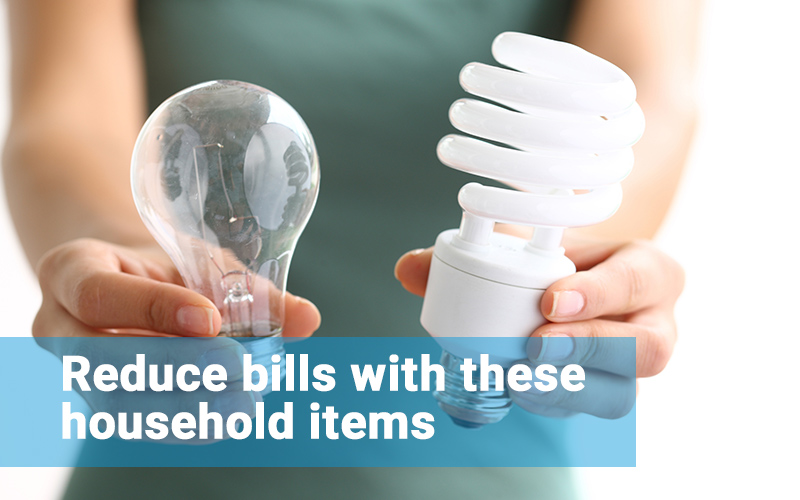
Likewise, energy-efficient light bulbs often use about 25% to 80% less energy than traditional incandescent light bulbs and generally last three to 25 times longer.ii

2. Water-efficient appliances

The Australian Government estimates by 2021 Australians could save more than $1 billion on their water and energy billsiii by using more water-efficient appliances and fixtures, specifically water-efficient

In addition, rain water tanks, which can be just as useful in urban areas as they are in rural zones, can generate cost savings. Tanks range from around $700 to $2000iv and rebates may apply.

3. Solar power systems

Solar power systems, which generate free electricity, are becoming increasingly popular, with about 1.63 million roof top systems installed across the country as
at 1 January 2017.v

While there are upfront costs involved, solar power systems are becoming more affordable. Plus, they require little maintenance and generally last 20 years or more. Rebates here may also apply.

Marcus Dorreen, Director of Retail at energy services company Evergen (co-owned by CSIRO), says pre and post-retirees are showing increasing interest in solar batteries, with 50% of inquiries coming from people over age 55, with owners of solar battery systems reporting electricity-cost savings of up to 80%.

4. Programmable thermostats

On average, 40% of energy used in homes across Australia is for heating and cooling.vi Using thermostats and timers to make sure you’re only heating a room as much as you need (and as required) can save you considerable money, depending on your usage.

5. Vegetable and herb gardens

Data from The Australia Institute shows 52% of all Australian households are growing some of their own food, with a further 13% intending to do so.vii

Of the top five reasons to grow food at home, saving money was the second most popular response at 62%. Statistics indicate however that it’s not until people are saving more than $250 a year (which only 16% of people are), that real cost savings are achieved.

6. Beverage supplies

If you’re in the habit of buying a $4 bottle of water, coffee or smoothie every day, then your take-away drink of choice is costing you over $1,400 over a 12-month period.

Investing in a reusable drinking bottle, blender or espresso machine could save you hundreds of dollars per year.

7. Extended warranties

Extended warranties cost you a little more upfront but if you have a home appliance or device that breaks, particularly an expensive one like a fridge or laptop, you’ll be comforted to know you won’t be slogged with a high repair bill. Plus, if the equipment can’t be fixed, the company will usually replace it.

Saving money and the environment

There are big and small investments you can make around the home today that will pay for themselves and help save hundreds, or even thousands of dollars, over the months and years ahead.

An added benefit is that many of these investments can lessen our impact on the environment at the same time!


Looking for more guidance on budgeting?

We can review your current situation and help you get to where you want to be. Call us to arrange an appointment with one of our advisors on 02 9328 0876.


i http://www.yourhome.gov.au/energy/appliances
ii http://energy.gov/energysaver/how-energy-efficient-light-bulbs-compare-traditional-incandescents
iii http://yourenergysavings.gov.au/water/water-home-garden/water-efficient-appliances-fixtures
iv https://www.choice.com.au/home-improvement/water/saving-water/buying-guides/rainwater-tanks
v http://yourenergysavings.gov.au/energy/solar-wind-hydro-power/solar-power
vi http://yourenergysavings.gov.au/energy/heating-cooling/understand-heating-cooling
vii http://www.tai.org.au/content/grow-your-own>


This article contains information that is general in nature. It does not take into account the objectives, financial situation or needs of any particular person. You need to consider your financial situation and needs before making any decisions based on this information.


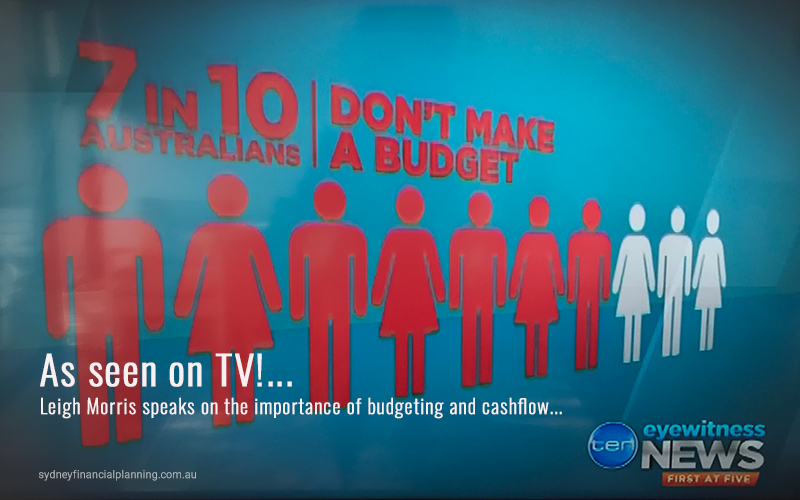
Leigh Morris speaks on budgeting

Leigh Morris speaks on budgeting – Channel 10 News

Leigh Morris speaks on budgeting


If you are looking for advise on how to get on top of budgeting and planning for your financial future, contact us to arrange to speak with one of our Planners.


Have some bigger goals you want to plan for?

It can really help to create a financial roadmap and budget with the help of a professional. Why not call us to arrange an appointment on 02 9328 0876.


General Disclaimer: This article contains information that is general in nature. It does not take into account the objectives, financial situation or needs of any particular person. You need to consider your financial situation and needs before making any decisions based on this information. Please seek personal financial advice prior to acting on this information.
Earn more, spend less

Earn more, spend less

Earn more, spend less

Are you living from pay to pay? Sick of borrowing money from family? Do you own a credit card? Perhaps you’re drowning in debt? Maybe you just want some extra cash for weekend splurging? If you fit-the-bill for any (or all) of these categories, keep reading…

It’s time to get a grip on your financial affairs and rethink your values, particularly those related to money. Stop and ask yourself ‘what is truly important in your life?’ It’s so easy to get caught up in our lifestyles that we fall out of touch with our values system and subsequently we end up spending money on unnecessary things.

Below are five techniques to help you attain financial freedom and rekindle your values.

1. Clear out your casa.

Assign a weekend to go through your garage, cupboards and wardrobe to find things you can sell online. Create a profile on sites like Gumtree or eBay and list all of your available products. Not only will you earn more money, this exercise will free up room around your home and teach you to be minimalistic.

2. “A penny saved is a penny earned”.

Review your bank statements to sift out all of the random one-off expenses and ongoing, but underutilised direct debits. If you have a gym membership you never use, cancel it – outside is free! If you own a subscription to a magazine or smart phone apps that aren’t providing any value, get rid of them. If you’re spending a small fortune at restaurants and bars, make an effort to spend more time at home and away from temptation. You have to be brutal and disciplined when it comes to cutbacks.

3. Change your psych.

Instead of forgoing and giving things up – “savour” them instead. Giving up something to save money can make you feel deprived. That is, unless you shift your way of thinking to start “savouring” instead of “giving up.” Don’t feel you have to change your lifestyle; merely change the frequency of your indulgences. Go to the movies weekly? Try once a month instead. It’s psychologically much easier to tell yourself you’re not giving anything up, you’re just going to savour it more.

4. Overtime.

Ask your boss if you can put in a few extra hours at work each week. If this isn’t possible, look for an additional part-time job that will bring you in extra money or sell your products and services online.

5. Compare the Market.

Make sure you’re paying as little as possible for your credit cards loans, utilities, insurance, and phone and internet connections. Use price comparison services to find out if you’re paying over the odds. If you’ve been with the same service providers for many years, there’ll be a good chance switching could save you money or you might be rewarded with a loyalty discount.


Don’t know where to start?

For more help and to take a fresh look at the way you manage your money, speak to your financial adviser at SFP. Or if you don’t have an adviser yet, contact us on 02 9328 0876.


General Disclaimer: This article contains information that is general in nature. It does not take into account the objectives, financial situation or needs of any particular person. You need to consider your financial situation and needs before making any decisions based on this information. Please seek personal financial advice prior to acting on this information.


Savvy Spending

Be savvy with your spending this Christmas

Savvy Spending

Take control of your spending so you can enjoy quality time with friends and family.

Here are some easy ways to spread Christmas cheer without burning a hole in your pocket. 

  • Create a budget for your seasonal shopping. Segment your spending into smaller categories such as presents, food, decorations, travel and donations. Important household expenses should be a key priority. You don’t want to miss a payment on your mortgage, insurance, or car. These should be taken care of first before you splash your cash.
  • Make a list and check it twice. Write a list of the people you need to buy for and what you intend to buy them. This will give you a good indication of what you can and can’t afford. Don’t forget those that look after you during the year such as your local barista, dry cleaner, gardener etc. A little can go a long way.  
  • Spare a thought for those less fortunate by volunteering time if monetary gifts aren’t an option or a donation isn’t enough.  
  • Get in early. Don’t get caught out making panic purchases at the eleventh hour because you’ve put off buying gifts and supplies. Spread your spending over the month(s) by shopping early, and make sure you tick items off your list as you go.  
  • Try to avoid using your credit card and resist the temptation of spending beyond your means. Credit card interest rates can add 20% on top of the purchase price if you don’t meet the due date on your credit card statement.  
  • Shop with cash and only go into a store if you have your list with you. This will help keep your budget in check and eliminate unnecessary spending.  
  • We all have our favourite shops. Make sure you follow them on social media and subscribe to their email alerts so you can be the first to know when they have a sale or special offer.  
  • If you can send a gift digitally such as a card, e-book or gift voucher, then do it. This will keep your postage costs down, especially if you have friends and family overseas.  
  • If you’re Christmas shopping online, be frugal. Before you start, google your way to a discount or coupon codes that you can use at the checkout.  
  • Want versus need. Sure, we all love a bit of splurging and spoiling, but if you find yourself second-guessing a purchase at the checkout, chances are you already know it belongs back on the shelf. This is also a great question to ask yourself when buying for kids – don’t go over the top on expensive gifts they have a short life span, buy them something constructive and long lasting.
  • Don’t be roped in with store card discount offers or special options to pay over a longer period of time. Whilst these offers may seem like a deal, they could end up costing you over time. Remember: If it sounds too good to be true, it probably is!  
  • Great presents don’t have to be pricey. If you’re an exceptional cook or home brewer, whip up a batch of tasty treats.
  • Start a new tradition with a family Secret Santa! This way everyone gets a gift and nobody breaks the bank. A great idea for the adults in the family.  
  • Minimise meal costs by asking everyone to bring a plate of food and a bottle of wine.  
  • Ditch the expensive wrapping paper and gift bag. Replace them with handmade gift decorations – get the kids on the job.  
  • Recycle your gifts. If the red wine your neighbour bought you doesn’t tickle your fancy, re-gift it to someone who would appreciate it. Don’t let these gifts go to waste.  
  • If you’ve accumulated frequent flyer or rewards points over the year, now is a great time to redeem them for trips, accommodation and gifts.  

The Christmas-New Year period should be relaxing and enjoyable rather than financially stressful. The easiest way to alleviate any financial pressure is to plan in advance and work within a budget.


Make your Christmas fun – not a financial burden?

It can really help to create a financial roadmap with the help of a professional. Why not call us to arrange an appointment on 02 9328 0876.


General Disclaimer: This article contains information that is general in nature. It does not take into account the objectives, financial situation or needs of any particular person. You need to consider your financial situation and needs before making any decisions based on this information. Please seek personal financial advice prior to acting on this information.
5 habits to become financially secure

5 habits to become financially secure

5 habits to become financially secure

Believe it or not, being secure financially doesn’t involve magic or an outrageous stroke of luck.

More often than not, it results from good habits, such as keeping track of your finances, cutting back on expenses, and planning ahead.

Here are five habits you can develop

That will help you become the awe of your friends and family!

1

Set Goals

It’s time to take control of your financial security and a great place to start is to identify short, medium, and long-term financial goals.

These might be saving for a family holiday, making additional contributions to your superannuation, paying off expensive credit card debt, or just keep it simple and save a set amount each pay-day.


2

Regular check-ups

Creating a budget is an incredibly important step to achieving your goals as you work towards your financial security.

Rest assured it’s easier than you think using a good budgeting tool. And there are plenty of helpful apps and websites out there to choose from. We tested a few and liked the simplicity of ASIC’s MoneySmart Budget planner.

  • Calculate your household’s monthly income: Look at your payslips or bank statements to see how much is going into your account on an average month.
  • Tally your monthly expenses: Check your bank statements, bills, and receipts to see how much you’re spending. Don’t forget to factor in the big ticket items you purchase less often.
  • Remember your goals: Make an allowance to put some of your income aside to achieve your goals. Can you afford to save 20% of your income or do you start a bit lower?
  • Crunch the numbers: You’ll now have a summary of how much you’re saving, or losing each month. Don’t forget to save a copy.
  • Find saving measures: Boost your savings, identify and cut back on unnecessary expenses. That might include take-away coffee, restaurants, or subscription services you rarely use.

The first few months of sticking to your budget will be the toughest, so start by setting a realistic budget. Sticking to consistent saving will mean that you can build up an amount that can be used for a significant goal, like paying off a car loan, or saving a deposit for your first home.


3

Optimise your bank accounts

Give your saving efforts a big boost with the checklist below:

  • Streamline banking – Get paid into an account that’s not accessible by debit card. Pay off your monthly essentials first, such as rent and utilities, then transfer your budgeted savings into a separate account.
    Finally, only put as much as you’ll need in a spending account. That’s this month’s budget.
  • Bank fees – How much are fees eating into your savings and spending accounts? If you don’t know, find out, then shop around for a better deal.
  • Credit cards – Tackle your outstanding credit card balance, check to see if you own any credit cards you no longer need. The sooner you can stop using them and pay off the balance the sooner you will have extra money to put towards your goals. Remember late payment fees and interest can really put a dent into your savings.


4

Track your spending

You need to keep your eye on the ball at all times. That’s because it’s one thing to create a budget and set financial goals, but entirely another to stick to them.

So set aside 15-30 minutes each week or fortnight to make sure you’re keeping on track. This regular review is also a good opportunity to identify any expenses you don’t really need. Your streamlined bank accounts should
make this very simple to track your progress.

Notice the spring in your step if you’ve stuck to your budget and saved towards your goals. Remember how good that feels!


5

Plan for the unexpected

Your income is fundamental to achieving your financial goals, so for financial security, you should be confident that you have adequate protection in place.

Ask yourself how quickly you would burn through your savings if you were unable to work for three to five months? Or even longer?

By having different types of insurance you can help protect yourself and your family when you need it the most.

Taking out the right cover for you means that you can be confident that if something unexpected did occur, your efforts to become financially secure are protected.


Would you like to explore options to help meet your financial goals?

Connect with one of our planners to review your current financial position, either book a virtual meeting or call us on 02 9328 0876.


Article by Sydney Financial Planning


General Disclaimer: This article contains information that is general in nature. It does not take into account the objectives, financial situation or needs of any particular person. You need to consider your financial situation and needs before making any decisions based on this information. Please seek personal financial advice prior to acting on this information.

Photo by Fuu J on Unsplash

Improve your financial wellness

7 tips to improve your financial wellness

Improve your financial wellness

This can be measured by the financial wellness index, which measures a person’s satisfaction with their current and future financial situation.

Some days you might feel confident you can meet your needs within the boundaries of your current income, whereas other days you may feel like you don’t have nearly enough funds in order to do so.

The truth is, you’re not alone. Nearly 2.5 million Aussies say they feel moderately to severely financially stressed, even though financial stress has been decreasing year-on-year in Australia.i

Improving your financial wellbeing

On a positive note, research identified that those who have been financially stressed in the past were often able to recover through changes to their behaviour and mindset.ii

Here are some suggestions of things you could do (if you aren’t already) which may help you to improve how you feel financially.

1. Create a budget that works for you

When it comes to creating a budget, try jotting down into three categories – what money is coming in, what cash is required for the mandatory stuff (such as bills), and what dough might be left over (which you may want to put toward existing debts, savings or your social life).

Writing up a budget may take an afternoon out of your diary, but it will help you to more easily identify where there’s room for movement. For instance, could you reduce what you’re spending on luxury items, subscription or streaming services, eating out or clothing?

2. Consider rolling your debts into one

If all the small debts you once had, have multiplied and grown into bigger debts – you could look to roll them into a single loan, and reduce what you pay in fees and interest.

This could help you to save a significant amount of money (depending on what you owe) and make it easier to manage your repayments, as you’ll potentially only need to make one monthly repayment rather than having to juggle several.

The main thing to ensure is you are paying less than what you are currently when it comes to interest rates, fees and charges, and that you’re disciplined about making your repayments.

3. Try to save a bit of money regularly

Even a small amount of cash deposited on a frequent basis could go a long way toward your savings goals, with a separate research report indicating the average savings target for Aussies is a bit over $11,000.iii

Some tips people said helped them along the way was transferring spare funds into an actual savings account, setting up automatic transfers to their savings account (so they didn’t have to move money manually) and putting funds into an account which they couldn’t touch.iv

4. Set aside some emergency cash

With research showing that an emergency fund of between $4,000 and $5,000 is generally enough to cushion most working Aussies when it comes to unexpected expenses, it’s probably worth some thought.v

An emergency stash of cash could give you peace of mind and reduce the need to apply for high-interest borrowing options should you be faced with a busted phone, car tyre, or bad landlord.

5. Be open to talking money with your partner

One in two Aussie couples admit to arguing about money,vi so if you haven’t already, it might be worth sitting down to ensure you’re on the same page and that both parties’ goals are being considered.

6. See if you can get a better deal with your providers

You more than likely have several product and service providers, and figures show you could save more than a grand annually on energy alone just by switching from the highest priced plan to the most competitive on the market.vii

Again, this may take a couple of hours out of your day, but the savings you could potentially make may make a real difference to what you cough up throughout the year.

7. Don’t be afraid to seek financial assistance

If you are struggling to make repayments, you may be able to seek assistance from your providers by claiming financial hardship.

All providers must consider reasonable requests to change their terms in instances where you may be suffering genuine financial difficulties and feel help would enable you to meet your repayments, possibly over a longer period.

Of course it also helps to have an expert on your side and we are here to support you to achieve and maintain financial wellness.


Need a hand with your financial wellness?

For more help and strategies on identifying your feelings on financial wellness, speak to your financial planner at SFP. Or if you don’t have a planner yet let us arrange an appointment, contact us on 02 9328 0876.


i, ii, v AMP’s 2018 Financial Wellness in the Australian Workplace Report, pages 7, 8, 14

iii, iv MoneySmart – How Australians save money infographic

vi Finder – Heated conversations: 1 in 2 Aussie couples argue about finances paragraph 1

vii Mozo – Sick of high energy bills? Aussies willing to change providers could be saving over $1,000 a year paragraph 2

Article by © AMP Life Limited. First published October 2019

General Disclaimer: This article contains information that is general in nature. It does not take into account the objectives, financial situation or needs of any particular person. You need to consider your financial situation and needs before making any decisions based on this information. Please seek personal financial advice prior to acting on this information.

 

Australian's are a generous nation

Australia is a generous nation

Australian's are a generous nation

Australia is a generous nation. We love to give gifts. It brings us joy.

When we spend, we go big: $19.8 billion AUD is spent on gifts by Australians each year, or an average of $100 each month ($1,200 per year).

That’s more than buying a $4 coffee every weekday, getting our shirts dry cleaned daily, or what we spend, on average, on mobile phone plans. Gen Y spend more on gifts than any other generation: $130 each month ($1,560 per year).

Here’s what the average Australian adult spends on gifts for loved ones each year:

  • $437 for our spouse or partner,
  • $361 for each of our children,
  • $201 per parent, and
  • $115 for our pet.

Women are more generous towards their spouses or partners than men ($454/ year compared to $419/year), but men are spending $22 more per month on gifts than women in general.

Younger adults spend more than older adults (see table). Almost $20 billion spent on gifts each year


  Gen Z
(18-24)
Gen Y
(25-39)
Gen X
(40-54)
Boomers
(55-73)
Average gift spending per month $91 $130 $87 $89


We find joy in giving

Experts in psychology generally agree that the altruistic act of giving has neural and emotional benefits. These range from elevated activity in regions of the brain associated with pleasure, social connection, and trust, all the way through to lowering blood pressure and stress levels.

So it’s a good thing most of us find joy in giving. Most Australians (85%) say they get more joy giving gifts to others than in receiving gifts themselves.

Females find particular joy in giving (88% find greater joy in giving than receiving, compared to 83% of males).

Older Australians gain the greatest joy: 90% of Baby Boomers say they get more joy in giving than receiving, as do 84% of Gen X, 84% of Gen Y and 78% of Gen Z.

Gifts for our Pets

74% of Australian pet owners buy gifts for their pet.

Those who do spend an average of $115/year on gifts for their pet.  Pushing the average higher are Gen Ys who spend $121/year and Gen X who spend $142/year.

Generous to a fault

73% of Australian’s don’t budget for gifts!

Disturbingly, a significant proportion of the $19.8 billion spent on gifts each year in Australia is not accounted for in household budgets. In fact, three in four of us (73%) do not have a budget allocation for gifts. Men are less likely than women to allocate a budget towards gift-giving (24% men cf. 31% women).
Those least likely to budget for gifts are older families, couples and older singles, of whom 79% don’t have a budget allocation for gifts.

Surprisingly, the vast majority of us are happy with the amount we spend on gifts. Just one in eight of us (13%) feel we spend too much on gifts, while most of us (81%) feel we spend about the right amount.

The discrepancy between a high unplanned household spend and a satisfaction with that spend indicates an opportunity to improve our financial literacy and awareness of the benefits of budgeting, planning, and giving in a way that brings joy without debt or regret.

How do we decide how much to spend?

If we don’t budget or plan for gifts, how do we decide how much to spend?

The top three decision-drivers that inform how much we choose to spend on a gift are:

  1. How close we are to the recipient (59% selected this)
  2. How special the occasion is (58%); and
  3. Our budget at the time (55%).

The FPA “Gifts that Give” national survey of Australians reveals some truly fascinating insights into how we think, buy, plan and spend our money on those we love the most. Did you know Australia is a generous generation and spends nearly $20 billion a year on gifts? This 19-page report is a fascinating read and a great conversation starter with friends and families.

Download the Goodness of Giving eBook.

Download the full report – Gifts that Give.


Does the report findings raise some questions on your gift-giving budgeting?

Why not arrange to meet with one of our planners to do a budget review. Make a booking or call us on 02 9328 0876 to arrange a meeting.


1 Assuming drycleaning fee of $15 for five shirts, 52 weeks per year. Australians spend an average of $77/month on mobile phone plans, according to Canstar Blue research.

Aricle by FPA Gifts that Give Research Report

General Disclaimer: This article contains information that is general in nature. It does not take into account the objectives, financial situation or needs of any particular person. You need to consider your financial situation and needs before making any decisions based on this information. Please seek personal financial advice prior to acting on this information.


4 Gift-Giving Personalities

Australia’s four gift-giving personalities

4 Gift-Giving Personalities

The FPA created a Gift-Giver Personality Quiz to help people identify their own gift-giving preferences, and those of others within their social networks.


Heartfelt Gift-Giving

Heartfelt Givers

  • Spend $103/per month on gifts
  • Least likely to bulk buy gifts (29%)
  • More likely to be female (57%)
  • Most likely to value the gift of seeing a financial planner (64%)


Practical Gift-Giving

Practical Givers

  • Spend $104/month on gifts
  • Most likely to budget for gifts (40%)
  • Highly value the gift of seeing a financial planner (60%)
  • Most likely to be older (66% are Gen X or Baby Boomers)


Impulsive Gift-Giving

Impulsive Givers

  • Spend the most on gifts at $112/month
  • More likely to be female (61%)
  • Least likely to budget for gifts (24%)
  • Highly likely to value the gift of seeing a financial planner (61%)


Simple Gift-Giving

Simple Givers

  • Spend the least on gifts at $85/month
  • Least likely to value the gift of seeing a financial planner (53%)
  • Unlikely to budget for gifts (25%)
  • Prefer to give cash or an easy gift such as wine or chocolate


Discover your gift-giving personality

Take FPA Gift-Giver Personality Quiz and discover detailed personality profiles with fascinating insights about buying behaviours, preferences and habits.

The FPA “Gifts that Give” national survey of Australians reveals some truly fascinating insights into how we think, buy, plan and spend our money on those we love the most. Did you know Australia is a generous generation and spends nearly $20 billion a year on gifts? This 19-page report is a fascinating read and a great conversation starter with friends and families.

Download the Goodness of Giving eBook.

Download the full report – Gifts that Give.


Would you like some help with reviewing your financial behaviour?

Why not book a meeting with one of our finanical planners to review your saving and spending goals. Make a booking or call us on 02 9328 0876 to arrange a meeting.


Aricle by FPA Gifts that Give Research Report & Money & Life

General Disclaimer: This article contains information that is general in nature. It does not take into account the objectives, financial situation or needs of any particular person. You need to consider your financial situation and needs before making any decisions based on this information. Please seek personal financial advice prior to acting on this information.

 

Pocket money for kids?

Pocket money for kids?

Pocket money for kids?

Instead, try this.

Split the money for them into three pockets:

Spend pocket (40%)

Spend as usual now (lollies, toys etc.), pay for anything immediate. The key here is to allow them to buy whatever they want with this money. They are in charge of it. If they spend it all at once, they will have none left. Slowly introduce the basic save-spend conversation. Kids will learn the spending fundamentals fast.

TIP: Point out to them that once the money is spent, it’s gone forever. 

Save pocket (30%)

Save for something big in the shorter timeframe, spend later.
Teaches them the concept of saving and having more to spend in near future. A more advanced version of this allows them to spend only half of what they saved, always keeping some money in the account.

TIP: Good old piggy works a treat here. Can be placed in their room. Point out to them that if they resist the temptation of spending all now, they will benefit from having visibly more later.

Invest pocket (30%)

Put away and invest to benefit from in 10 + years’ time (ideally buy and hold and never sell). This account should only allow only type of one transaction – buy.  It can form an education plan, a property deposit plan or anything long term.

TIP: Must be set up as Automatic Direct Debit. Point out to them that every dollar saved and invested will produce income for as long as we keep it.

This approach teaches kids to split their income purposely for different reasons, just like the grown-ups do when they get paid. Don’t get lost in options, the key is to pick one you can stick with or seek our professional advice


Maybe your re-evaluating your own saving habits?

Speaking with a financial planner and reviewing your own financial behaviour to better guide your kids may help. Make a booking or call us on 02 9328 0876 to arrange a meeting.


Article by Michal Bodi | Senior Financial Planner


General Disclaimer: This article contains information that is general in nature. It does not take into account the objectives, financial situation or needs of any particular person. You need to consider your financial situation and needs before making any decisions based on this information. Please seek personal financial advice prior to acting on this information.


Be aware of your money biases

Be aware of your money biases

Be aware of your money biases

Six cognitive biases that influence how we save, spend and invest money

We like to think we’re rational beings. But the reality is that a lot of our daily behaviour is influenced by our subconscious. 

Behavioural scientists have looked at the way human beings are wired and discovered some ‘cognitive biases’ that influence our everyday behaviour.i 

Here are a few of their insights into how our minds work. 

1. We tend to discount the future

We value immediate rewards over rewards in the distant future. This tendency to want instant gratification is hard wired from birth. Studies have shown that children find it hard to stop themselves eating a treat even when a bigger and better treat is offered for those who wait for a few minutes. And ‘discounting the future’ doesn’t stop when you reach adulthood. It could explain why it’s hard to get too excited about saving for your retirement in your 20s. But the earlier you start planning, the more you’ll be able to put away. 

2. We tend to feel the pain of a loss more than the pleasure of a gain

You can see an extreme example of this sort of behaviour at the casino when gamblers chase their losses. This ‘loss aversion’ can also manifest itself in continuing to commit to a poor investment because you’ve already put a lot of money into it. It can help to think long term and avoid focusing on short-term fluctuations in the value of your investments. 

3. We tend to follow the herd

Much as we like to think of ourselves as independent human beings, we tend to look to others for affirmation. Think about the rush to secure seats for the concert when you know that everyone else is using the online booking system. This sort of ‘herd mentality’ can work in a positive way. When it comes to money, this ‘herd mentality’ can manifest itself after stock market downturns, when investors start panicking and selling up, even though rationally this will crystallise their losses. It can help to shut out daily market noise and focus on long-term goals. 

4. We tend to think things are more likely to happen than they are

You can see this in the popularity of lotteries around the world. While the chances of winning are infinitesimal, the winners get a lot of publicity, which makes us think it’s more likely to happen. But at least the lottery is relatively harmless. Thanks to the global mass media, this ‘availability bias’ often focuses on bad events like kidnapping, plane crashes or stock market downturns. Investors who experience a market crash like the GFC over-estimate the chances of the same thing happening again, even though statistically it’s unlikely. It can lead to people saving for retirement changing their investment preferences to lower risk investments, even though this may not be in their best interests as their long-term returns struggle to keep pace with inflation. 

5. We tend to favour recent reference points when making decisions

This ‘anchoring bias’ can make it easy to overspend in shopping malls. When you first see a pair of shoes for $200 and then a similar pair for $150 it’s easy to anchor on the first amount and perceive $150 as a great bargain. And these days it doesn’t stop when you leave the mall—online shopping means plenty more opportunities for that anchor to embed itself and end up in an unwanted purchase. To counter this, try setting your own ‘base price’ before you set out shopping and stick to it. You can also see anchoring in practice when investors rush in to buy stocks that have just plunged in value without looking at the underlying performance of the company. They have made the mistake of anchoring the recent high point in their mind. 

6. We tend to be a bit lazy

We tend to stick with current plans rather than change if it’s too much hassle. This is probably why so many of us stay with our utility providers rather than shopping around for a better deal. If you find yourself suffering from ‘status quo bias’, try making a start with one area of the household finances—say, your electricity bill—to make it more manageable, rather than trying to tackle everything at once. 


Do you need help to put a saving strategy together?

Speaking with one of our financial advisors would be a good place to start. Make a booking or call us on 02 9328 0876 to arrange a meeting.


i Source: Thinking, Fast and Slow by Daniel Kahneman; Nudge: Improving Decisions About Health, Wealth, and Happiness by Richard Thaler and Cass Sunstein; Predictably Irrational: The Hidden Forces That Shape Our Decisions by Dan Ariely.

Article by: ©AMP Life Limited. First published March 2019

General Disclaimer: This article contains information that is general in nature. It does not take into account the objectives, financial situation or needs of any particular person. You need to consider your financial situation and needs before making any decisions based on this information. Please seek personal financial advice prior to acting on this information.

 

New year financial goals

Take control of your finances now for the new financial year

New year financial goals

And if you didn’t set any goals – or if you have strayed off track – this is the perfect time to get organised, write a checklist and stick with it! 

Don’t wait until 1 July to start. Kick off now with these practical tips: 

1

Set some goals

Think about what you want to achieve this financial year. Is it to save for something special, to curb your spending or to reduce your debts? Once you know what you’re aiming for you can set and achieve your goals.


2

Understand where your money goes

If you’re running out of money before payday, or you’d just like to get a better understanding of where your money goes, it’s probably a good idea to start tracking your spending.

3

Set a budget

Get serious about managing your budget.

If you don’t already have a budget, now’s a good time to set one. Use AMPs budget calculator to work out your expenditure and find out how much you could put aside each payday.

4

Get your super sorted

Find out if you have any lost super and how you can consolidate it to avoid paying multiple fees. Or read about how you can boost your super and possibly lower your tax bill.

5

Consolidate your debt

Now might be the time to get rid of extra credit cards and opt for a single card with a lower interest rate and less fees. See Canstar for a comparison of credit cards.

If you have a home loan, consider increasing your loan amount and using the extra money to pay off your other debts. A home loan usually has a lower interest rate than debts such as credit cards, so this will help you to avoid paying higher interest rates.

If you don’t have a home loan, consider getting a personal loan at a lower interest rate to help you pay off your debts sooner.

6

See where you can make savings on big ticket items

Take advantage of end of financial year sales to buy big ticket items, such as cars, whitegoods or furniture. And be sure to do your research on products and prices, shop around and don’t be afraid to bargain.

Make sure you get the best rates available on your frequent bills such as insurance and energy. Use comparison websites, such as comparethemarket.com.au to compare product benefits and costs and check Canstar to see how your interest rates and financial products stack up.

7

Commit to better money habit

Resolve to curb any costly bad habits that can drain your finances, such as paying for things that you can do yourself. Do you really need to outsource house cleaning or washing the car?


What else should you think about?

Working on your finances can be a bit daunting at any time, not just when the new financial year is drawing close. So if you’d like help with working out your financial goals contact us today for some help.

Do you find it hard to stay on track?

Speaking with one of our financial advisors would be a good place to start. Make a booking or call us on 02 9328 0876 to arrange a meeting.


Source:© AMP Life Limited. First published May 2019

General Disclaimer: This article contains information that is general in nature. It does not take into account the objectives, financial situation or needs of any particular person. You need to consider your financial situation and needs before making any decisions based on this information. Please seek personal financial advice prior to acting on this information.


How to play catch up with your super

How to play catch up with your super

How to play catch up with your super

Putting more money into the tax-friendly framework of superannuation to help you enjoy a fulfilling retirement… it’s one of those things that seems like a no brainer, especially with the benefit of hindsight. 

In a recent report Australians in retirement said that making extra super contributions was the most common change they would make if they could have their time again. 

So the theory’s all well and good. But back in the real world it’s not always so easy. 

There are times in our lives when it may be hard to free up the funds for super.

  • When you’re taking time off work to care for a newborn baby
  • When you’re looking after elderly relatives
  • When you’re concentrating on reducing the mortgage, paying the bills and simply putting food on the table.

But there may be other times when you have more capacity to direct some money into super. 

The good news is that new legislation means you may be able to put more into super at a concessional rate of tax. 

But first, a reminder about the super taxation rules. 

What are concessional contributions?

Concessional contributions into super get special tax treatment. For most of us, that means you’ll pay less tax on your super contributions than you do on your income. 

Concessional contributions can generally be made two ways.

  • By you through personal deductible super contributions.
  • By your employer through salary sacrifice or super guarantee (SG) payments.

There’s a cap on how much can be put into your super at the concessional tax rate each year. The cap has fluctuated over the years but at the moment it’s $25,000. 

Until recently, your cap was reset every year – so if you didn’t put the full $25,000 into super you lost your entitlement to any unused amount. But if you’re eligible, you can now carry forward any unused amount for up to five years.

Who is eligible to make catch up concessional contributions?

It’s a good idea to be across the rules so that you can plan ahead.

  • The ability to make a catch-up concessional contribution applies to people whose total superannuation balance was less than $500,000 on 30 June of the previous financial year.
  • The five-year carry-forward period started on 1 July 2018 so the 2019-20 financial year is the first one when you can actually make extra concessional contributions using any unused super contribution cap.
  • Work test rules still apply for people aged 65 or over.
  • The usual notice requirements continue to apply for personal deductible contributions.
  • Unused amounts can be carried forward regardless of your total superannuation balance but expire after five years.


How to boost your super in the lead-up to retirement – Ashlea’s story

Ashlea knows she needs to save for a comfortable retirement. But right at the moment she’s paying for the kids’ education and then there’s the mortgage to cover. It’s not the right time. So Ashlea makes do with her employer’s SG payments of $5,000 a year. 

Fast forward three years and things have changed. Ashlea’s youngest daughter has just graduated from high school, she’s chipped away at the mortgage on the family home and she’s secured a promotion at work so she’s earning more income. It’s the right time to start playing catch-up with her super. 

Until recently, Ashlea would generally have been limited to the $25,000 concessional contribution cap. But now she can use her unused cap amounts from previous years to put more into her retirement savings. 

She could put as much as $85,000 into her super as concessional contributions—that’s her unused cap amounts from the previous three years added to the current year cap. 

She decides to make a personal tax deductible super contribution of $45,000 on top of her $5,000 SG payment so this means she still has $35,000 in unused contributions that will roll over to the following year. 

However, if her extra payments take her super over the $500,000 threshold, she wouldn’t be able to use the unused concessional contribution amounts in future years unless her balance falls below $500,000 again. Please see the table below. 

  2018-19 2019-20 2020-21 2021-22
SG payment $5,000 $5,000 $5,000 $5,000
Extra 
contributions
$0 $0 $0 $45,000
Total 
concessional 
contributions
$5,000 $5,000 $5,000 $50,000
  2018-19 2019-20 2020-21 2021-22
Unused cap 
rolled over
$20,000 $40,000 $60,000 $35,000


The new rules could prove particularly useful for anyone who’s spent time out of the workforce to catch up with their super, as well as people approaching retirement wanting to maximise their retirement savings and minimise their tax.

What other ways can you boost your super?

There are plenty of other ways to boost your retirement savings.

  • You can make super contributions to a lower earning spouse and receive a tax offset.
  • You can receive a government co-contributions if you earn below a certain amount.
  • You can contribute up to $100,000 to your super as a non-concessional after-tax contribution. If you’re under 65, you can bring forward two years of this cap, allowing you to contribute a total of $300,000 at a time.


What does your retirement savings look like?

For more help and to take a fresh look at the way you can have the retiremnt you imagine, speak to your financial adviser at SFP, book a coffee or call us on 02 9328 0876.


Article by AMP Life Limited

General Disclaimer: This article contains information that is general in nature. It does not take into account the objectives, financial situation or needs of any particular person. You need to consider your financial situation and needs before making any decisions based on this information. Please seek personal financial advice prior to acting on this information.

 

Day One - Budgeting

How to turn One Day to Day One – Budgeting

Day One - Budgeting

We’ve heard it all before. It’s not that we don’t want to take control of our money. I mean it makes sense – we all work so hard for it, it would make sense to know what happens to it once it hits our bank account. Even better if it went to all the right places. 

But the reality is, it JUST GETS TOO HARD!!!

That is all true, but…you don’t have to go from zero to 100 in one day. You can just start somewhere basic, get used to it, then move on once you’re comfortable. Doing something is always better than doing nothing. 

Here’s something you can do today, 5 simple steps:

Step 1 – think about all the reasons why you think you should get in charge of your money

Would it mean more cash for travelling? Would it make you less stressed? Maybe more fun money for going out? Maybe just have a regular cash reserve so you don’t have to dip into your credit card every time? Maybe it’s time to finally start paying off some debts…?

Whatever it is, you need to be clear on these reasons. Once you have the clarity, write it all down. (make sure you don’t skip this step, writing down is an important step).

Step 2 – think about all the stuff you just wrote down

 Rate all the reasons based on their importance. Are some of them more important than others? What would it mean to never achieve some of them? How would it make you feel? 

Step 3 – time to pause and think.

 You’ve just articulated all the reasons why you want to be in control, and how bad you’d feel if you never got there. It’s time to ask yourself – What have I done about it so far?

Step 4 – if the answer to the last question is ‘Not much’, what do you think you should do now?

Are you really going to change something after reading an article like this? That’s right. Knowing we should do something doesn’t mean we actually end up doing it. It’s human nature. Well, if you won’t change something, nothing will change. You know you won’t do it alone.

Step 5 – Ask for help

Asking for help isn’t a weakness. It’s called being smart and doing something different to people around us. It’s the only way not to end up like everyone else around us.

Procrastinating, getting distracted, being busy – it’s all human but it all stands in your way to move ahead. It’s ok to ask for help, it’s ok to talk to a third-party financial expert. They’re not going to bite your head off and I can promise you one thing – you’ll know you when you find the right one. You’ll look back one day and go ‘what took me so long!?’.

If you change nothing, nothing will change. Change ONE DAY… to DAY ONE!


Do you need some help with creating a new day one?

Send us a message if you want to ask anything. Make a booking or call us on 02 9328 0876 to arrange a meeting.


Article by Michal Bodi | Senior Financial Planner

General Disclaimer: This article contains information that is general in nature. It does not take into account the objectives, financial situation or needs of any particular person. You need to consider your financial situation and needs before making any decisions based on this information. Please seek personal financial advice prior to acting on this information.

Do you need help managing your money?

6 steps to get your money stuff together

Do you need help managing your money?

Here are some easy wins to keep you on the right track for 2019

1. Work out your goals

If you don’t know what you’re trying to achieve, you’ll never get anywhere. And different goals need different strategies…saving for a new car is very different from building up your retirement income.

Take a few minutes to write down your goals for this year and beyond. If your goal is to pay for this year’s big trip, you’ll need to start making some savings to free up some cash.

If your goal is to finance your upcoming wedding, you’ll need to think about putting some money away in a fairly low-risk investment option. If your goal is to buy a house, you’ll need to work out where you can afford to live and how you’re going to build up a deposit.

And if your goal is to put your kids through school, you’ll need to start thinking about a long-term investment plan.

2. Go paperless

You might be the kind of person who enjoys paperwork. But for many of us the age of electronic commerce has been a game changer. Unless you want to, there’s no reason to be receiving any bills or statements by snail mail.

You don’t have to sort it all out today. Just make a point of every time a bill comes in, follow the simple instructions to go paperless—most suppliers offer an electronic option these days. In a few months the postie will only be stopping at your door with exciting purchases from Amazon.

3. Start a budget

We’re all different. Some of us work best off a screen, some of us prefer old fashioned pen and paper.

If an Excel spreadsheet sounds too hard, there are a number of apps that can take the hard work out of paying, saving and spending.

4. Shop around for better deals

You wouldn’t willingly pay more for an item of clothing when the store down the road is selling it for less. So when it comes to your home loan, your utility bills or your credit card why shouldn’t the same rule apply?

Talk to your providers about whether you’re getting the best deal for your particular circumstances. And if not, be prepared to take your business elsewhere.

5. Make a will

It doesn’t matter what stage of life you’re at, you don’t want complications for your loved ones in the event anything happens to you. If your needs are fairly simple, you might want to consider setting up a will online. If your needs are a bit more complicated, your financial adviser, a solicitor or a public trustee can help.

And remember, if you experience major life changes like embarking on a new relationship, starting a family or splitting up with your partner, you need to make sure that your will is up-to-date.

7. Get your tax sorted

If you’re the kind of person who’s already got their receipts filed in date and alphabetical order, you can skip this bit.

But if you’re like many of us, you tend to approach tax time with trepidation. Your receipts are all over the place, you’ve forgotten the work HR password to retrieve your payslip and you still haven’t got around to looking into the Medicare levy surcharge.

It’s time to get back to basics. Don’t worry about how disorganised you’ve been in the past, focus instead on getting your affairs in order for the future.Create a simple spreadsheet for your tax receipts to make your next tax return much easier.

You’ll be surprised at what difference a few really basic steps can make to your personal finances. A phone call here, an online form there…and before you know it, you’ll be well on the way to getting your money stuff together this year and beyond.

If you need help getting your money stuff together, give us a call.


Is your credit card debt sinking you?

Speaking with one of our financial advisors would be a good place to start. Make a booking or call us on 02 9328 0876 to arrange a meeting.


i https://corporate.amp.com.au/newsroom/2018/january/new-year–new-financial-resolutions- 

General Disclaimer: This article contains information that is general in nature. It does not take into account the objectives, financial situation or needs of any particular person. You need to consider your financial situation and needs before making any decisions based on this information. Please seek personal financial advice prior to acting on this information.

 

6 ways to reduce your credit card

6 ways to reduce your credit card debt once and for all

6 ways to reduce your credit card

Now, perhaps that’s no drama if we’re not paying too much to access credit and we’re managing to avoid interest charges by paying back what we owe on time. 

But we paid a collective $1.5 billion in fees in 2016-17.i And we’re taking out new credit cards at an increasing rate. Two in five Australians are juggling more than one credit cardi and 300,000 new credit cards accounts were opened over the five years to 2017, bringing the total number of cards in Australia to a staggering 14 millionii

So given all this it’s not surprising that almost one in five of us are struggling with credit card debt.iii

Getting to grips with your existing debt…

If you’ve realised you might have a problem with your credit card debt, it’s time to take back control. Sit down, take a deep breath and work out a step-by-step plan. 

  • Stop all but essential spending on your credit card. Try and get by without your credit card and use cash wherever possible while you work on your plan. You could even set yourself a challenge not to spend any money for a week!
  • It sounds basic, but start by listing how many cards you have and what you’re paying for them in interest.
  • If you have more than one card, start chipping away at the low-hanging fruit. Consider paying the card with the highest interest rate off first or if the rates are similar, work on clearing the smallest debt.
  • If you can’t pay a card off in full, see if you can pay more than the minimum each month to reduce your balance more quickly and save on interest. It could be worth setting up a direct debit on your payday to pay a fixed amount.
  • Once you’ve paid off a card, close the account and work towards having a single card to help make your finances easier to manage.
  • If you feel that your interest rate is too high, you could consider transferring any remaining balance to a card with a lower interest rate or rolling the debt into an existing personal loan or mortgage, these tend to have lower interest and fees. Many providers offer great rates to consolidate, but make sure you pay the card off during any honeymoon period with the new provider so that you don’t start accruing interest. Check the fine print – what interest rate will you pay after any promotional period ends? You don’t want to just kick the can down the road.
  • If all else fails, don’t be afraid to ask for help from your credit provider. There may be a way you can work out a spending plan that takes into account your financial circumstances.

…make sure you don’t build up more credit card debt…

Congratulations. You’ve consolidated your debt, set up a direct debit, closed a few cards and set yourself well on the way to pay off any remaining debt. 

But how do you make sure you don’t fall into the same credit trap again? It’s all about developing more healthy financial habits.

  • Reduce your credit card limit to take temptation off the table.
  • Try not to use credit to pay for the basics like food, groceries and utility bills. See if there are any ways you could adjust your household budget or make savings elsewhere so you’re only using credit as a last resort.
  • Avoid cash advances because they may attract higher interest rates.
  • Be wary of store cards and any fees you’ll pay – they are just another form of credit card.
  • Keep track of your spending

…and take advantage of credit card reforms

The good news is that the Government is introducing reforms on 1 January 2019 to help Australians manage their credit card debt.

  • You can cancel your card or lower your limit online for all new accounts.
  • You won’t be charged any back-dated interest.
  • And you’ll be assessed on your capacity to repay your debt when you ask for an increase.iv

Once the credit card’s sorted, it could be time to move on to any other debts you might have. Come and speak to us about taking control of your overall debt. 


Is your credit card debt sinking you?

Speaking with one of our financial advisors would be a good place to start. Make a booking or call us on 02 9328 0876 to arrange a meeting.


i Australian Securities & Investments Commission, REP 580 Credit card lending in Australia, July 2018, The credit card market in Australia, section 81, pg. 17, https://asic.gov.au/regulatory-resources/find-a-document/reports/rep-580-credit-card-lending-in-australia/
ii Australian Securities & Investments Commission, REP 580 Credit card lending in Australia, July 2018, Snapshot of the market, 2012-17, section 92, pg. 20, https://asic.gov.au/regulatory-resources/find-a-document/reports/rep-580-credit-card-lending-in-australia/ 
iii Australian Securities & Investments Commission, REP 580 Credit card lending in Australia, July 2018, section 99, pg. 24, https://asic.gov.au/regulatory-resources/find-a-document/reports/rep-580-credit-card-lending-in-australia/ 
iv National Consumer Credit Protection Amendment (Credit Cards) Regulations 2018, Schedule 1 – Amendments, https://www.legislation.gov.au/Details/F2018L00504/Explanatory%20Statement/Text 

General Disclaimer: This article contains information that is general in nature. It does not take into account the objectives, financial situation or needs of any particular person. You need to consider your financial situation and needs before making any decisions based on this information. Please seek personal financial advice prior to acting on this information.


Holiday budgeting tips – How to avoid a travel debt hangover

What a trip…you’re not going to kiss the tarmac or anything but it’s good to be home! You post the final selfie to Instagram on your mobile but as you flick back to the home screen you notice your banking app. A nagging thought disturbs your post-holiday reverie. 

You haven’t logged on since you left Australia. But it was all so slick. The days of sewing travellers’ cheques into your pants and wiring FedEx cheques around the world are long gone. Even the little Thai fishing village had a workable ATM that pumped out baht. And pretty much everywhere accepted your credit card. Luckily you extended the limit before you left, all it took was a few clicks. You also vaguely remember setting a daily budget…that didn’t last long. But hey, you’re not in Rome every day of the year. 

Hang on though…you did hit it pretty hard in London’s West End. And then there were the five days at the Airbnb near Lake Como. After all, if it’s good enough for George and Amal, it’s good enough for you. Come to think of it, the previous week scooting up and down the French Riviera wasn’t cheap. And way back at the start of the trip those Sangrias in Barcelona kept on coming… 

Slowly your heart sinks and you close the screen down, hastily shoving the phone back in your pocket. It can wait another hour at least, at least until you’ve got home and brewed a strong cup of coffee. 

You’ve heard of jetlag, now brace yourself for debt-lag

We know how to avoid jetlag. Stay hydrated, get as much sleep as possible and go easy on the complimentary inflight beverages. 

But what about debt-lag? You don’t want to arrive back home with a spring in your step but a hole in your wallet. 

And it doesn’t have to be the trip of a lifetime. Even if it’s just the annual family holiday down the coast, it’s all too easy to let your spending get out of control. 

Here are a few tips you might want to consider that could help you avoid a travel debt hangover. 

Budgeting tips before you go…

  • Pre-pay the big-ticket items. Look for good deals and pay in advance for flights, accommodation and tours. The more you can pay for before you go, the less you’ll have to pay for at short notice with a potentially hefty local mark-up.
  • Do your homework on fees and charges. You may want to give yourself a choice of how to pay—a debit card with lower fees, a pre-paid travel card so there are no surprises and a credit card for emergencies.
  • Work out your holiday budget. Think about how much you’re willing to spend—it could help to set a daily limit and an overall limit (and stick to it!). Sometimes your choices about where to travel and where to stay can have a knock-on effect. If you’re based on a resort island or in a small hotel room with no kitchen facilities it could be difficult to source reasonably priced groceries and save money on food.

…budgeting tips while you’re travelling…

  • Keep track of how much you’re spending. If you’re good at budgeting, there’s no reason to let things slide just because you’re on holiday. And if you’re not so good at budgeting, a holiday could be the ideal time to start getting into the right habits.
  • Use the right card. Pre-loaded travel cards are getting more popular and mean you don’t have to stress about the exchange rate. Credit cards are convenient but represent temptation. If you’re going to use credit, make sure your card is appropriate for travelling. Some cards charge an international transaction fee as well as not giving you any control over your exchange rate.

  • Make smart choices. Sometimes local merchants will give you the choice of paying in the local currency or Australian dollars. Converting to Aussie dollars could cost you more as you may not get a favourable exchange rate.

…and budgeting tips when you get back

  • Pay off your credit card as soon as you can. Be wary of minimum repayments—this only drags out the debt for longer and increases the overall interest charges. If you can cut back in other areas you could potentially pay off your credit card debt earlier and avoid paying interest.

If you’re looking at budgeting for a holiday, we can help you manage your money more effectively.


Do you need help budgeting for a holiday?

Speak with one of our financial advisers on better ways to manage your money, book a coffee or contact us on 02 9328 0876.