Tag: Financial Market

Higher global inflation

Higher global inflation and higher bond yields
Higher global inflation

  • Higher US inflation and a more aggressive Fed will likely boost volatility this year. However, the back-up in bond yields is likely to remain relatively gradual, and other countries including Australia will lag the US
  • Introduction

    Since the Global Financial Crisis (GFC) there have been a few occasions when many feared inflation was about to rebound and push bond yields sharply higher only to see growth relapse and deflationary concerns dominate.

    As a result, expectations for higher inflation globally have been progressively squeezed out to the point that few seem to be expecting it. However, the global risks to inflation and bond yields are finally shifting to the upside, with investment markets starting to take note as evident in the pullback in global share markets seen over the last few days. But how big is the risk? Are we on the brink of another bond crash that will engulf other assets?

    Inflation and bond yields – some context

    But first some context. In a big picture sense, inflation has been falling since the mid 1970s-early 1980s. The global economy is finally emerging from its post-Global Financial Crisis (GFC) hangover. Talk of secular stagnation was overdone. Slow global growth since the GFC largely reflected a typical constrained aftermath from a major financial crisis.
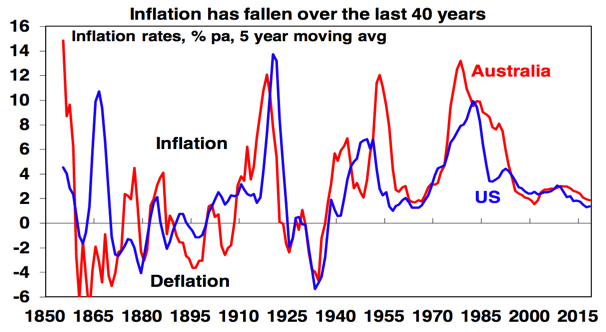
    AU Inflation Past 40 Years

    Source: Global Financial Data, AMP Capital


    The fall in inflation over the last 30-40 years reflects: the inflation-fighting policies of central banks; supply side reforms that boosted productivity; globalisation that brought a billion or so workers into the capitalist system; and the benefits of the information technology revolution harnessed by the likes of Amazon and Uber. The fall in inflation in turn has been the main driver of a super cycle bull market in bonds, with yields trending down since the early 1980s. (Don’t forget, when bond yields fall, bond prices rise. Suppose the government issues a $100 bond paying $4 pa in interest for an initial yield of 4%. If investors push yields down to 3%, the bond’s price will be pushed up until the 3% yield is achieved with the $4 interest payment.)
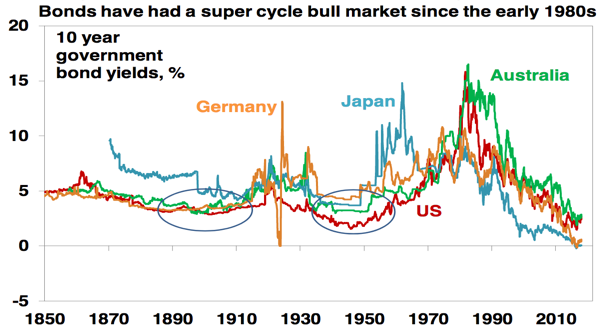
     

    Bonds Super Cycle

    Source: Global Financial Data, AMP Capital

    The collapse in bond yields into 2016 was accentuated by: worries about deflation; investors extrapolating very low official interest rates; worries economic growth will remain slow; safe-haven investor demand for bonds in response to geopolitical concerns and the experience that bonds always rally when shares fall; an increasing demand for income-yielding assets as populations age; and a shortage in the supply of bonds as budget deficits fell when central banks have been buying bonds. But the main driver since the early 1980s has been the fall in inflation.

    Inflation and other assets

    The 35-40-year fall in inflation and bond yields has also underpinned strong gains in most other assets. Put simply:

    • the shift to lower in inflation allowed interest rates
      to fall;
    • this allowed bond yields to fall (resulting in capital gains);
    • which in turn allowed shares to be rerated higher (price to earnings multiples rose from around seven or eight times in the early 1980s to around 15-17 times), which boosted share returns over and above what would have been expected from dividend yieldsand earnings growth alone;
    • lower interest rates allowed other assets to trade on lower yields boosting both commercial property returns, house prices and infrastructure returns. In
      particular, residential property gained as lower mortgage rates allowed people to borrow more relative to their incomes.

    Inflation starting to stir globally, bond yields on the up

    Since late 2016, our assessment has been that the super cycle bull market in bonds is over. This remains the case for several reasons. First, deflation risks are receding and gradually giving rise to inflation risks, led by the US:

    • Global growth is now starting to run above potential again and this is leading to a decline in spare capacity and with global growth now accelerating this is likely to have been used up by late next year. Diminishing spare capacity makes it easier for companies to raise prices.
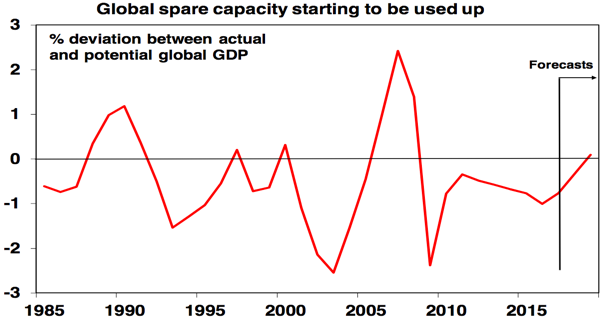
    Bonds Super Cycle

    Source: IMF, AMP Capital

    • While Europe, Japan and Australia are lagging (as evident in still low inflation readings recently), the US economy is likely around full capacity evident in unemployment around 4%, increasing anecdotes of labour shortages and rising wages and business surveys pointing to rising selling prices. This will likely drive 4 (or possibly 5) Fed hikes this year whereas the market is only allowing for 2 or 3, with the Fed’s January meeting indicating a bit more hawkishness.

    • Commodity prices are rising most notably oil, which will at least boost headline inflation.

    • Second, this is occurring when bond yields remain well below levels consistent with likely long-term nominal growth (see the next table). Over the long-term, nominal bond yields tend to average around long-term nominal GDP growth.
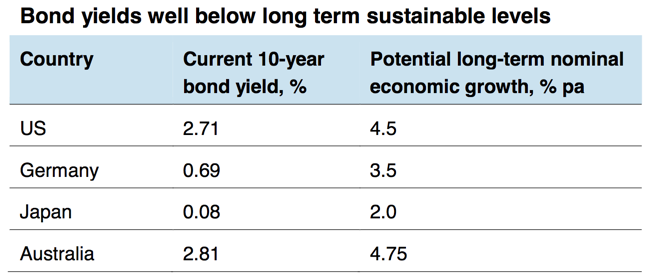
    Bonds Yeild

    Source: Bloomberg, AMP Capital


    US Mutual Funds

    Source: ICI, AMP Capital

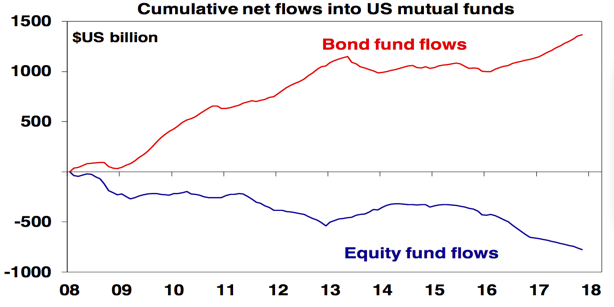
    • Thirdly, bonds remain over loved with a huge post-GFC inflow into bond funds in the US. (The same picture applies if ETFs are added in.) This leaves them vulnerable to a reversal if investor sentiment towards them turns really negative.

    Finally, central bank buying of bonds is starting to slow.

    For these reasons, it’s likely that the upswing in bond yields that began in the second half 2016, then paused last year and has since resumed, will continue.

    Reasons bond crash/perfect storm fears are overdone

    Naturally as falling inflation gives way to rising inflation and bond yields head higher many assume the worst – such as a
    rerun of the 1994 mini bond crash or some sort of “perfect storm” where inflation takes off but central banks are powerless to stop it because high debt levels mean they can’t raise rates much. While we see bond yields rising, it’s likely to be gradual (like over the last 18 months) and a perfect storm is unlikely:

    • Historically, bond yields have remained low after a long-term downswing for around several years as it takes a while for growth and inflation expectations to
      really turn back up. See the circled areas for US and Australian bond yields in the second chart in this note.
    • While the Fed is likely to raise interest rates more than
      currently expected by the US money market (we expect four hikes and the market is factoring in two or three), the process of rate hikes is still likely to remain gradual.
    • Central banks in Europe, Japan and Australia remain
      a fair way off starting to tighten so global monetary policy will remain easy for a while yet.
    • Global inflation is unlikely to take off too quickly given spare capacity in labour markets (in Europe and Australia) and technological innovation continuing to constrain inflation.Inflation expectations are anchored at low levels far better than was the case in, say, 1994.
    • Finally, the idea that high debt levels mean that central banks will either have to live with a debt crisis or much higher inflation is nonsense. High debt levels just mean that interest rate increases are more potent than they used to be – so when inflation does start to become an issue, they won’t have to raise interest rates as much to bring spending and inflation back under control than was the case in the past. In fact, high debt levels mean central banks have more power than in the past to control inflation.

    Implications for Investors?

    There are several implications from rising bond yields. Firstly, expect mediocre returns from sovereign bonds. Over the medium term, the return an investor will get from a bond will basically be driven by what the yield was when they invested. 10-year bond yields of 2.8% in Australia imply bond returns over the next decade of just 2.8% or so! And in the short term, rising bond yields will mean capital loses.

    Secondly, higher bond yields will impact share market returns as they make shares more expensive. Shares will be okay if the rise in bond yields is gradual and so can be offset by rising earnings – as we expect this year – but a large abrupt back up in bond yields will be more of a concern. In any case expect a more volatile ride in shares.

    Thirdly, defensive high-yield sectors of the share market are likely to remain under pressure. This includes real estate investment trusts and utilities that benefitted from falling bond yields. With bond yields trending up, REITs and utilities are likely to remain relative underperformers.

    Fourthly, when it comes to real assets like unlisted commercial property and unlisted infrastructure, the search for yield is likely to remain a return driver unless bond yields rise aggressively. Commercial property has lagged listed property in responding to the decline in bond yields and so
    the gap between commercial property yields and bond yields leaves commercial property still looking attractive. Heading into the GFC, it was only when bond yields rose above commercial property yields that commercial property prices started to struggle. We are a long way from that but as bond yields trend higher the valuation boost to commercial property and infrastructure returns will gradually fade.

    Concluding comment

    After 7 years of positive gains averaging higher than usual returns mixed with low volubility, it looks like a change is upon us. Volatility is the price we pay for gaining a higher return. Now with interest rates slowly increasing, we can expect to see more volatility moving forward. The main point is don’t freak out! It’s normal. I’ve been advising for 30 years now and seen this many times before. As unpleasant as it can be to see your investments go up and down on a weekly basis, this is completely normal – because this is what financial markets just do. The key takeaway is don’t panic, and in fact it may be an advantage to go and buy assets for cheaper. Personally, I’ve been topping up my own super and investments, taking advantage of lower prices. So if you’re still freaking out after reading all this, I urge you to call your Financial Planner and see what strategy you have in place to manage this. A well-managed, well diversified and well advised strategy is the key.

    That’s our job. 2018 here we go!

    Bill Bracey – FChFP | Principal Sydney Financial Planning
    Authorised Representative Charter Financial Planning


    Do you still have some questions?

    If you want to discuss your investment strategy or impacts of current trends with one of our advisors. Call us to arrange an appointment on 02 9328 0876.


    This article was prepared by Dr Shane Oliver. Dr Shane Oliver, Head of Investment Strategy and Economics and Chief Economist at AMP Capital is responsible for AMP Capital’s diversified investment funds. He also provides economic forecasts and analysis of key variables and issues affecting, or likely to affect, all asset markets.

    Important note: While every care has been taken in the preparation of this document, AMP Capital Investors Limited (ABN 59 001 777 591, AFSL 232497) and AMP Capital Funds Management Limited (ABN 15 159 557 721, AFSL 426455) make no representations or warranties as to the accuracy or completeness of any statement in it including, without limitation, any forecasts. Past performance is not a reliable indicator of future performance. This document has been prepared for the purpose of providing general information, without taking account of any particular investor’s objectives, financial situation or needs. An investor should, before making any investment decisions, consider the appropriateness of the information in this document, and seek professional advice, having regard to the investor’s objectives, financial situation and needs. This document is solely for the use of the party to whom it is provided.

    General Disclaimer: This article contains information that is general in nature. It does not take into account the objectives, financial situation or needs of any particular person. You need to consider your financial situation and needs before making any decisions based on this information. Please seek personal financial advice prior to acting on this information.

    The Australian Economy

    The Australian economy – five reasons growth will continue

    The Australian Economy

  • There is good reason to expect growth to continue and pick up a bit: the drag from falling mining investment is nearly over,non-mining investment is turning up, public investment is strong, trade should add to growth and profits are rising. But growth is likely to be constrained to just below 3% this year and underlying inflation is likely to remain low.
  • We don’t expect the RBA to start raising rates until 2019 (we were looking for a hike late this year). Australian shares are likely to move higher by year end, but to continue underperforming global shares.
  • Growth just muddling along

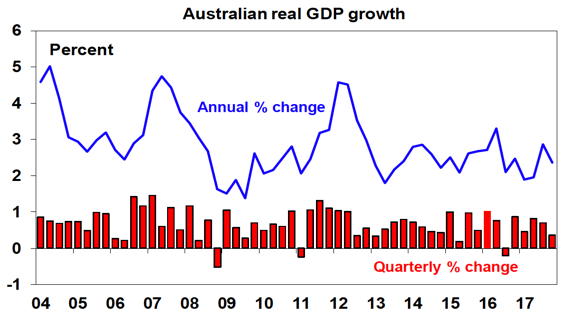
    For the last few years the Australian economy has been meandering between 2-3% growth. This remained the case through last year with December quarter GDP up just 0.4%, and annual growth of 2.4% as a bounce a year ago dropped out. In the quarter growth was helped by consumer spending and public investment but soft housing and business investment and a large detraction from net exports weighed on growth.

    GDP Growth

    Source: Global Financial Data, AMP Capital

    Australia continues to defy recession calls. Against this, economic growth is well below potential, with per capita growth running at just 0.8% year on year, which is below that in most major countries.

    The usual worry list

    Global threats aside, Australia’s worry list is well known:

    • The solid contribution to growth from housing construction seen over 2013-16 has faded and building approvals are off their highs.
    • Average house prices have started to edge down, with fears of a deeper crash. But in the absence of a stronger supply surge, the Reserve Bank of Australia (RBA) making a mistake and raising rates too high and/or unemployment surging, our view remains that price declines in Sydney and Melbourne will be limited to 5-10% and other cities face a more positive outlook.
    • The outlook for consumer spending is constrained and uncertain given record low wages growth, high levels of underemployment and slowing wealth gains. Consumers have been running down their savings rate helped by rising wealth (to now just 2.7%), but this is unlikely to continue as property prices in Sydney and Melbourne slow.
    • Mining investment is still falling with investment plans pointing to roughly 15% falls this financial year and next.
    • The Australian dollar at around $US0.78 is up 12% from its 2015 low and risks threatening growth in trade-exposed sectors like tourism, agriculture and manufacturing.
    • Underlying inflation is too low with a fall in inflationary expectations, making it harder to get wages growth up and with the stronger $A not helping.
    • Our political leaders seem collectively unable to undertake productivity-enhancing economic reforms. And it’s unlikely this will change any time soon which is a concern with productivity falling 0.8% through 2017.


    Five reasons why growth will be okay

    These drags are nothing new. We continue to see five reasons why recession will be avoided, and growth will be okay:


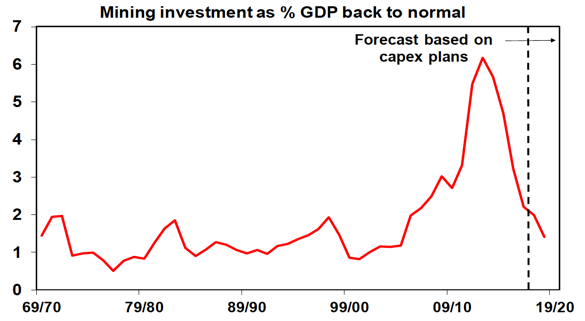
    • First, the drag from falling mining investment is nearly over. Mining investment peaked at nearly 7% of GDP five years ago and has since been falling, knocking around 1.5% pa from GDP growth. At around 2% of GDP now, its growth drag has fallen to around 0.3% pa and it’s near the bottom.

    Mining Investing

    Source: ABS, AMP Capital


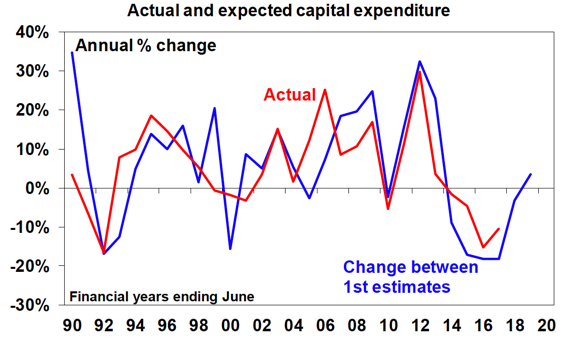
    AU Expected Capital Expenditure

    Source: ABS, AMP Capital

    • Second, non-mining investment is now rising. Comparing corporate investment plans for this financial year with those made a year ago points to a decline in business investment this year of around 3% (see next chart) and a similar sized rise in 2018-19. But this is the best it’s been since 2013 & once mining investment is excluded this turns into an 8% gain for non mining investment in both years.

    • Third, public investment is rising strongly, reflecting state infrastructure spending.
    • Fourth, net exports are likely to add to growth as the completion of resources projects and strong global demand boosts resources export volumes and services sectors like tourism and higher education remain strong.
    • Finally, profits for listed companies are rising. This is a positive for investment.

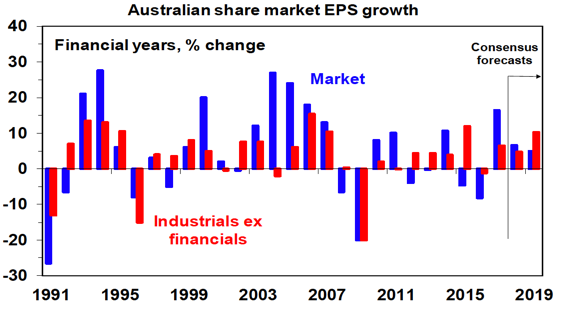
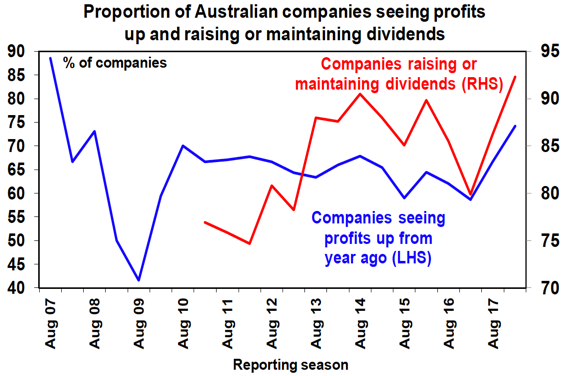
    While profit growth has slowed from 16% in 2016-17 to around 7% now as the 2016-17 surge in commodity prices dropped out, more companies (74%) are seeing profit gains than at any time since before the GFC. 92% of Australian companies either raised or maintained their dividends in the most recent reporting season indicating a high degree of confidence in the earnings and growth outlook.

    AU Share & EPS Growth

    Source: ABS, AMP Capital


    AU Company Profits

    Source: ABS, AMP Capital

    So while housing is slowing and consumer spending is constrained (with January retail sales data suggesting consumer spending this year is off to a weak start), a lessening drag from mining investment and stronger non-mining investment (both public and private) along with solid export growth are likely to keep the economy growing and see a pick-up in growth to between 2.5% and 3%. However, growth is likely to remain below Reserve Bank of Australia expectations for a pick up to 3.25% this year and next. As a result, and with wages growth and inflation likely to remain low for a while yet we have pushed out the expected timing for the first RBA rate hike from late this year into February next year.


    Implications for investors

    There are several implications for Australian investors. First, continuing growth should provide a reasonable backdrop for Australian growth assets. Australian shares are vulnerable to the concerns impacting global markets – particularly US inflation and Fed fears and worries about a trade war – but we remain of the view that the ASX 200 will be higher by year end.

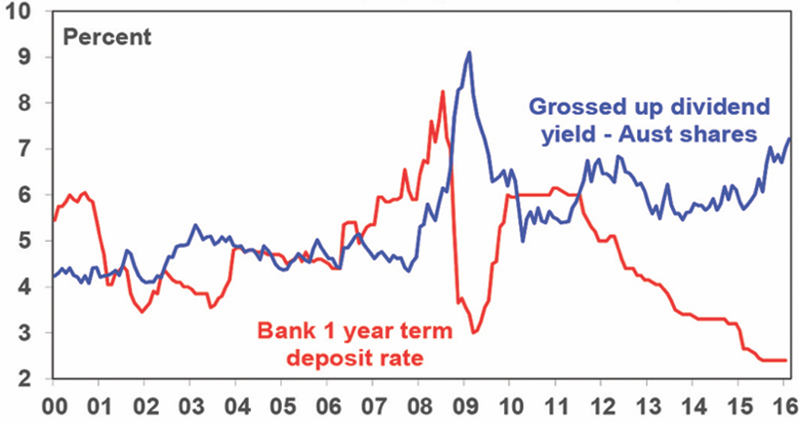
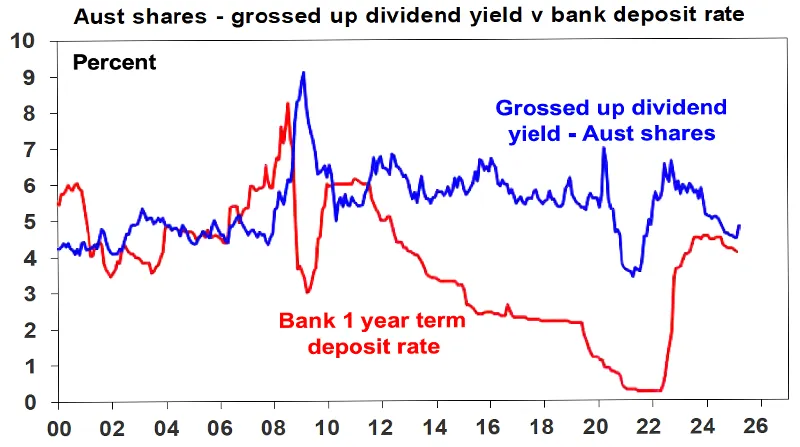
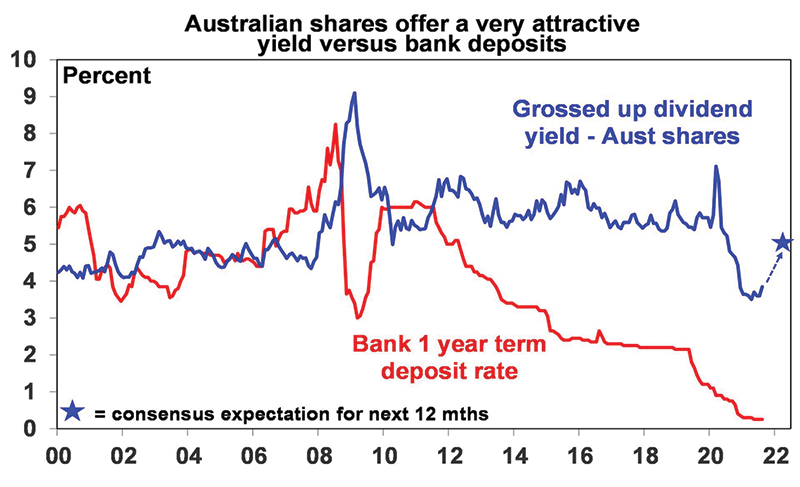
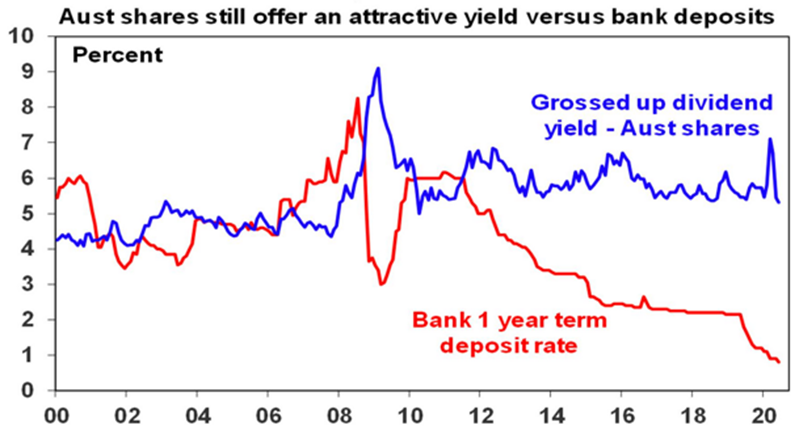
    Second, bank deposits are likely to provide poor returns for investors for a while yet. The issue for investors in bank deposits is to think about what they are really after. If it’s peace of mind regarding the capital value of their investment, then maybe stay put. But if it’s a decent income yield then there are plenty of alternatives providing superior yield. The yield gap between Australian shares and bank deposits remains wide.

    Third, while Australian shares are great for income, global shares are likely to remain outperformers for capital growth. Global shares have been outperforming Australian shares since October 2009 and over the last five years have outperformed in local currency terms by nearly 4% pa and by 9% pa in Australian dollar terms. This reflects relatively tighter monetary policy in Australia, the commodity slump, the lagged impact of the rise in the $A above parity in 2010, and a mean reversion of the 2000 to 2009 outperformance by Australian shares. While earnings growth in Australia is around 7%, it’s double this globally, suggesting the relative underperformance of Australian shares in terms of capital growth may go for a while yet. Which all argues for a continuing decent exposure to global shares.


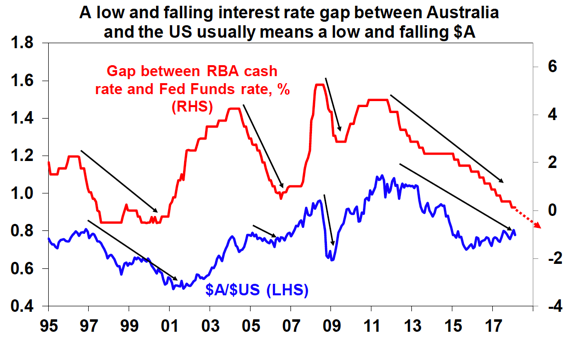
    Finally, the risks remain on the downside for the $A. With the RBA comfortably on hold and the Fed set to raise rates later this month with four hikes this year in total, the interest rate gap between Australia and the US will go negative and keep falling this year. Historically this has been associated with falls in the value of the Australian dollar. Fears of a global trade war may add to this risk given Australia’s relatively high trade exposure. All of which is another reason to maintain a continuing decent exposure to global shares but on an unhedged basis.

    Low Falling Interest

    Source: Bloomberg, AMP Capital

    Concluding comment

    Although there now seems more volatility, and volatility may become the norm for a while, there are lots of positives in Australia and for Financial Markets to go up, we need economic growth.

    This seems to be happening, so as per my last newsletter, there are still more positives than negatives, but – be prepared for volatility, that’s how you build wealth.

    Bill Bracey – FChFP | Principal Sydney Financial Planning
    Authorised Representative Charter Financial Planning


    Do you need some help with your investment strategy?

    Maybe it’s time to review where your portfolio with the help of a professional. Why not call us to arrange an appointment with one of our advisors on 02 9328 0876.


    This article was prepared by Dr Shane Oliver. Dr Shane Oliver, Head of Investment Strategy and Economics and Chief Economist at AMP Capital is responsible for AMP Capital’s diversified investment funds. He also provides economic forecasts and analysis of key variables and issues affecting, or likely to affect, all asset markets.

    Important note: While every care has been taken in the preparation of this document, AMP Capital Investors Limited (ABN 59 001 777 591, AFSL 232497) and AMP Capital Funds Management Limited (ABN 15 159 557 721, AFSL 426455) make no representations or warranties as to the accuracy or completeness of any statement in it including, without limitation, any forecasts. Past performance is not a reliable indicator of future performance. This document has been prepared for the purpose of providing general information, without taking account of any particular investor’s objectives, financial situation or needs. An investor should, before making any investment decisions, consider the appropriateness of the information in this document, and seek professional advice, having regard to the investor’s objectives, financial situation and needs. This document is solely for the use of the party to whom it is provided.

    General Disclaimer: This article contains information that is general in nature. It does not take into account the objectives, financial situation or needs of any particular person. You need to consider your financial situation and needs before making any decisions based on this information. Please seek personal financial advice prior to acting on this information.
    Australian House Prices

    Will Australian House Prices Crash?

    Australian House Prices

    This year I’m using help from a friend, Dr Shane Oliver, someone who I highly respect and been following for over 20 years. He’s also an individual with a great track record. Generally people who last in this industry get it right a lot. Clients put their money with winners not losers. I would highly recommend you read this article as I think he’s got it right.

    Key points:

    • Talk of a property crash is likely to ramp up again with signs that the Sydney and Melbourne property markets are cooling. But the Australian property market is a lot more complicated than the crash calls suggest.
    • We continue to expect a 5-10% downswing in Sydney and Melbourne property prices but a crash is unlikely and other capital cities will perform better.
    • It remains a time for property investors to exercise caution and focus on laggard or higher-yielding markets.

    Introduction

    A common narrative on the Australian housing market is that it’s in a giant speculative bubble propelled by tax breaks, low interest rates and “liar loans” that have led to massive mortgage stress and that it’s all about to go bust, bringing down the banks and the economy with it. Recent signs of price falls – notably in Sydney – have added interest to such a view.

    The trouble is we have been hearing the same for years. Calls for a property crash have been pumped out repeatedly since early last decade. In 2004, The Economist magazine described Australia as “America’s ugly sister” thanks in part to a “borrowing binge” and soaring property prices. At the time, the OECD estimated Australian housing was 51.8% overvalued. Property crash calls were wheeled out repeatedly after the Global Financial Crisis (GFC) with one commentator losing a high-profile bet that prices could fall up to 40% and having to walk to the summit of Mount Kosciuszko as a result. In 2010, a US newspaper, The Philadelphia Trumpet, warned “Pay close attention Australia. Los Angelification (referring to a 40% slump in LA home prices around the GFC) is coming to a city near you.” At the same time, a US fund manager was labelling Australian housing as a “time bomb”. Similar calls were made last year by a hedge fund researcher and a hedge fund: “The Australian property market is on the verge of blowing up on a spectacular scale…The feed-through effects will be immense… the economy will go into recession.” Over the years these crash calls have even made it on to 60 Minutes and Four Corners.

    The basic facts on Australian property are well known:

    • It’s expensive relative to income, rents, its long-term trend (see the next chart) and by global standards.
    • Affordability is poor – price to income ratios are very high and it’s a lot harder to save a sufficient deposit.
    • The surge in prices has seen a surge in debt that has taken our household debt to income ratio to the high end of OECD countries, which exposes Australia to financial instability should households decide to cut their level of debt.

    Australian house prices

    Source: ABS, AMP Capital


    These things arguably make residential property Australia’s Achilles heel. But as I have learned over the last 15 years, it’s a lot more complicated than the crash calls suggest.

    First, it’s dangerous to generalise

    While it’s common to refer to “the Australian property market”, only Sydney and Melbourne have seen sustained and rapid price gains in recent years. On CoreLogic data over the last five years dwelling prices have risen at an average annualised rate of 11.4% per annum (pa) in Sydney and 9.4% pa in Melbourne but prices in Brisbane, Adelaide, Hobart and Canberra have risen by a benign 3 to 5% pa and prices have fallen in Perth and Darwin.

    graph - capital city property prices

    Source: CoreLogic, AMP Capital

    Australian cites basically swing around the national average with prices in one or two cities surging for a few years and then underperforming as poor affordability forces demand into other cities. This can be seen in the next chart with Sydney leading the cycle over the last 20 years and Perth lagging.


    Second, supply has not kept up with demand

    Thanks mostly to an increase in net immigration, population growth since mid-last decade has averaged 368,000 people pa compared to 218,000 pa over the decade to 2005, which requires roughly an extra 55,000 homes per year.

    Unfortunately, the supply of dwellings did not keep pace with the surge in population growth (see the next chart) so a massive shortfall built up driving high home prices. Thanks to the recent surge in unit supply this is now being worked off. But there is no broad based oversupply problem.

    Consistent with this, average capital city vacancy rates are around long-term average levels, are low in Sydney and are falling in Melbourne (helped by surging population growth).


    home construction not keeping up

    Source: ABS, AMP Capital

    Vacancy rates are reasonable

    Source: Real Estate Institute of Australia, AMP Capital


    Third, lending standards have been improving

    For all the talk about “liar loans”, Australia has not seen anything like the deterioration in lending standards other countries saw prior to the GFC. Interest-only loans had been growing excessively but are not comparable to so-called NINJA (no income, no job, no asset) sub-prime and low-doc loans that surged in the US prior to the GFC. Interest-only and high loan to valuation loans have also been falling lately. And much of the increase in debt has gone to older, wealthier Australians, who are better able to service their loans.

    sfp e4 graph 5

    Source: APRA, AMP Capital


    Yes, I know various surveys report high levels of mortgage stress. But we heard the same continuously last decade from the Fujitsu Mortgage Stress Survey and yet there was no crash. By contrast, RBA research shows that while getting into the housing market is hard “those who make it are doing ok” and bad debts and arrears are low. Finally, debt interest payments relative to income are running around 30% below 2008 peak levels thanks to low interest rates. Sure, rates will eventually start to rise again but they will need to rise by around 2% to take the debt interest to income ratio back to the 2008 high.


    Fourth, the importance of tax breaks is exaggerated

    A range of additional factors like tax breaks and foreign buyers have played a role but their importance is often exaggerated relative to the supply shortfall. While there is a case to reduce the capital gains tax discount (to remove a distortion in the tax system), negative gearing has long been a feature of the Australian tax system and if it’s the main driver of home price increases as some claim then what happened in Perth and Darwin? Similarly, foreign buying has been concentrated in certain areas and so cannot explain high prices generally, particularly with foreign buying restricted to new properties.

    Finally, the conditions for a crash are not in place

    To get a housing crash – say a 20% average fall or more – we probably need much higher unemployment, much higher interest rates and/or a big oversupply. But it’s hard to see these.

      • There is no sign of recession and jobs data remains strong.
      • The RBA is likely to start raising interest rates next year, but it knows households are now moresensitive to higher rates & will move only verygradually – like in the US – and won’t hike by more than it needs to to keep inflation on target.
      • Property oversupply will become a risk if the current construction boom continues for several years but with approvals to build new homes slowing this looksunlikely.

    Don’t get me wrong, none of this is to say that excessive house prices and debt levels are not posing a risk for Australia. But it’s a lot more complicated than commonly portrayed.

    So where are we now?

    That said, we continue to expect a slowing in the Sydney and Melbourne property markets, with evidence mounting that APRA’s measures to slow lending to investors and interest-only buyers (along with other measures, eg to slow foreign buying) are impacting. This is particularly the case in Sydney where price growth has stalled and auction clearance rates have fallen to near 60%. Expect prices to fall 5-10% (maybe less in Melbourne given strong population growth) over the next two years. This is like what occurred around 2005, 2008-09 & 2012.

    sfp e4 graph 6

    Source: CoreLogic, AMP Capital


    By contrast, Perth and Darwin home prices are likely close to the bottom as mining investment is near the bottom. Hobart and increasingly Brisbane and Adelaide are likely to benefit from flow on or “refugee” demand from Sydney and Melbourne having lagged for many years.

    Implications for investors

    Housing has a long-term role to play in investment portfolios, but the combination of the strong gains in the last few years in Sydney and Melbourne, vulnerabilities around high household debt levels as official interest rates eventually start to rise and low net rental yields mean investors need to be careful. Sydney and Melbourne are least attractive in the short term. Best to focus on those cities and regional areas that have been left behind and where rental yields are higher. So there you have it. Let’s see if we got it right next year.

    Concluding comment

    So there you have it. Let’s see if we got it right next year.


    Bill Bracey FChFP
    Principal Sydney Financial Planning
    Authorised Representative Charter Financial Planning


    Still have some questions?

    If you want to discuss any cocerns or implications on your property investing with one of our advisors. Call us to arrange an appointment on 02 9328 0876.


    This main article was prepared by Dr Shane Oliver. Dr Shane Oliver, Head of Investment Strategy and Economics and Chief Economist at AMP Capital is responsible for AMP Capital’s diversified investment funds. He also provides economic forecasts and analysis of key variables and issues affecting, or likely to affect, all asset markets.

    General Disclaimer: This article contains information that is general in nature. It does not take into account the objectives, financial situation or needs of any particular person. You need to consider your financial situation and needs before making any decisions based on this information. Please seek personal financial advice prior to acting on this information.
    Important note: While every care has been taken in the preparation of this document, AMP Capital Investors Limited (ABN 59 001 777 591, AFSL 232497) and AMP Capital Funds Management Limited (ABN 15 159 557 721, AFSL 426455) make no representations or warranties as to the accuracy or completeness of any statement in it including, without limitation, any forecasts. Past performance is not a reliable indicator of future performance. This document has been prepared for the purpose of providing general information, without taking account of any particular investor’s objectives, financial situation or needs. An investor should, before making any investment decisions, consider the appropriateness of the information in this document, and seek professional advice, having regard to the investor’s objectives, financial situation and needs. This document is solely for the use of the party to whom it is provided.

    Market update

    From goldilocks to taper tantrum 2.0

    Market update

  • However, its unlikely to derail the bull market in shares as any move to tightening reflects stronger growth (and profits), low inflation pressures will keep monetary tightening very gradual (as we have seen in the US) and monetary policy is a long way from being tight
  • An RBA tightening remains a long way away.
  • Introduction

    For much of this year, there has been a surprising divergence between share and bond markets with shares up in response to improving growth and bond yields down in response to weak inflation. Some feared that either bonds or equities had it wrong, but in a way it seemed like Goldilocks all over again – not too hot (ie benign inflation) but not too cold (ie good growth). However, the past week or so has seen a sharp back up in bond yields – mainly in response to several central banks warning of an eventual tightening in monetary policy. Over the last week or so, 10 year bond yields rose 0.2-0.3% in the US, UK, Germany and Australia. This may not seem a lot but when bond yields are this low it actually is – German bond yields nearly doubled. This caused a bit of a wobble in share markets.

    The big question is: are we seeing a resumption of the rising trend in bond yields that got underway last year and what does this mean for yield sensitive investments and shares? Since central banks are critical in all of this we’ll start there.

    Central banks turn a (little) bit more hawkish

     The action over the last week or so was largely driven by a somewhat more hawkish tone from key central bankers:

    • Fed Chair Janet Yellen is really continuing to reiterate that it’s appropriate to raise interest rates gradually. Nothing new there but comments by Yellen and other Fed officials referring to strength in share markets indicate that they don’t see share markets as a constraint to raising rates again.
    • More importantly, ECB President Draghi noted that “the threat of deflation is gone and reflationary forces are at play” and “political winds are becoming tailwinds” (presumably a reference to President Macron’s pro-reform and pro-Europe election victory in France, in particular) and that monetary policy will need to adjust once inflation rises.
    • Bank of England Governor Mark Carney indicated that “some removal of monetary stimulus is likely to become necessary” if risks continue to diminish.
    • Bank of Canada Governor Stephen Poloz repeated that rate cuts have done their job and that “we need to be at least considering that whole situation [low interest rates] now that the excess capacity is being used up”.

    The last three basically signalled that thought is being given to an exit from ultra easy monetary policy. In the face of such seemingly synchronised comments, it’s little wonder bond yields rose. Perhaps the most significant was the shift in tone by Mario Draghi – with overtones of former Fed Chair Ben Bernanke’s indication in mid-2013 that the Fed will start phasing down (or tapering) its quantitative easing (bond buying) program. This saw bond yields back up and shares fall around 8% and became known as the “taper tantrum”. So maybe the current episode is “taper tantrum 2.0”.

    Bonds and shares are a bit vulnerable to a correction

    The rally in bonds this year had arguably gone a bit too far and positioning had become excessively long and complacent leaving them vulnerable to a rebound in yield that we are now seeing. Similarly, we have been concerned for some time that global shares are vulnerable to a correction given solid gains in most markets for the year to date and high levels of short-term investor optimism and complacency on some measures. As we have seen over the last week, worries about central bank tightening have provided a potential trigger. And this could have further to go if bond yields continue to back up sharply.

    Three reasons not to be too fussed

    However, there are several reasons not to be too concerned.

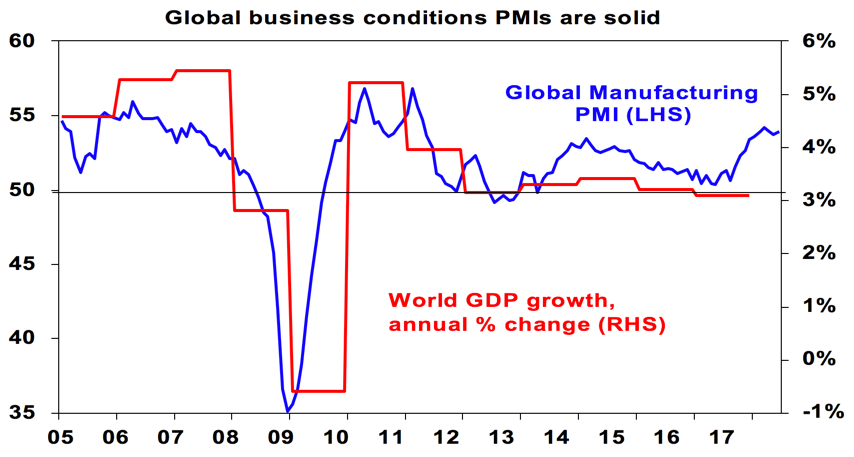
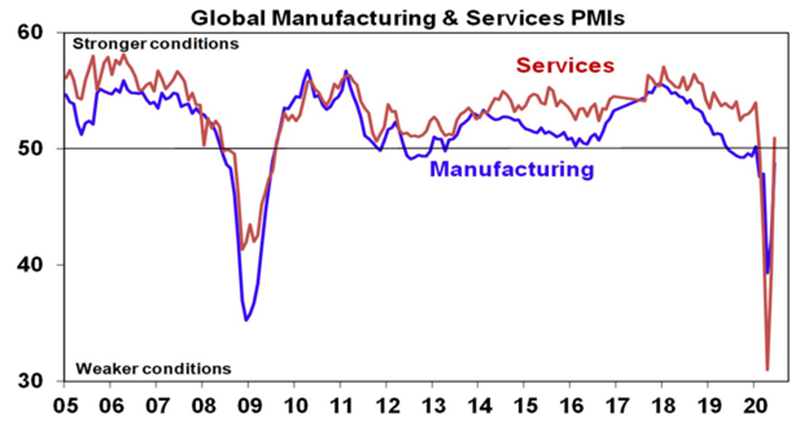
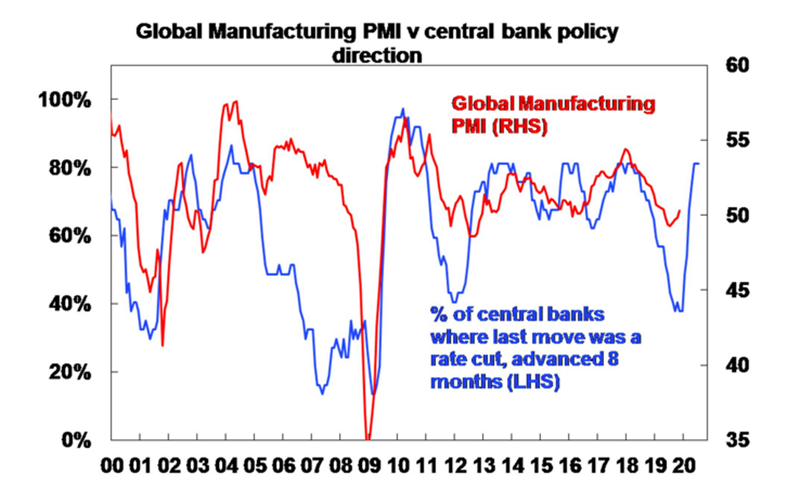
    First, the shift in the tone of central bank commentary just matches the improvement seen in global growth and the receding risks of deflation, so it is actually good news. Global business conditions indicators (or PMIs) are strong (next chart), the OECD’s leading economic indicators have turned up, jobs markets have tightened and global trade is up.

    diagram global 1

    Source: Bloomberg, AMP Capital

    diagram eurozone 2

    Source: Bloomberg, AMP Capital

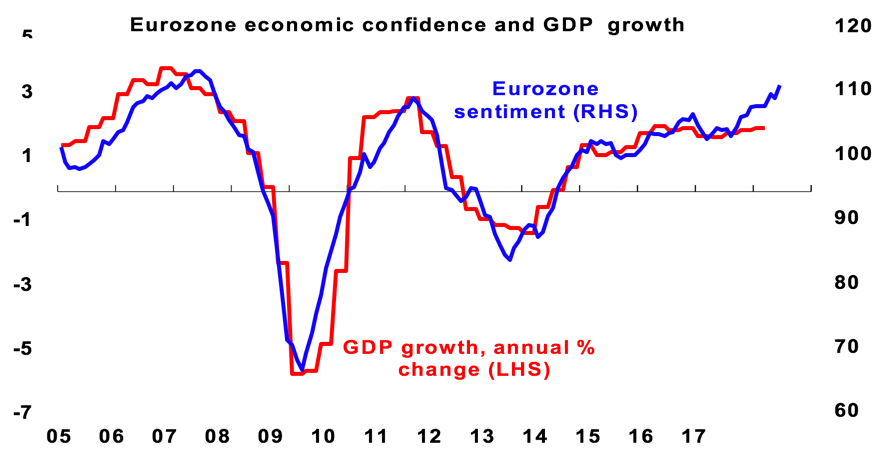
    In particular, Eurozone economic confidence readings – both for consumers and business – are strong and at their highest in nearly a decade (see the next chart). So it makes sense for Mario Draghi to sound a bit more upbeat. If growth relapses, easy money exit talk will pause or fade too – much as we have seen in the US at various points over the last four years.


    Second, with underlying inflationary pressures remaining weak, monetary tightening is likely to remain very gradual. There are two main forces serving to keep inflation down:

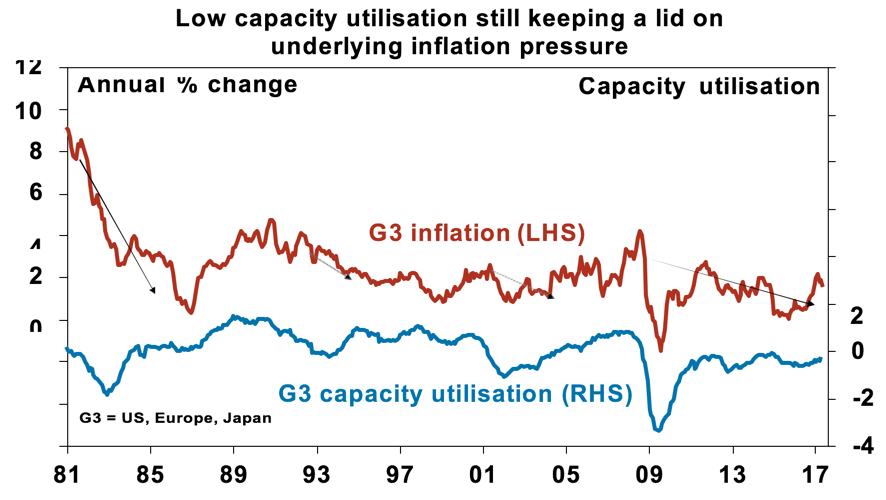
    • Because of years of below-trend growth globally, spare capacity remains and this will constrain core inflation. While headline inflation bounced over the last year, this was largely due to the bounce in energy prices, which has not been sustained, whereas core inflation remains very subdued (at 1.4% year on year in the US, 1.1% in the Eurozone and zero in Japan). This partly reflects continuing spare capacity, which limits pricing power. As can be seen in the chart below whenever the capacity utilisation measure is around zero or below inflation tends to fall or remain soft. Of course this is a cyclical factor that will eventually fade.

    diagram g3 3

    Source: Bloomberg, AMP Capital

     
    • At the same time structural factors continue to bear down on inflation including technological innovation – eg, artificial intelligence and robots hollowing out the middle class and along with a rising services sector weighing on wages growth, Amazon reaping havoc on retailer margins in the US and potentially soon too in Australia, and Verizon in the US moving to unlimited mobile data plans (won’t this kill the need for the NBN for most households?).

    As a result of these cyclical and structural factors, corporate pricing power and wages growth remains weak just about everywhere. The lack of significant inflation pressure will keep central banks gradual as we have seen with the Fed over the last four years since the taper tantrum of 2013:

    • The Fed – while Janet Yellen does not appear to be too concerned about inflation running below target (its currently 1.4% against the Fed’s 2% target) because she believes that the tight US labour market will eventually drive higher wages growth and inflation, others at the Fed have expressed concern about the inflation undershoot and so a slowing in Fed rate hikes is possible (eg, no hike in September, hike in December). There is certainly nothing in what Yellen has said pointing to a faster tightening.
    • The ECB – Mario Draghi is right to warn policy will need to adjust once inflation rises. But at this stage there is little evidence of much tick up in underlying inflation in Europe. The total of unemployment and underemployment in the Eurozone at 18.5% is about 4 percentage points above where it was prior to the GFC acting as a huge constraint on wages growth. And political risk around Italy will slow Draghi from moving too quickly. Our view remains that the ECB will announce a slowing (or taper) in its quantitative easing program later this year (from €60bn a month to maybe €30bn a month for 2018) but that rate hikes are a way off.
    • The Bank of Japan – with inflation stuck at zero and the BoJ committing last September to continuing quantitative easing and a zero 10 year bond yield until inflation rises above 2%, it’s likely years from any exit from easy money.
    • RBA – while the drag from plunging mining investment is fading and the RBA remains upbeat, soft consumer spending, slowing housing investment, high underemployment and record low wages growth are likely to prevent a rate hike for at least a year or more. So we have seen no hawkish tilt from the RBA.

    Finally, even though global monetary policy has gradually tightened thanks to four Fed hikes over the last two years, it’s a very long way from tight levels that will bring the bull market in shares to an end. As such – barring an exogenous shock – this global growth cycle and bull market in shares will likely remain long and drawn out.

    Implications for investors

    At the time of the 2013 taper tantrum, there was much fear that an end to US money printing would lead to a major bear market, send bond yields sharply higher (as one source of bond buying dried up) and imperil the US and global economy. In the event it was a bit of a non-event as shares resumed their uptrend and the global economy continued to recover. The same is likely to be the case with the latest taper tantrum:

    • With inflationary pressures remaining weak and monetary tightening likely to remain gradual (and non-existent in many countries including Australia for some time) the uptrend in bond yields is likely to remain gradual too.
    • While shares remain vulnerable to a short-term correction (on easy money exit talk), with monetary tightening likely to remain gradual and dependent on a further improvement in growth it’s unlikely to become tight enough to cause a major bear market in shares any time soon.
    • The search for yield will likely continue but may fade in intensity as bond yields gradually rise. This probably means that, while listed bond proxies such as global real estate trusts and listed infrastructure may be constrained as they were initial beneficiaries of the search for yield, unlisted property and infrastructure have further to go.

    Exiting from ultra easy money not the end of the world

    Finally, for those who say that central banks can never exit money printing and zero interest rates – just look at the US! Over the last four years, the Fed has phased down and stopped money printing or bond buying, raised interest rates four times and announced that it will start allowing its bond holdings to run down by phasing down the rolling over of maturing bonds in its portfolio. Each of these moves have caused uncertainty but have not crashed the US bond market, shares or the economy. Other central banks are likely to follow the Fed model.


    Dr Shane Oliver
    Head of Investment Strategy and Chief Economist AMP Capital


    Important note: While every care has been taken in the preparation of this article, AMP Capital Investors Limited (ABN 59 001 777 591, AFSL 232497) and AMP Capital Funds Management Limited (ABN 15 159 557 721, AFSL 426455) makes no representations or warranties as to the accuracy or completeness of any statement in it including, without limitation, any forecasts. Past performance is not a reliable indicator of future performance. This article has been prepared for the purpose of providing general information, without taking account of any particular investor’s objectives, financial situation or needs. An investor should, before making any investment decisions, consider the appropriateness of the information in this article, and seek professional advice, having regard to the investor’s objectives, financial situation and needs. This article is solely for the use of the party to whom it is provided.

    54.2 million worries

    54.2 million worries – five ways to help manage the noise

    54.2 million worries

    To be sure these risks are real and in our view some combination of them could drive a short term correction in shares, but we don’t see them derailing the longer term rising trend in shares.

    More fundamentally there seems to be a never ending worry list which is receiving an ever higher prominence as the information age enables the ready and rapid dissemination of news, opinion and noise. The danger is that this is making us all worse investors as we lurch from one worry to the next resulting in ever shorter investment horizons in the process. The trick is how to manage the noise to avoid this.

    Why the worries might seem more worrying?

    The problem for investors is that the worry list seems more worrying than it used to be. Yes, there is a fundamental element: the nominal return potential from most asset classes are lower than they used to be, global growth is slower than it was pre GFC and the world seems awash in geopolitical risks.

    But there is a huge psychological aspect to this that is combining with the increasing availability of information, and intensifying competition amongst various forms of media for clicks, that is magnifying perceptions around various worries.

    Firstly, people suffer from a behavioural trait that has become known as “loss aversion” in that a loss in financial wealth is felt much more distastefully than the beneficial impact of the same sized gain. This probably reflects the evolution of the human brain in the Pleistocene age when the trick was to avoid being eaten by a sabre toothed tiger or squashed by a wholly mammoth. This leaves us biased to be more risk averse and it also leaves us more predisposed to bad news stories as opposed to good news stories. Flowing from this, prognosticators of gloom are more likely to be revered as deep thinkers than are optimists. As John Stuart Mill noted “I have observed that not the man who hopes when others despair, but the man who despairs when others hope, is admired by a large class of persons as a sage.” In other words bad news and doom and gloom find a more ready market than good news or balanced commentary as it appeals to our instinct to look for risks around the corner. Hence the old saying “bad new sells”.

    Secondly, we are now exposed to more information than ever on both how our investments are going and everything else. On the one hand this is great – we can check facts, analyse things, sound informed easier than ever. But for the most part we have no way of weighing such information and no time to do so. So it becomes noise. This comes with a cost for investors. If we don’t have a process to filter it and focus on what matters we can simply suffer from information overload. This can be bad for investors as when faced with more (and often bad) news we can freeze up and make the wrong decisions with our investment as our natural “loss aversion” combines with what is called the “recency bias” that sees people give more wait to recent events which can see investors project recent bad news into the future and so sell after a fall. A 1997 study by US behavioural economist Richard Thaler and others showed that providing investors in an experiment “with frequent feedback about their [investment] outcome is likely to encourage their worst tendencies…More is not always better. The subjects with the most data did the worst in terms of money earned.”

    Thirdly, there is explosion in media outlets all competing for your eyes and ears. We are now bombarded with economic and financial news and opinions with 24/7 coverage by multiple web sites, subscription services, finance updates, dedicated TV and on line channels etc. And in competing for your attention, bad news and gloom naturally trumps good news and balanced commentary as “bad news sells.” So naturally it seems that the bad news is “badder” and the worries more worrying than ever.

    Google the words “financial crisis 2016” and you get 54.2 million search results with titles such as:

    • “the looming financial crisis nobody is talking about…”;
    • “the pieces are falling into place for another financial crisis”;
    • “7 signs of a US economic collapse in 2016”;
    • “coming financial collapse – 18 critical items you need to prepare, tomorrow may be too late”;
    • “beware the great 2016 financial crisis”;
    • “looking for economic crisis 2016? Find everything you need here”;
    • “Trouble with money? The Bible has answers for you”; and
    • The Illuminati (are those guys still around?) are supposedly behind the “global financial crisis 2016-2017”.

    The trouble is that there is no evidence that all this noise is making us better investors. Average returns are no higher than in the past. A concern is that the combination of a massive ramp up in 2 NOVEMBER 2016 EDITION 2 information combined with our natural inclination to zoom in on negative news is making us worse investors: more fearful, more jittery and more short term focussed.

    Nine keys for successful investing

    There are nine keys to successful investing (see http://bit. ly/1JmaIDU): 1. Make the most of the power of compound interest; 2. Be aware that there is always a cycle; 3. Invest for the long term; 4. Diversify; 5. Turn down the noise; 6. Buy low and sell high; 7. Beware the crowd at extremes; 8. Focus on investments offering sustainable cash flow; and 9. Seek advice. But of all of these, number 5 – or turn down the noise on the information flow around us, is critical – if you can’t do that there is no point getting advice, you won’t be a long term investor, you won’t get the benefit of compound interest, you will be sucked into selling low in every cyclical downturn, etc.

    Five ways to manage the perpetual worry list

    So here are five suggestions as to how to manage the worry list and turn down the noise:

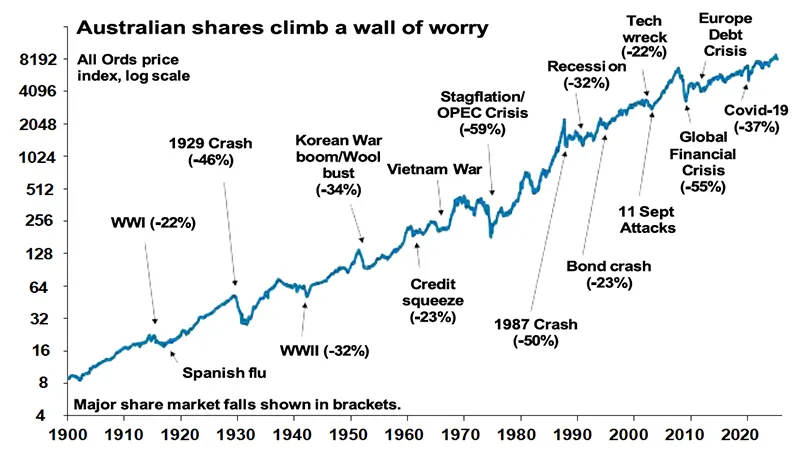
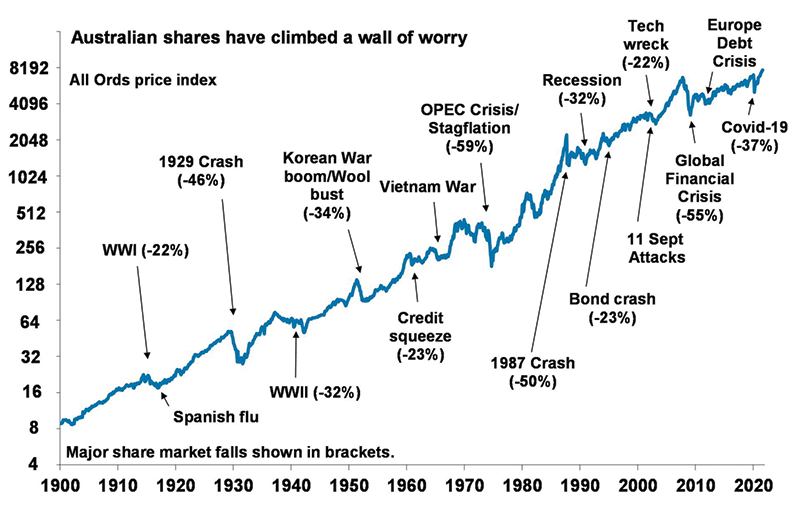
    Firstly, put the latest worry list in context. Remember that there has always been an endless stream of worries. Here’s a list of the worries of the last four years that have weighed on markets: the fiscal cliff; Cyprus; Fed taper talk; the US Government shutdown and debt ceiling debacle; Ukraine; IS terror threat; Ebola; deflation; Greece; China worries; Australian recession, property & banks; Brazil and Russia in recession; energy producers defaulting; manufacturing slump; Trump; worries about the Fed raising rates; soft starts to the year for US growth; falling profits; Brexit and contagion to the rest of Europe; North Korea; messy Australian election result; and South China Sea tensions.

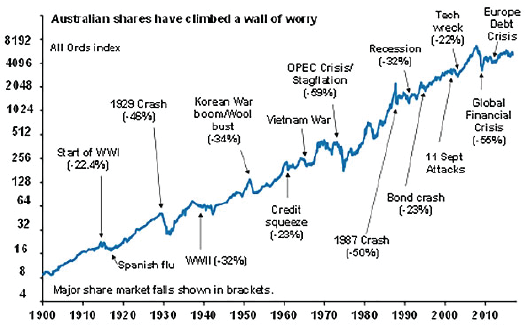
    Australian shares have climbed a wall of worry

    sfp e2 graph 1

    Source: ASX, AMP Capital


    Yet despite this extensive worry list investment returns have actually been okay with average balanced growth superannuation funds returning 9.6% pa over the last four years and 7.4% pa over the last three years after taxes and fees.

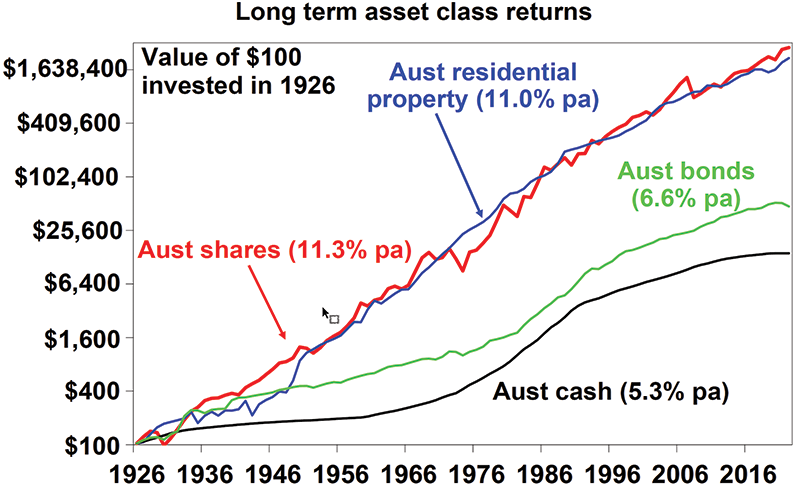
    The global economy has had plenty of worries over the last century, but it got over them with Australian shares returning 11.6% pa since 1900 and US shares 9.8%pa.

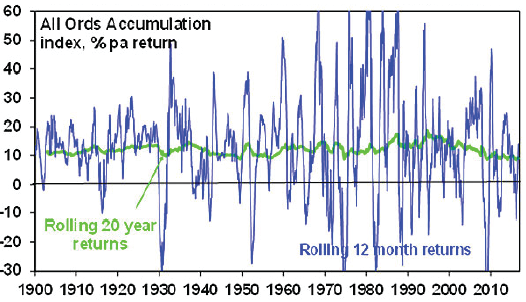
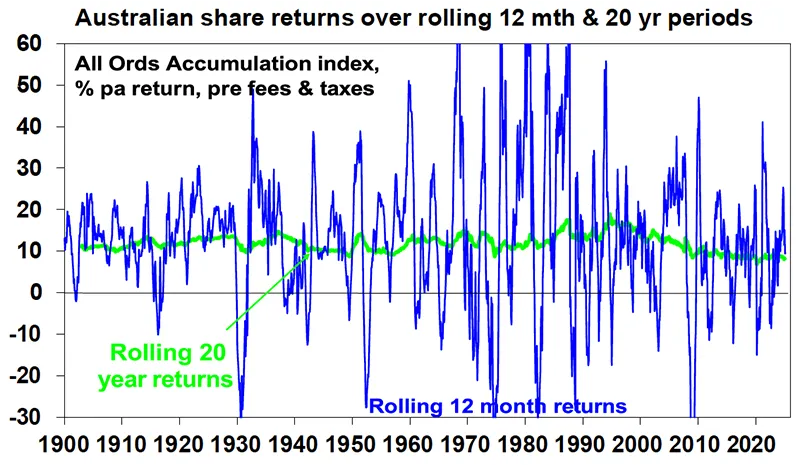
    Secondly, recognise how markets work. A diverse portfolio of shares returns more than bonds and cash long term because it can lose money short term. As can be seen in the chart below while the share market can be highly volatile in the short term it has strong returns over all rolling 20 year periods. And invariably the short term volatility is driven by “loss averse” investors projecting recent events into the future and so causing shares to periodically from long term fundamental value. So volatility driven by worries and bad news is normal. It’s the price investors pay for higher longer term returns.

    Australian share returns over rolling 12 mth and 20 yr periods

    sfp e2 graph 2

    Source: Global Financial Data, AMP Capital

    Thirdly, find a way to filter news so that it doesn’t distort your investment decisions. For example this could involve building your own investment process or choosing 1-3 good investment subscription services and relying on them. Or simpler still, agreeing to a long term strategy with a financial planner and sticking to it. Ultimately it all depends on how much you want to be involved in managing your investments.


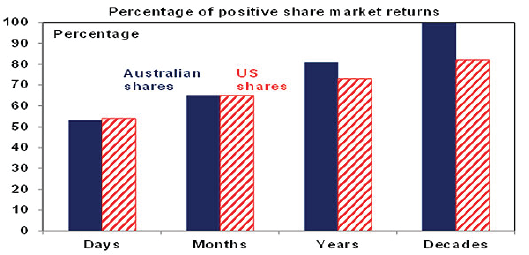
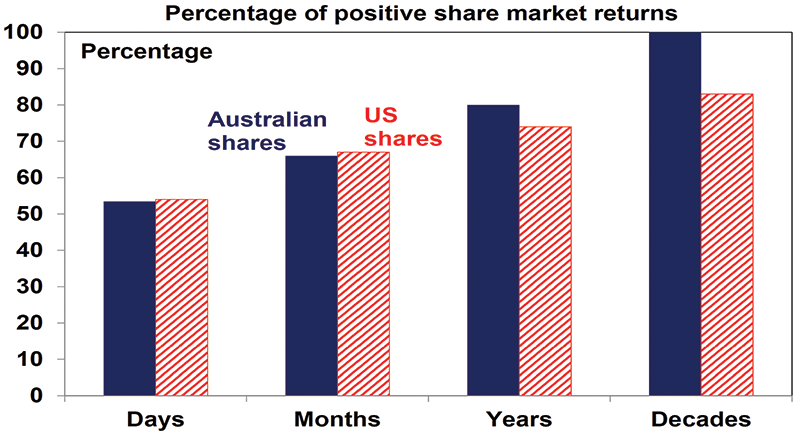
    Fourthly, make a conscious effort not to check your investments so much. If you track the daily movements in the Australian All Ords price index, measured over the last twenty years it has been down almost as much as it has been up. See the next chart. It’s little different for the US S&P 500. So day to day it’s pretty much a coin toss as to whether you will get good news or bad. By contrast if you only look at how the share market has gone each month and allow for dividends the historical experience tells us you will only get bad news 35% of the time. Looking only on a calendar year basis, data back to 1900 indicates that the probability of bad news in the form of a loss slides further to just 19% for Australian shares and 27% for US shares. And if you can stretch it out to once a decade, again since 1900, positive returns have been seen 100% of the time for Australian shares and 82% of the time for US shares.

    Percentage of positive share market returns

    sfp e2 graph 3

    Data from 1995 and 1900. Source: Global Financial Data, AMP Capital

    The less frequently you look the less you will be disappointed and so the lower the chance that a bout of “loss aversion” will be triggered which leads you to sell at the wrong time. Try to avoid looking at market updates so regularly and even consider removing related apps from your smart phones & tablets.

    Finally, look for opportunities that bad news and investor worries throw up. Always remember that periods of share market turbulence after bad news throw up opportunities for investors as such periods push shares into cheap territory.


    About the Author Dr Shane Oliver, Head of Investment Strategy and Economics and Chief Economist at AMP Capital is responsible for AMP Capital’s diversified investment funds. He also provides economic forecasts and analysis of key variables and issues affecting, or likely to affect, all asset markets.

    Concluding comment

    This article written by Dr Shane Oliver clearly demonstrates how we should act in the face of fear.

    I’m now aged 54. I started investing in the share market when I was 12 and at that age thought I knew what I was doing. By the time I was 24 I was certain I knew what I was doing when it came to investing. Then came October 1987 which convinced me I didn’t know what I was doing.

    So after the crash of 1987, some 29 years ago I started my path in Financial Planning. And, after watching and learning the markets for over 41 years, I can now confidently say I’m in a position to give great advice.

    In short, you need to work with an experienced Planner who can sift through all the bullshit and clearly explain what is going on and the actions required for you to build and retain wealth.

    The first step is to call us at Sydney Financial Planning. The second is to have an ongoing working relationship with your planner to ensure you don’t fail. If you are not a client yet, call us for an initial no obligation appointment.

    If you are an existing client, keep doing what you’re doing.


    Still have some questions?

    If you want to discuss your income strategy or side gig idea with one of our advisors. Call us to arrange an appointment on 02 9328 0876.


    Article by Bill Bracey | Senior Financial Planner


    General Disclaimer: This article contains information that is general in nature. It does not take into account the objectives, financial situation or needs of any particular person. You need to consider your financial situation and needs before making any decisions based on this information. Please seek personal financial advice prior to acting on this information.
     

    World Economy

    What’s Really Going on in the World Economically

    World Economy

    So what’s really happening in in the economy?

    Global economic data was largely positive in August as the post-Brexit recovery continued. In the main, economic data showed signs of stabilising and surprising to the upside, pointing towards continued, gradual economic growth.

    China‘s economic data was also better than expected in August, supporting the view that the economic growth has stabilised at about 7%. Industrial production, power consumption, retail sales, investment and growth in credit all notched higher.

    In the UK, the Bank of England left monetary policy on hold while in Europe, the industrial production made a reasonable comeback from declines in July.

    US economic data was soft as retail sales and industrial came in weaker than expected and small business confidence edged lower. However, the soft tone may well reduce the likelihood of a US rate rise, reducing some of the uncertainty deeply disliked by markets everywhere.

    In Australia, business confidence was up although jobs data were mixed. However, Australia has a seldom-discussed positive in its corner. Amid global concerns of developed economies running out of monetary policy rope, the Reserve Bank has never resorted to quantitative easing, yet still, has 1.5% up its sleeve.

    So in short, although there is constant volatility, things seem to be getting a little better around the world, and the share markets generally seem reasonably good value.


    Still have some questions?

    If you want to discuss your investment portfolio with one of our advisors. Call us to arrange an appointment on 02 9328 0876.


    General Disclaimer: This article contains information that is general in nature. It does not take into account the objectives, financial situation or needs of any particular person. You need to consider your financial situation and needs before making any decisions based on this information. Please seek personal financial advice prior to acting on this information.
    Zen of a market crash

    Zen of a market crash

    Zen of a market crash

    The mainstream media loves a “crash”, but let’s think through what actually happens…

    What I’d like you to get out of this blog post is to love market corrections … welcome them, see why they have to happen, how little they mean in the long run and how much advantage you have over them – if you only process them the right way.”

    The difference between the mind of a victim and the mind of an opportunist

    First of all, let’s start calling things by their real names.

    A crash is something definite, irreversible. Planes crash … cars crash. Markets don’t crash… markets correct. Their permanent growth is randomly interrupted by temporary declines. (Please notice the use of the adjective temporary). These happen often for no apparent reason, we can’t predict exactly when they happen and why? And guess what?! We don’t have to.

    Let me tell you a story…There is an old Zen parable that speaks of two monks; sitting on a hill, watching a flapping pennant in the wind.

    The first monk says: ‘The pennant is moving, the wind is not moving’.

    The other monk says: ‘No, it’s the wind that is moving, the pennant is not moving’.

    A third monk happens to walk by and he overhears the conversation.  He turns his head and says to his friends: ‘The pennant is not moving…the wind is not moving. Your minds are moving….’

    This parable precisely describes what happens during a market correction.


    You see, what actually happens in the market itself is infinitely less important than the following two things: 

    ‘How surprised people get’ and ‘What they think is going on’.

    And although the market correction is not predictable or controllable in any scientific way, these two things influence the way your ‘mind moves’ and are both totally predictable and controllable and I will argue also avoidable.

    1. The element of surprise

    It wasn’t that the market went down 50% between 2008 and 2009 that mattered.  What really mattered was how it surprised many… how unprepared and shocked many people were when it happened.

    We, humans, love fairy tales.  When we experience good time, we want it to last.  Sometimes, we want it so badly, that soon, we start believing that it’s not going to stop.

    When we look at the events prior to the GFC (or the Great Panic), a few years of consistent and smooth double digit returns in the market, we simply slipped into this state of a false comfort.  The minute you bought into this fiction of the ‘new era’ and you presumed that the market would only go up from that point onwards, there was no way you’d be ready for the market to come down 50%.

    Of course, the market didn’t go down any more or less for you than it did for anybody else. The difference was – it caught you by surprise, which prevented you from dealing with it calmly, making sense of it all and having a ‘battle plan’ (which is largely a psychological battle plan) for waiting out the correction.

    2. What do you think is going on?

    It doesn’t matter how strong the wind is blowing and it doesn’t matter how much the pennant is flapping… What do YOU think is going on?

    • If you think it’s the end of the world, you’re going to panic and sell.
    • If you think, this time is different than the last correction and that it won’t go up again, you’re going to panic and sell again.
    • If you think the market will just keep ‘crashing’ down, or it will take a hundred years for it to recover, you’re going to panic and sell!
    • If you think that something so major happened in the economy that the market cycle has been repealed and the companies will stop making profits from now on, you’re going to panic and sell.


    All this has nothing to do with the wind and it has nothing to do with the pennant…this is just ‘your mind moving’.

    I think you might begin to understand by now, that rather than studying corrections, we should focus on how people process the idea of a correction (and from my perspective of a financial coach, how passionately they’re coached).

    Simply because this is what’s going to make all the difference. These are all the behavioural variables and therefore are all variables under our control.

    But you need to recognise it and your financial (investment) adviser needs to recognise it.

    Otherwise, all will be lost.


    Still have questions or concerns?

    It can really help to seek the help of a professional to discuss the best investment strategies for you. Why not call us to arrange an appointment on 02 9328 0876.


    Article by Michal Bodi | Senior Financial Planner

    Photo by Brooke Lark on Unsplash


    General Disclaimer: This article contains information that is general in nature. It does not take into account the objectives, financial situation or needs of any particular person. You need to consider your financial situation and needs before making any decisions based on this information. Please seek personal financial advice prior to acting on this information.
    Bear Market Territory

    Shares hitting bear market territory

    Bear Market Territory

  • Global growth worries could drive more short term weakness. But in the absence of a US/global recession it’s hard to see a deep and long bear market.
  • The key for investors is to recognise that periodic declines in share markets are normal, that selling after big declines just locks in a loss, that dividend income from a well-diversified portfolio is little affected by share market volatility and that income flow from Australian shares is now very high relative to bank deposits.
  • Introduction

    The malaise affecting equity markets and risk assets generally has shown no let up with Australian shares slipping into bear market territory yesterday (defined as a 20% or greater decline from the most recent high). In some ways it is reminiscent of 2008 with tightening credit markets, bank shares under pressure and worries central banks are powerless. 

    From their highs last year to their latest lows US shares have now had a fall of 13%, Australian shares -20%, Japanese shares -25%, European shares -26%, Emerging market shares -27% and Chinese shares -49%. So Australia is not alone – in fact the drivers of the fall from last year’s high are global and many markets have had deeper falls. With global growth worries likely to linger we could still see more downside in the short term. However, a critical differentiator between whether that further downside is say 5-10% and short versus say another 25% and drawn out is likely to be whether the US/global economy has a recession and whether central banks can provide more helpful policy support.

    Fault lines in the global economy

    What started in January as mainly China based worries has clearly broadened back out to concerns about global growth. At its core there are five fault lines running through the global economy. The first is the malaise in emerging markets that began earlier this decade, with Brazil and Russia in recession. The second is the ongoing concern about China and its intentions regarding the value of the Renminbi. The third is the collapse in commodity/oil prices which is weighing on energy producers and hence business investment, credit markets and driving selling by sovereign wealth funds. The fourth is the strong $US which has made the fall in the oil price worse, raised debt servicing concerns in the emerging world and weighed on the US economy. Finally, there is fear itself as financial market turmoil drives fears that this will cause a global recession (via reduced confidence, lower wealth and tighter credit conditions) which in turn is reinforcing selling pressure and pushing share markets even lower. Worries about banks – and their exposure to energy loans & higher bad debts if there is a recession – seem to be at the centre of this.

    These are all feeding on each other to a degree. However, there are some positives: Chinese economic data has been more mixed rather than negative lately; the Renminbi has settled and the $US looks to have peaked; and central banks are becoming more dovish. But I think there are three key issues. How serious is the problem regarding banks? Will the US have a recession? And are central banks out of ammo?

    What is the risk of another bank crisis/credit crunch?

    While the risks have risen, there are several reasons for believing that a GFC style credit crisis is unlikely. Banks are better capitalised now, US and European bank exposure to energy loans at around 2-4% of total assets is a fraction of their exposure to housing loans (at the centre of the GFC), new restrictions on proprietary trading have limited banks’ exposure to riskier corporate debt and the issues of low transparency and complexity that bedevilled the sub-prime mortgage market are not really an issue in corporate debt markets now. So far we are not seeing any blow out in interbank lending rates.

    Is the US economy headed for recession?

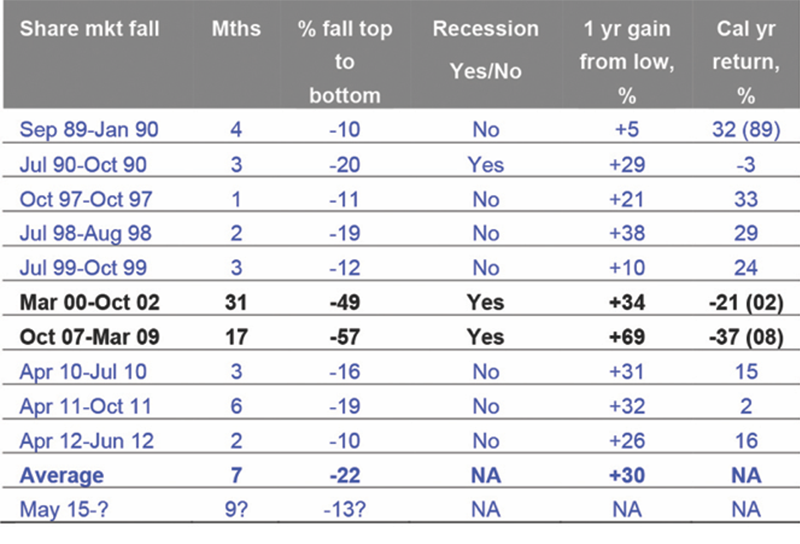
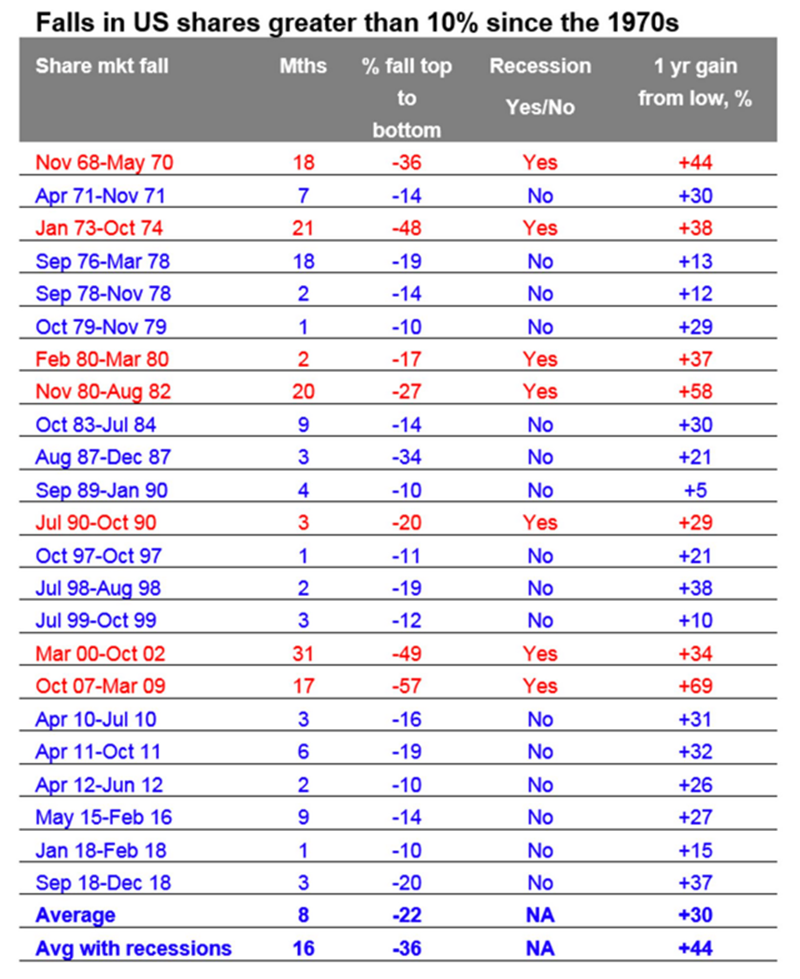
    This is a critical question as the US share market sets the direction for global shares including the Australian share market and the historical experience tells us that slumps in shares tend to be shallower and/or shorter when there is no US recession and deeper and longer when there is (eg the tech wreck and GFC). See the adjacent table.

    Falls in US shares greater than 10% since 1989

    blog content 04032016 falls us shares 

    Bear markets highlighted in black. Source: Bloomberg, AMP Capital

    A range of considerations have raised the risk of a US recession: December quarter GDP growth slowed sharply; credit spreads (ie, the interest rates on corporate bonds relative to government bonds) have blown out to levels associated with recessions; and falling energy related investment is weighing on manufacturing. But against this:

    • US growth has regularly run hot and cold since the GFC.
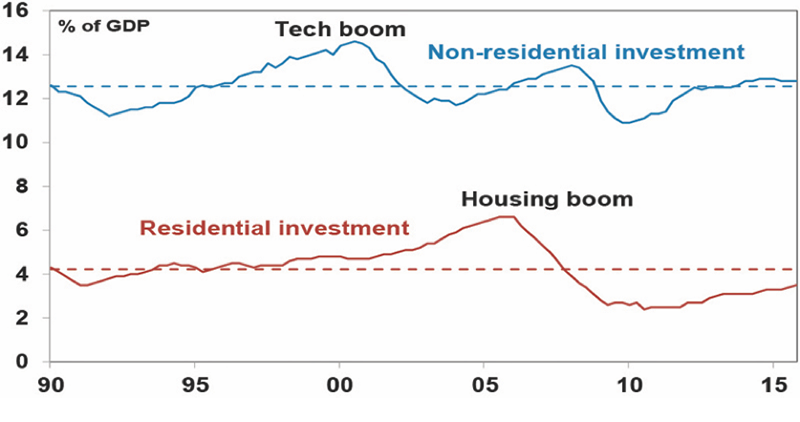
    • We have seen none of the excesses that precede recessions – like excessive growth in private debt, over investment in housing or capital goods, high inflation or a speculative bubble in shares or housing.

    No US investment boom

    04032016 us invest

    Source: Thompson Reuters, AMP Capital

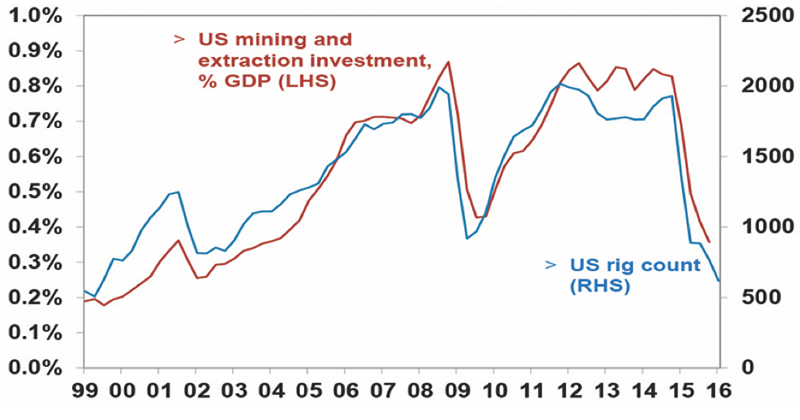
    04032016 us oil

    Source: Thomson Reuters, AMP Capital

    • Some of the softness in recent US economic data has been due to falling energy related investment. But with resource investment having fallen from 0.9% of US GDP to just 0.4% the bulk of the damage from this may already be behind us.

    US oil investment has already collapsed

    • While the collapse in oil prices is a big drag on energy producers, it is a huge boost to household spending power. This is very different to the loss of household wealth that flowed from the housing collapse at the centre of the GFC. 
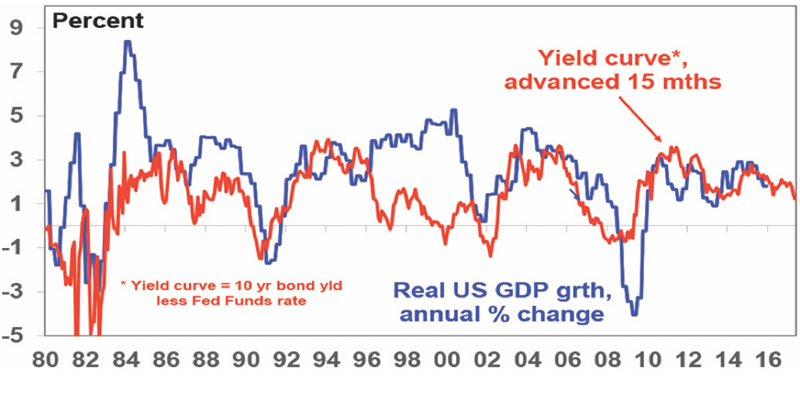
    • Nor have we moved to an inverted yield curve (where short term interest rates exceed long term interest rates) driven by aggressive monetary tightening like the 17 Fed interest rate hikes seen prior to the GFC. Inverted yield curves have regularly warned of recession.

    The US yield curve is far from inverted

    blog content 04032016 us yeild

    Source: Bloomberg, AMP Capital

    We would put the risk of a US/global recession at around 25%.

    Are central banks out of ammo?

    This is a common concern with interest rates already at or around zero for major central banks. However, they are a long way from being unable to do anything: the Fed can reverse last year’s interest rate hike and launch another round of quantitative easing; the ECB could provide more cheap short term funding for banks; both the ECB and Bank of Japan could expand their quantitative easing programs; and quantitative easing programs could be focussed on buying corporate debt to bring down corporate borrowing rates. More negative interest rates are also an option but central banks may be wary of this after the negative impact of Japan’s move on banks. Perhaps the ultimate option is for central banks to provide direct financing of government spending or tax cuts.

    If credit markets and bank share prices don’t settle down soon many or all of these measures are likely to be adopted with the ECB potentially launching a QE program focussed on buying corporate debt as early as next month.

    Meanwhile, the People’s Bank of China (with an official benchmark rate of 4.35%) and the RBA (with an official cash rate of 2%) still have a long way to go before they even have to consider unconventional monetary policies.

    What should investors do?

    Times like the present are very stressful as no one likes to see the value of their investments decline. Investors need to allow for several things though: 

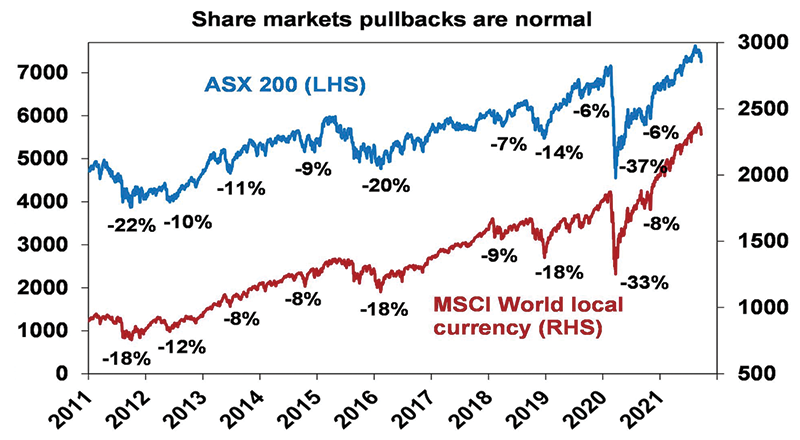
    • First, sharp falls are regular occurrences in share markets – we have seen it all before. Shares literally climb a wall of worry over many years with numerous events dragging them down periodically, but with the trend ultimately rising and providing higher returns than other more stable assets.
    • Second, selling after a major fall just locks in a loss.
    • Third, when shares and growth assets fall they are cheaper and offer higher long term return prospects. So the key is to look for opportunities that the pullback provides – shares are getting cheaper, investment yields on shares and corporate debt are rising. It’s impossible to time the bottom but one way to do it is to average in over time.
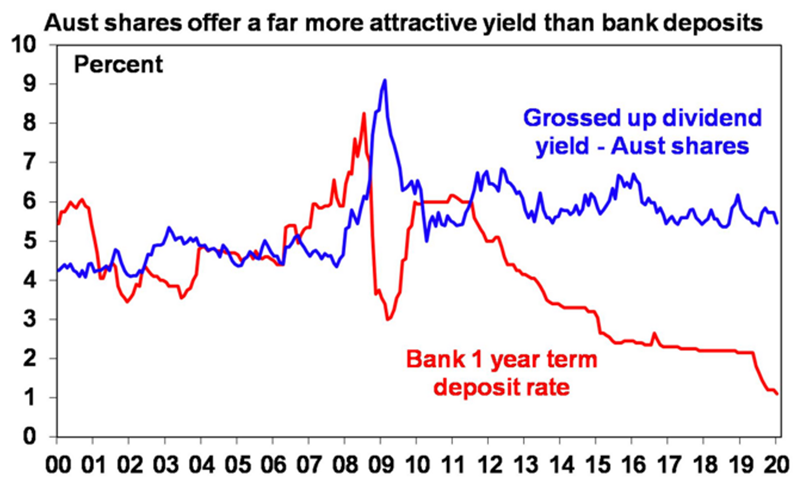
    • Fourth, while shares may have fallen in value the dividends from the market haven’t. So the income flow you are receiving from a well-diversified portfolio of shares continues to remain attractive, particularly against bank deposits.

    Australian shares offering a very high yield versus bank deposits

    • Fifth, shares and other related assets will bottom at the point of maximum bearishness, ie just when you and everyone else feel most negative towards them. So the trick is to buck the crowd. As Warren Buffett once said: “I will tell you how to become rich…Be fearful when others are greedy. Be greedy when others are fearful”.
    • Finally, turn down the noise. At times like the present the flow of negative news – via traditional and social media – reaches fever pitch, making it harder to stick to an appropriate long term strategy let alone see the opportunities that are thrown up.
    04032016 au shares

    Source: RBA, Bloomberg, AMP Capital


    Still have some questions?

    If you want to discuss your investment strategy with one of our advisors. Call us to arrange an appointment on 02 9328 0876.


    Article by AMP Capital


    General Disclaimer: This article contains information that is general in nature. It does not take into account the objectives, financial situation or needs of any particular person. You need to consider your financial situation and needs before making any decisions based on this information. Please seek personal financial advice prior to acting on this information.
    Important note: While every care has been taken in the preparation of this article, Sydney Financial Planning makes no representations or warranties as to the accuracy or completeness of any statement in it including, without limitation, any forecasts. Past performance is not a reliable indicator of future performance. This article has been prepared for the purpose of providing general information, without taking account of any particular investor’s objectives, financial situation or needs. An investor should, before making any investment decisions, consider the appropriateness of the information in this article, and seek professional advice, having regard to the investor’s objectives, financial situation and needs. This article is solely for the use of the party to whom it is provided.

    Share market falls - seven key things for investors to bear in mind

    Share market falls – seven key things for investors to bear in mind

    Share market falls - seven key things for investors to bear in mind

  • It’s still too early to say markets have bottomed and we continue to see a high risk of a 15% plus correction, although calendar year returns should still be okay.
  • This will weigh on short term super fund returns but follows two years of very strong returns.
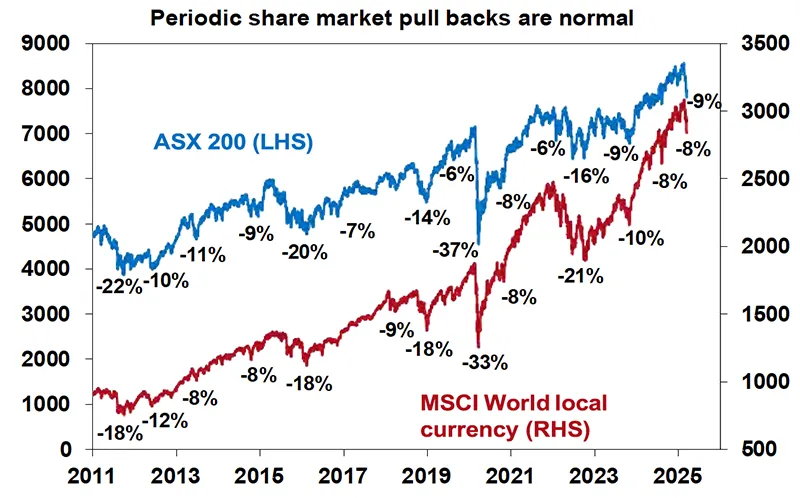
  • Key things for investors to bear in mind are that: share pullbacks are healthy and normal; in the absence of a recession a deep and long bear market should be avoided; selling shares after a fall locks in a loss and timing markets is hard; share pullbacks provide opportunities for investors to buy them more cheaply; shares still offer an attractive income flow; and to avoid getting thrown off a long-terminvestment strategy it’s best to turn down the noise.
  • Introduction

    Much of the time share markets are relatively calm and so don’t generate a lot of attention. But periodically they tumble and generate headlines like “billions wiped off share market” and “biggest share plunge since…” Sometimes it ends quickly and the market heads back up again and is forgotten about. But every so often share markets keep falling for a while. Sometimes the falls are foreseeable (usually after a run of strong gains), but rarely are they forecastable (which requires a call as to timing and magnitude) despite many claiming otherwise. In my career, I have seen many periodic share market tumbles and so they are nothing new.

    And now it’s happening again with share markets falling from record highs just a few weeks ago. From their all-time highs to their lows in February US shares have fallen 9%, global shares have fallen 8% and Australian shares have fallen nearly 9%. Always the drivers are slightly different. But as Mark Twain is said to have said “history doesn’t repeat but it rhymes”, and so it is with share market falls. This means that from the point of basic investment principles, it’s hard to say anything new. Which is why this note may sound familiar with “key things for investors to keep in mind”, but at times like this they are worth reiterating.

    What’s driving the plunge in share markets

    The key drivers of the fall in shares are a combination:

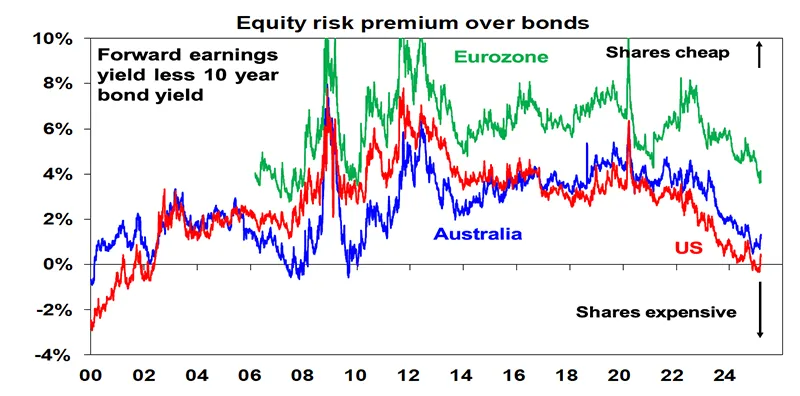
    • Stretched valuations after a relatively calm year last year with strong returns. The strong gains in share markets after the inflation driven weakness of 2022 and still relatively elevated bond yields left US shares offering no risk premium over bonds (as measured by the gap between the forward earnings yields and 10 year bond yields).Australian shares were not much better. This left shares vulnerable to bad news. The equity risk premiums have improved a bit with recent falls but still remain low.

    Source: Bloomberg, AMP

    • While investor sentiment was not seeing the euphoria often evidentat major share market tops, there was a bit of speculative froth evident in the huge gains in the Magnificent Seven stocks (Apple,Microsoft, Amazon, Alphabet, Meta, Nvidia and Tesla). These had accounted for nearly two thirds of US share market gains in 2023 and over 50% in 2024 taking them to roughly 35% of the S&P 500’s market capitalisation. Their huge gains left them vulnerable to a pullback with DeepSeek’s apparent success weighing on Nvidia and Telsashares plunging more than 50% since their January high partly owing to signs of a buyer backlash against Elon Musk. This heavy reliance on a handful of shares added to the US share markets vulnerability.
    • Another bout of sticky US inflation saw expectations for Fed rate cuts this year wound back a few weeks ago.
    • But the trigger for the pullback has really come from the frenetic and often contradictory policy announcements from the White House around tariffs, public sector cutbacks and US relations with allies. This has contributed to a run of weaker US economic data, fears ofrecession and desire by investors for a higher risk premium fromshares. Those fears intensified after Trump and members of his team seemed to not rule out a recession with Trump talking about a“period of transition” and saying that he is not worried about falls inthe share market and Treasury Secretary Bessent talking about 6-12months of pain and “a detox period” (presumably from government).
    • As always, the most speculative “assets” are getting hit the hardest and this includes tech stocks (with the Magnificent Seven down 20% and Nasdaq down 14%) and Bitcoin (which has fallen 23%).

    Share markets are oversold and so may see a short-term bounce. But our assessment is that increasing uncertainty and stretched valuations mean there is a high risk of further falls in shares. At some point economic weakness and its impact on support for Trump and Republican politicians along with share market falls – with Trump ultimately seeing share gains as a key performance indicator – will put pressure him to reverse course and focus on more positive policies. But we are likely not at that point yet. So, we continue to see a high likelihood of a 15% plus correction in shares before more positive forces around Trump’s tax cuts and deregulation and more Fed rate cuts get the upper hand.

    Key things for investors to bear in mind

    First, while they unfold differently, periodic share market corrections and occasional bear markets (which are usually defined as falls greater than 20%) are a normal part of investing in shares. 

    See the next chart.

    Periodic share market pull backs are normal

    Source: Bloomberg, AMP

    And, as can be seen in the next chart rolling 12 month returns from shares have regularly gone through negative periods.

    sfp ed2 03 2025 aus share returns over rolling 12 mth 20 yr 001

    Source: ASX, Bloomberg, AMP

     But while the falls can be painful, they are healthy as they help limit excessive risk taking. Related to this, shares climb a wall of worry over many years with numerous events dragging them down periodically (next chart), but with the long-term trend ultimately up and providing higher returns than other more stable assets. As can be seen in the previous chart, the rolling 20-year return from Australian shares has been relatively stable and solid. Which is why super funds have a relatively high exposure to shares along with other growth assets. Bouts of volatility are the price we pay for the higher longer-term returns from shares compared to more defensive assets like cash and government bonds. 

    Australian shares climb wall of worry

    Source: ASX, AMP

    Second, historically, the main driver of whether we see a correction (a fall of say 5% to 15%) or even a mild bear market with say a 20% or so decline that turns around relatively quickly like we saw in 2015-2016 in Australia – which may be called a “gummy bear market” – as opposed to a major “grizzly” bear market (like that seen in the mid-1970s or the global financial crisis when shares fell by around 55%) is whether we see a recession or not – notably in the US, as the US share market tends to lead most major global markets. 

    While Trump’s policies and the noise around them has increased the risk of a US/global recession our base case is that it will be narrowly avoided as Trump pulls back under political pressure and signs of weaker growth enable the Fed to start easing again and other global central banks including the RBA continue to cut rates. But recession is now a more significant risk so it’s too early to say share have bottomed. Of course, short-term forecasting is fraught with difficulty and should not be the basis for a long-term investment strategy, so it’s better to stick to long term investment principles.

    Third, selling shares or switching to a more conservative superannuation investment strategy whenever shares fall sharply just turns a paper loss into a real loss with no hope of recovery. Even if you get out and miss a further fall, the risk is that you won’t feel confident to get back in until long after the market has fully recovered. The best way to guard against deciding to sell on the basis of emotion after falls in markets is to adopt an appropriate long-term strategy and stick to it.

    Fourth, when shares fall, they’re cheaper and offer higher long-term return prospects. So, the key is to look for opportunities’ pullbacks provide. It’s impossible to time the bottom but one way to do it is to “average in” over time. Fortunately, the Australian superannuation system does just that by regularly putting money into shares for employees (via their super) taking advantage of the fact they are cheaper.

    Fifth, while share prices have fallen dividends have not. While the rebound in interest rates since 2022 reduced the yield advantage shares had over cash it’s likely now starting to wide again with the RBA starting to cut interest rates and likely to do more. 54% of companies raised their dividends compared to a year ago in the just completed December half earnings reporting season so the income flow from a well-diversified portfolio is likely to remain attractive.

    Australian shares grossed up dividends yield vs bank deposit rate

    Source: RBA, Bloomberg, AMP

    Sixth, shares and other related assets often bottom at the point of maximum bearishness, i.e. just when you and everyone else feel most negative towards them. So, the trick is to buck the crowd. “Be fearful when others are greedy. Be greedy when others are fearful,” as Warren Buffett has said.

    Finally, turn down the noise. At times of uncertainty like now, the flow of negative news reaches a fever pitch. This makes it harder to stick to your long-term financial plan and investment strategy. But remember, like all quality assets, they recover over time. When they get cheaper, they can represent great value. This fact is quickly forgotten by the media and the masses.

    As I’ve stated many times before, that’s how the rich get richer and the poor sell what they think are distressed assets at low prices to the rich, who can afford to buy low and hold quality assets.

    The great news is, if you’re reading this, you are in great hands as you are being advised by Sydney Financial Planning. If you start to get wobbly knees, please call us to review your strategy/plan. We have normally built this in, so you can prosper. The value of this advice and having a trusted relationship with an experienced team during times like this is what we call the Value of Advice.

    Bill Bracey
    CEO & Founder of Sydney Financial Planning


    Are you ready to take advantage of investment opportunities?

    Arrange a meeting with one of our Financial Planners to get the right investment decisions in place, either book a meeting or get in contact with us on 02 9328 0876.


    This article was prepared by Dr Shane Oliver with opening and closing summary by William Bracey – CEO & Senior Financial Planner from Sydney Financial Planning. Dr Shane Oliver who provides economic forecasts and analysis of key variables and issues affecting, or likely to affect, all asset markets. He also provides economic forecasts and analysis of key variables and issues affecting, or likely to affect, all asset markets.

    Sydney Financial Planning Pty Ltd (ABN 29 606 413 254), trading as Sydney Financial Planning & Illawarra Financial Planning is an Authorised Representative & Credit Representative of Charter Financial Planning Limited, Australian Financial Services Licensee and Australian Credit Licensee.

    This article contains information that is general in nature. It does not take into account the objectives, financial situation or needs of any particular person. You need to consider your financial situation and needs before making any decisions based on this information. If you decide to purchase or vary a financial product, your financial adviser, and other companies within the AMP Group may receive fees and other benefits. The fees will be a dollar amount and/or a percentage of either the premium you pay or the value of your investments. Please contact us if you want more information. If you no longer wish to receive direct marketing from us you may opt out by contacting Sydney Financial Planning . You may still receive direct marketing from AMP as a product issuer, bringing to your attention products, offerings or other information that may be relevant to you. If you no longer wish to receive this information you may opt out by contacting AMP on 1300 157 173.

    Investing under uncertainty

    Investing under uncertainty

    Investing under uncertainty

    Uncertainty is here to stay; we have no say in that. So, we spend time and energy on keeping our heads down and continuing to fund our plan – we have a full control over that.

    Here we are in a tectonic shift in the world’s geopolitical order, occasioned by Russia’s tragic war on Ukraine, the severe supply chain issues caused by offshoring of manufacturing and services to Asia. And we find ourselves in the grip of the most severe inflation outbreak in 40 years. No one can begin to predict how these situations will resolve themselves (even though it doesn’t stop many from trying)…much less when. Nor can anyone begin to imagine how the capital markets will adapt to said resolution(s). We are once again in a perfect cloud of unknowing.

    It is also – and this is what we find human nature can often be bitterly incapable of grasping – irrelevant to the investment policy of a long-term, goal focused, plan-driven investor. And I say again: current events are perfectly irrelevant to the investment policy of the long-term equity investor.

    What is the essence of successful long-term equity investing? It is the continuing practice of rationality under uncertainty. To me it means basing our investment policy on our financial plan as distinctly opposed to a view of the economy and the markets. This is where rationality begins and ends.

    Two years ago, we could not begin to imagine how lethal the pandemic was going to be, nor when effective vaccines would become available in sufficient quantity. Today, we can’t anticipate what Putin will do in Ukraine, nor how the back of this inflation will ultimately be broken. Nothing has changed; we’ve just moved on to a different set of unknowables.

    Meanwhile our clients’ retirement dates are bearing down on them at the same pace. The amount of money they need to accumulate has if anything gone up with inflation. And the only hope they have in the world for a secure retirement and meaningful legacy are the premium return of shares of brilliantly managed companies, whose short to intermediate-term corrections cannot be anticipated, much less timed.

    What we can know amid all this uncertainty—and just about all we need to know—is that the great companies in Australia and the world are already adjusting to this reordering. Today’s crisis invariably becomes yesterday’s news. Not only will you not be worried about this stuff ten years from now, you won’t even remember it.

    It all comes down to the main reason you hired us, to acting vs. reacting: keeping your head down and continuing to fund your plan, looking neither to the right nor to the left. Looking at history, not headlines.

    This is a glorious time to be a mainstream share investor for the long haul – even if, just at this moment,it feels like we can’t see a foot in front of our faces.

    We realise that on any given day, optimism can often sound like a crazy concept while pessimism on the other hand can feel like a good advice from a friend. We also realise that ours may be the only calm voice of long-term optimism you hear. We just want to make sure you hear it. Today’s the day.


    Key takeaways:

    • Try to minimise the noise. If news headlines make you feel uncomfortable,reduce your exposure to them. Their objective is to capture your attention, not to provide you with rational investment strategy.
    • Follow your investment plan, not headlines. Your plan is carefully designed to help you reach your life goals. If your goals haven’t changed, your investment strategy most likely doesn’t need changing. Only people without plans follow the headlines (they have nothing else to focus on)
    • Remember fundamentals. History doesn’t repeat but it rhymes. Look at the spread between the real-life returns (after inflation) of growth assets like shares and the real-life returns of cash and bonds.
    • Price versus value. When price (e.g. share price) of an asset decreases, the value of investing in that assets increases (and vice versa). If you’re still contributing to your investments/super, lower share market prices represent better value for your money.
    • Income vs account balance. If you already retired and your investment objective is to generate a lifestyle sustaining income, that income is paid based on the amount of your investment units, not your account balance. Make sure you focus on the right thing.
    • Optimism is the only realism. Having the faith in the future is number one investment principle we follow. It always gets tested when markets correct, and it can make all the difference.

    If you get ever concerned about your investment strategy, please always contact your adviser before you make any decisions. It’s one of the main reasons you hired us.


    Michal Bodi
    Partner and Senior Financial Planner


    Do you have a long-term investing strategy in place?

    Speak with one of our Financial Planners about the best investing approach for your circumstances, either book a meeting or get in contact with us on 02 9328 0876.


    Article by Michal Bodi | Partner and Senior Financial Planner

    General Disclaimer: This article contains information that is general in nature. It does not take into account the objectives, financial situation or needs of any particular person. You need to consider your financial situation and needs before making any decisions based on this information. Please seek personal financial advice prior to acting on this information.

    5 useful charts on investing

    5 useful charts on investing in times of uncertainty like the present

    5 useful charts on investing

  • Here are another five great charts to help illuminate those basic principles: the importance of time in the market versus timing; the case to look less at your investments; the relationship between risk and return; the value of diversification; & the role of property.
  • Introduction

    Successful investing can be really hard in times like the present when share markets are down sharply & very volatile on the back of uncertainty around inflation, rising interest rates and the war in Ukraine. I will be the first to admit that my crystal ball is even hazier than normal in times like the present. As the US economist JK Galbraith once said “there are two types of economists – those that don’t know and those that don’t know they don’t know.” And this is certainly an environment where much is unknown. But the basic principles of investing are simple and timeless and can be particularly useful to bear in mind in times like this. This note continues our updated series that began with “Five great charts on investing”.

    Chart #1 Time in versus timing

    In times of uncertainty its temping to try and time the market, ie to sell ahead of falls & buy in anticipation of gains. But without a proven asset allocation or stock picking process, trying to time the market is very difficult. A good way to demonstrate this is with a comparison of returns if an investor is fully invested in shares versus missing out on the best (or worst) days. The next chart shows that if you were fully invested in Australian shares from January 1995, you would have returned 9.5%pa (including dividends but not allowing for franking credits, tax and fees).

    Best and worst days 001

    Source: Bloomberg, AMP

    If by trying to time the market you avoided the 10 worst days (yellow bars), you would have boosted your return to 12.5% pa. If you avoided the 40 worst days, it would have been boosted to 17.5% pa. But this is very hard to do, and many investors only get out after the bad returns have occurred, just in time to miss some of the best days and so end up damaging their longer term returns. For example, if by trying to time the market you miss the 10 best days (blue bars), the return falls to 7.4% pa. If you miss the 40 best days, it drops to just 3.3% pa. Hence the old cliché that “it’s time in that matters, not timing”.

    Key message: market timing is great if you can get it right, but without a process the risk of getting it wrong is very high and, if so, it can destroy your longer-term returns.

    Chart #2 Look less

    Percentage of positive share market 001

    Daily and monthly data from 1995, data for years and decades from 1900.
    Source: Bloomberg, RBA, ASX, AMP

    If you look at the daily movements in the share market, they are down almost as much as they are up, with only just over 50% of days seeing positive gains. See the next chart for Australian and US shares. So day by day, it’s pretty much a coin toss as to whether you will get good news or bad news. But if you only look monthly and allow for dividends, the historical experience tells us you will only get bad news around a third of the time. Looking only on a calendar year basis, data back to 1900 indicates the probability of a loss slides to just 20% in Australian shares and 26% for US shares. And if you go all the way out to once a decade, since 1900 positive returns have been seen 100% of the time for Australian shares and 82% for US shares.

    Chart #3 Risk and return

    This chart is basic to investing. Each asset class has its own risk (in terms of volatility and risk of loss) and return characteristics. Put simply: the higher the risk of an asset, the higher the return you will likely achieve over the long term and vice versa. The next chart shows a stylised version of this. Starting with cash, it’s well known that its very low risk but so is its return potential. Government bonds usually offer higher returns but their value can move around a bit in the short term (although major developed countries have not defaulted on their bonds). Corporate debt has a higher return potential again but a higher risk of default. Unlisted or directly held commercial property and infrastructure offer a higher return again but they come with higher risk and are less liquid and can be less able to be diversified (except via say a managed fund).

    Equities can offer another step up in return, but this is because they come with higher risk as they are subject to share market volatility and individual companies can go bankrupt wiping out share holder capital. Beyond this, private equity entails more risk again & so tends to command an even higher return premium. Each step up involves more risk, and this is compensated for with more long-term return. Of course, this neat relationship may not hold in the short-term – eg, government bonds have had worse returns over the last 12 months than shares. And its hard to place “crypto currencies” on the chart – they are very volatile but have not been around long enough to have confidence their long-term returns will compensate for this.

    Risk return major assett classes 001

    Source: AMP

    Key message: Investors need to allow for the risk (and liquidity) and return characteristics of each asset. Those who don’t mind short-term risk (and illiquidity in the case of unlisted assets) can take advantage of the higher returns growth assets offer over long periods. The key is that there is no free lunch.

    Chart #4 Diversification

    But this not the end of the story. The next table shows the best and worst performing asset class in each year over the last 15.

    Risk best worst performing major assett class 001

    Source: Reuters, Bloomberg, AMP

    It can be seen that the best performing asset each year can vary dramatically, and that last year’s top performer is no guide to the year ahead. So, it makes sense to have a combination of asset classes in your portfolio. This particularly applies to assets that are lowly correlated, ie that don’t just move in lock step with each other. For example, global and Australian shares tend to move together during extreme events. But bonds and shares tend to diverge when crises hit threatening recession – as we saw in the GFC when shares fell but bonds rallied. So there is a case to have bonds in a portfolio to help stabilise returns. Of course, this doesn’t always work, eg like now when inflation is the key danger, highlighting the case for cash & real assets like unlisted commercial property and infrastructure too.

    Key message: diversification is also a bit like the magic of compound interest. Having a well-diversified exposure means your portfolio won’t be as volatile.

    Chart #5 Residential property has a role

    Chart #1 in the first edition in this Five Charts series highlighted the power of compound interest, with a comparison showing the value of $1 invested in various Australian asset classes back in 1900 and what it would be worth today. Unfortunately, I do not have monthly data for Australian residential property returns back that far but I do have them on an annual basis back to 1926 and this is shown in the next chart starting with a $100 investment.

    Long term assett class returns 001

    Source: ABS, REIA, RBA, ASX, AMP

    Again it can be seen that over very long periods the power of compounding works wonders for shares compared to bonds and cash. But it can also be seen to work well for Australian residential property with an average total return (capital growth plus net rental income) of 11% pa, which is similar to that for shares. All of which highlights, along with the diversification benefits of a real asset like property, the case to have it in a well-diversified portfolio along with listed assets like shares, bonds and cash. The key is to allow for the different “risks” experienced by property versus shares. Property prices are less volatile than share prices as they are not traded on share markets and so are not as subject to the whims of investors and movements in their values tend to relate more to movements in the real economy. But residential property takes longer to buy and sell and it’s harder to diversify as you can’t easily have exposure to hundreds or thousands of properties exposed to different sectors and countries like you can with shares. So, there are trade-offs between residential property and shares.

    Key message: given their long-term returns and diversification benefits, there is a key role for residential property in your investment portfolio – putting aside the current threat to the housing market from poor affordability and rising interest rates.

    Closing commentary

    So following on from our SFP insights over the past 6 months, where we keep you up to date on whats going on in Financial Markets and what to expect moving forward. As we suggested in our last 3 newsletters we will experienced market volatility in the short term and that is currently occurring. For some unadvised people that’s scary, for the well advised SFP clients they know volatility although unpleasant in the short term, is a normal part of financial markets and if they require better long term return, they need to hold growth assets like shares and property.

    When these asset prices fall it can be a wonderful time to buy at a discounted rate, rather than pay for over valued assets.

    Many of our clients have taken advantage of this and invested while these a discount is offered, rather than paying over priced assets. And as I continually say, that’s how the rich get richer, sadly they buy quality assets at a reduced price from unadvised people who panic. Sad for the seller, good for the buyer who knows value and buys quality at a lower price.

    Advice that stands the test of time!

    Bill Bracey – CEO and Founder
    Sydney Financial Planning


    Is your portfolio well positioned for long-term returns and benefits?

    Speak with one of our Financial Planners about the best approach for your circumstances, either book a meeting or get in contact with us on 02 9328 0876.


    This article was prepared by William Bracey and Dr Shane Oliver. Dr Shane Oliver who provides economic forecasts and analysis of key variables and issues affecting, or likely to affect, all asset markets. He also provides economic forecasts and analysis of key variables and issues affecting, or likely to affect, all asset markets.

    Important note: While every care has been taken in the preparation of this document, AMP Capital Investors Limited (ABN 59 001 777 591, AFSL 232497) and AMP Capital Funds Management Limited (ABN 15 159 557 721, AFSL 426455) make no representations or warranties as to the accuracy or completeness of any statement in it including, without limitation, any forecasts. Past performance is not a reliable indicator of future performance. This document has been prepared for the purpose of providing general information, without taking account of any particular investor’s objectives, financial situation or needs. An investor should, before making any investment decisions, consider the appropriateness of the information in this document, and seek professional advice, having regard to the investor’s objectives, financial situation and needs. This document is solely for the use of the party to whom it is provided.

    General Disclaimer: This article contains information that is general in nature. It does not take into account the objectives, financial situation or needs of any particular person. You need to consider your financial situation and needs before making any decisions based on this information. Please seek personal financial advice prior to acting on this information.

    SFP Investment Outlook Q&A - February 2022

    SFP investment outlook Q&A – February 2022

    SFP Investment Outlook Q&A - February 2022

  • Wages growth is likely to pick up to 3% this year.
  • A Russian invasion of Ukraine risks a short term hit to shares followed by recovery over the next 3 to 12 mths.
  • Introduction

    This note covers the main questions investors commonly have regarding the investment outlook in a simple Q&A format.

    Is the rise in inflation temporary or permanent?

    I suspect it’s a bit of both. Much of the rise in inflation (to a 40 year high in the US and to 3.5%yoy in Australia) can be traced to distortions caused by the pandemic which boosted goods demand and restricted supply (both of goods & workers). Global energy prices are also being boosted by geopolitical tensions (notably in Europe). As consumer demand rebalances back to services, workers return and production catches up to demand, inflation should subside over the next 12 months or so.

    However, underlying inflation is unlikely to fall back to pre-pandemic lows and risks running above central banks targets over the next 5-10 years: we are now seeing much easier monetary and fiscal policy & many of the structural forces that drove low inflation look to be going in reverse: globalisation is in retreat; the ratio of workers to consumers is in decline; and we are now seeing bigger more interventionist government.

    Will wages growth rise too?

    Wages growth has already lifted to 4-5% yoy in the US, depending on the measure. But it has higher inflation and has seen less workers return through the reopening than in Australia. Nevertheless, numerous signs point to faster wages growth in Australia: the jobs market is tight, pushing towards full employment; various business surveys point to rising labour costs; ABS data shows payroll wages accelerating relative to jobs; and there are numerous anecdotes of wage pressure. We expect wages growth to rise to a 3% annual pace by mid-year.

    How high will Australian interest rates rise?

    We expect the RBA to start raising the cash rate in August (possibly June) after news of more strong inflation data, unemployment below 4% and wages growth pushing up to 3% and see the cash rate rising to around 1.5 to 2% over the next two years or so. This would add a similar amount to variable mortgage rates. It will take household debt interest payments relative to income back to around 2018 levels. Higher household debt to income levels relative to the past and compared to say, the US, along with falling house prices will allow the RBA to proceed cautiously in raising rates through next year and see rates peak at lower levels compared to the past. Australia also has half the US’s inflation rate.

    Will the end of QE & rate hikes be a double whammy?

    Not really. Bond buying by central banks (or Quantitative Easing) was an alternative to cutting rates when rates had hit zero. With economic activity recovering and inflation up, it makes sense to end it and begin the withdrawal of the liquidity that was pumped in via QE (ie start quantitative tightening). But central banks can manage this with rate hikes to make sure the overall tightening in monetary conditions is not excessive.

    Is coronavirus no longer an economic concern?

    Not quite, but nearly. Starting last year each successive covid wave seems to have had progressively less economic impact. This reflects a combination of vaccines, new treatments and recent covid variants being less harmful which has combined to enable reopening to continue. While the risk remains of a new variant which is more harmful, causing a setback, coronavirus could finally be moving from a pandemic to being endemic.

    Is the economic recovery on track?

    While supply side constraints, monetary tightening, geopolitical threats and covid will constrain global and Australian economic growth, it will still be reasonable at around 4.5% this year. Key drivers are likely to be: ongoing reopening; pent up demand and excess savings; still easy monetary policy; strong business investment; and low inventory levels.

    How would a Russian invasion of Ukraine impact investment markets?

    Russia has been building up its military presence on the Ukraine border and is demanding that Ukraine never join NATO and NATO not station strategic weapons there. Negotiations have made little progress as the US fears consequences in other parts of the world if NATO does not stand tough. If anything, tensions have worsened as NATO has been shoring up Ukrainian defences and Russia has built up more military assets around it, with the US warning of possible imminent invasion. However, Russia has signalled it will continue with talks. Of course, there is a long history of various crisis events impacting share markets (major events in wars, terrorist attacks, financial crisis, etc) and the pattern is the same – an initial sharp fall followed by a rebound. Based on multiple crisis since 1907 Ned Davis Research found an average decline of 7% in the US share market from such events, but 6 months later the market is up 10% on average and 1 year later its up around 15%. Put very simply, there are four scenarios:

    1. Russia stands down – this would provide a very brief boost for share markets, including Australian shares (eg +1%).
    2. Russia moves in to occupy the Donbas (which is already controlled by Russian separatists) with sanctions from the west but not so onerous that Russia cuts of gas to Europe – this could see a brief hit to markets (say -2-4%) like in the 2014 Ukraine crisis but it would soon be forgotten about.
    3. Russian invasion of all of Ukraine with significant sanctions and Russia stopping gas to Europe (causing a stagflationary shock to Europe & possibly globally as oil prices rise further) but no NATO military involvement – this could see a bigger hit to markets (say -10%) but then recovery over six months.
    4. Invasion of all of Ukraine with significant sanctions, gas supplies cut & NATO military involvement – this could be a large negative for markets (say -15-20%) as war in Europe, albeit on its edge, fully reverses the “peace dividend” of the 1990s. Markets may then take 6-12 months to recover.

    Scenario 1 is still possible & it’s hard to see Russia undertaking a full invasion of Ukraine given the huge cost it would incur, let alone NATO troops being involved, but some combination of scenarios 2 and 3 are possible. But the history of such events points to an initial hit to shares, followed by a rebound.

    What is the threat posed by global geopolitical tensions – including those with China?

    Geopolitical issues have been building since the GFC and seemed to get a push along by the pandemic. The key drivers have been: a populist backlash against economically rationalist policies; the declining relative power of the US; and the polarising impact of social media. The most pressing are those with Russia (see above), China (in relation to Taiwan and trade with Australia) and Iran (in relation to its nuclear ambitions and oil supply). Although hard to time, they all make for a potentially more volatile ride in markets and possibly contribute to a less favourable return environment as they threaten higher inflation and less globalisation. It should be noted though that the economic impact of Australia’s tensions with China has been minor to date as most of the exports impacted were fungible commodities and able to find other markets. The same may apply in relation to iron ore if the adjustment occurs slowly.

    Will the Australian Federal election have much impact?

    There is a tendency for Australian shares to be somewhat flat in the run up to Federal elections followed by a bounce once it’s over and this is likely to apply this year with the election likely in May. In contrast to the 2019 election where Labor offered a higher tax and higher regulation agenda the policy differences so far appear less significant and if this remains the case the impact on investment markets is likely to be minor.

    What is the outlook for Australian home prices?

    From their pandemic lows in 2020 Australian dwelling prices are up 25%, but the gains have been slowing since March last year. We expect a further slowing in the months ahead as a result of worsening affordability, already rising fixed mortgage rates and rising variable rates from around August with average prices peaking in the September quarter and then falling into 2024. While prices are likely to rise 3% this year, they are likely to fall -5-10% next year. Top to bottom the fall could be around -10-15%, which would take prices back to the levels of mid last year. Sydney and Melbourne are the most vulnerable to higher rates as they have worse affordability and higher debt to income levels. They are both likely to see house prices peak by mid-year and risk top to bottom price falls of around 15%, whereas other cities and regions may not peak till later this year and have more modest top to bottom price falls.

    Will the return of immigrants support home prices?

    The return of immigrants this year will provide some support but will unlikely be enough to stop falls given the dominant impact of higher mortgage rates in constraining demand and given the likelihood that the initial return of immigrants will be gradual and won’t offset the net negative immigration of the last two years.

    How can we improve housing affordability?

    This requires a multifaceted solution across all levels of government with targets to be achieved over say a five-year period. My list of policies to improve affordability includes:

    • Measures to boost new supply – relaxing land use rules, releasing land faster and speeding up approval processes.
    • Matching the level of immigration in a post pandemic world to the ability of the property market to supply housing.
    • Encouraging greater decentralisation – the “work from home” phenomenon shows this is possible, but it should be helped along with appropriate infrastructure and of course measures to boost regional housing supply. Excess CBD office space should be speedily converted to residential.
    • Tax reform to replace stamp duty with land tax (to make it easier for empty nesters to downsize & cutting the upfront burden for first home buyers) & cutting the capital gains tax discount (to end a distortion favouring speculation).

    What is the outlook for commercial property?

    Commercial property may see weakness in retail and office returns as the influence of the pandemic on online buying and working from home impacts as retail and office leases come up for renewal, but industrial property is likely to be strong.

    Should investors invest in Bitcoin and other cryptos?

    It’s hard to see Bitcoin becoming digital cash – its transactions are slow and high cost, its highly volatile and it’s a massive user of electricity. It’s not an asset generating cash flows like rent or dividends which makes it very hard to value. And it appears to move in magnified fashion relative to shares, particularly during share market falls making it a poor portfolio diversifier. All of which makes it hard to justify other than as something to speculate on! Of course, this is not to say it can’t go up further as more jump on the bandwagon. Blockchain and distributed ledger technology offer significant potential but it’s hard to separate this from the speculation around crypto currencies.

    Will high inflation cause a share market crash?

    Shares have had a very strong rebound from their pandemic lows and are vulnerable to higher inflation as it puts upwards pressure on interest rates and downwards pressure on share market valuations (or price to earnings multiples). However, while a crash is always a risk it’s not our base case. First, earnings expectations are still being revised up albeit not as strongly as a year ago. Second, while monetary policy will be tightened its unlikely to become so tight as to cause a recession and slump in earnings. Finally, share markets still offer a strong earnings yield premium relative to bond yields in contrast to in the year 2000 when bond yields rose above earnings yields. Of course, if inflation just continues to surge then the risks to shares will increase.

    What are good hedges against higher inflation?

    Sustained higher inflation will ultimately mean upwards pressure on the yield structure in the economy which is negative for investments that have benefitted from years of low and falling interest rates, like high PE tech stocks. The best protection against sustained higher inflation would be inflation linked bonds, real assets like commodities and parts of the share market that will see stronger earnings growth.

    With bond yields still low why invest in bonds?

    Bonds are likely to see another year of negative returns this year reflecting still low starting point yields and capital losses as yields rise. However, they are still a good portfolio diversifier as they are likely to rally if significant concerns arise about a recession.

    Closing comments

    So, in closing , although we sent an economic update only 4 weeks ago, a lot has happened in the past 4 weeks and potentially a lot more can happen. It’s how we react in these times. Rather than panic, we take advantage of mispriced markets that always recover given some time.

    As I also say, if you’re an advised client, you don’t need to worry. However, if you’re not regularly reviewing your investments and overall strategy with one of our Financial Planners, you need to act swiftly. 

    Stay calm, review if needed and ride this one out with our recommended strategies.


    Bill Bracey – CEO, Managing Director
    Sydney Financial Planning  


    Your long-term strategy and investments positioned for taking take advantage of mispriced markets?

    Speak with one of our Financial Planners about the best approach for your circumstances, either book a meeting or get in contact with us on 02 9328 0876.


    This article was prepared by William Bracey and Dr Shane Oliver. Dr Shane Oliver who provides economic forecasts and analysis of key variables and issues affecting, or likely to affect, all asset markets. He also provides economic forecasts and analysis of key variables and issues affecting, or likely to affect, all asset markets.

    Important note: While every care has been taken in the preparation of this document, AMP Capital Investors Limited (ABN 59 001 777 591, AFSL 232497) and AMP Capital Funds Management Limited (ABN 15 159 557 721, AFSL 426455) make no representations or warranties as to the accuracy or completeness of any statement in it including, without limitation, any forecasts. Past performance is not a reliable indicator of future performance. This document has been prepared for the purpose of providing general information, without taking account of any particular investor’s objectives, financial situation or needs. An investor should, before making any investment decisions, consider the appropriateness of the information in this document, and seek professional advice, having regard to the investor’s objectives, financial situation and needs. This document is solely for the use of the party to whom it is provided.

    General Disclaimer: This article contains information that is general in nature. It does not take into account the objectives, financial situation or needs of any particular person. You need to consider your financial situation and needs before making any decisions based on this information. Please seek personal financial advice prior to acting on this information.
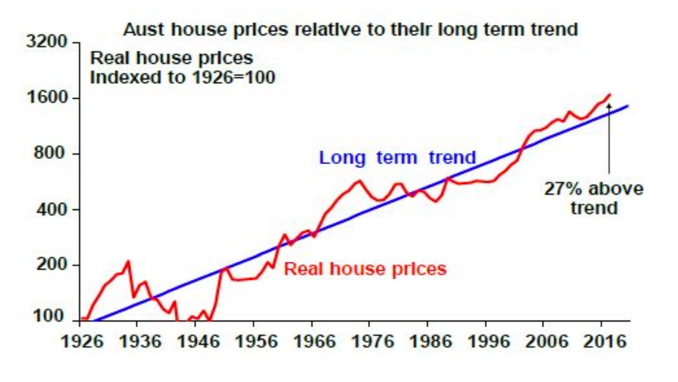
    Correction time? Shares get the wobblies

    Correction time? Shares get the wobblies – seven things investors need to keep in mind.

    Correction time? Shares get the wobblies

  • Shares may still have more downside as it will take a while to resolve some of these issues.
  • Key things for investors to bear in mind are that: corrections are healthy and normal; a renewed recession is unlikely and this will limit share market falls; selling shares after a fall locks in a loss; share pullbacks provide opportunities for investors to buy them more cheaply; shares offer an attractive income flow; and finally, to avoid getting thrown off a long-term investment strategy it’s best to turn down the noise during times like this.
  • Introduction

    The past week has seen share markets wobble – with US shares and global shares down 4% from their recent high and Australian shares falling about 5% – amidst concern about global growth, central banks starting to reduce monetary stimulus and problems at a major Chinese property developer. Some are even talking about a “Lehman moment” in relation to the latter – a reference to the collapse of Lehman Brothers in September 2008 that contributed to the worst of the GFC. Markets have stabilised a bit in the last day or so but its too early to say that we have seen the bottom. This note looks at the key issues for investors and puts the falls into context.

    A long worry list is behind the weakness

    The wobbles in shares reflects a long worry list that has been building for a few months now.

    • Recent economic data globally has been softer than expected, leading to concerns peak growth is behind us.
    • Uncertainty remains over the impact of the Delta variant.
    • Supply side constraints globally appear to be constraining growth and threatening to continue boosting inflation.
    • Central banks are starting to slow monetary stimulus with a focus this week on when the Fed will announce a “tapering”, or slowing, of its bond buying.
    • The US Congress needs to pass a continuing resolution to fund Federal spending by the end of the month (to avoid another Government shutdown) and will need to increase or suspend the debt ceiling sometime between mid-October and mid-November (to avoid the US Government defaulting on its debt servicing and social security commitments).
    • Congress is looking at tax hikes (on corporates which could knock 5% off US earnings, capital gains and dividends) to help fund Biden’s $US3.5trillion remaining stimulus plans.
    • The Chinese economy has been slowing in response to earlier policy tightening and recent coronavirus restrictions, adding to concerns about global growth.
    • Debt servicing problems at China Evergrande Group – China’s second largest property developer has gotten into trouble as a result of high debt levels and property tightening measures. If Evergrande ends in a full-scale default and liquidation of its assets, some worry that this may lead to another “Lehman moment” in terms of a flow on the Chinese financial system and property market, posing a big threat to the Chinese economy, global growth and commodity prices (like iron ore).
    • And share markets having had huge gains since their March lows last year – with US shares doubling having risen 14 of the last 17 months and Australian shares up 68% having risen 16 of the last 17 months – are arguably vulnerable to a bit of a pull back.

    Considerations for investors

    Sharp market falls with talk of “Lehman moments” are stressful for investors as no one likes to see their investments fall in value. However, several things are worth bearing in mind:

    First, while they all have different triggers and unfold differently, periodic corrections in share markets of the order of 5%, 15% and even 20% are healthy and normal. For example, during the tech/dot-com boom from 1995 to early 2000, the US share market had seven pull backs ranging from 6% to 19% with an average decline of 10%.

    During the same period, Australian shares had eight pullbacks ranging from 5% to 16% with an average fall of 8%. All against a backdrop of strong returns every year. During the 2003 to 2007 bull market, the Australian share market had five 5% plus corrections ranging from 7% to 12%, again with strong positive returns every year. And the last decade regularly saw major pullbacks. See the next chart.

    sfp ed23 share market pullback 001

    Source: Bloomberg, AMP Capital

    SFP ed23 september rough month 002

    Source: Bloomberg, AMP Capital

    And right now, we are in the time of year often associated with share market pullbacks. Over the last 35 years, September has been the weakest month of the year for both US and Australian shares. See the next chart. US shares have fallen in five of the last 10 Septembers and the Australian share market has fallen in seven of the last 10, with both falling in September last year.

    But while share market pullbacks can be painful, they are healthy as they help limit complacency and excessive risk taking. Related to this, shares climb a wall of worry over many years with numerous events dragging them down periodically, but with the long-term trend ultimately up & providing higher returns than other more stable assets. Bouts of volatility are the price we pay for the higher longer-term returns from shares.

    SFP ed23 australian shares climb wall 003

    Source: ASX, AMP Capital

    Second, historically the main driver of whether we see a correction (a fall of say 5% to 15%) or even a mild bear market (with say a 20% decline that turns around relatively quickly like we saw in 2015-2016) as opposed to a major bear market (like that seen in the global financial crisis (GFC) or the 35% or so falls seen in February/March last year going into the coronavirus pandemic) is whether we see a recession or not – notably in the US as the US share market tends to lead most major global markets.

    Right now it’s doubtful that the worry list referred to above, while extensive, will be enough to drive a US, global or Australian recession:

    • While global growth is likely to slow in 2022 business surveys remain strong and global growth is still likely to be strong at around 4%.
    • The exit from the coronavirus pandemic is proving longer and messier than expected – but vaccines are helping protect against serious illness with little support for a return to lockdowns in developed countries. In Australia, the delayed but now rapid vaccination program looks on track to allow a gradual reopening as we learn to live with higher levels of coronavirus though next quarter, avoiding recession ahead of much stronger growth next year.
    • Supply side constraints and hence the near-term inflation threat is likely to recede as recovery continues and spending rotates back towards services from goods.
    • While central banks are heading towards the exits from ultra-easy money, it’s likely to be gradual with low interest rates for some time and the sort of tight monetary policy that brings an end to cyclical bull markets looks a long way off.
    • The path to pass a funding resolution and resolve the debt ceiling in the US looks likely to be a white-knuckle ride with lots of brinkmanship, but neither side wants to be blamed for shutting the government or causing a default so a last minute deal remains likely.
    • Confirmation of rising taxes in the US will be a negative for shares – but tax hikes are likely to be watered down from already watered-down plans such that it’s only a partial reversal of the Trump tax cuts and the direct drag on US profits will only be about 5%.
    • While there is much uncertainty about how Evergrande will be resolved – which could cause more short-term weakness in share markets and the iron ore price – it’s not as systemically important to the Chinese/global financial system as Lehman Brothers was. While the Chinese authorities want to teach property developers and investors a lesson about the dangers of too much debt, it’s unlikely to allow Evergrande’s failure to mushroom into a full-on credit squeeze or a “Lehman moment” that collapses the property sector (via forced property sales) and the economy. So ultimately, some sort of debt restructuring rather than full bankruptcy is likely, with reports of a deal with bond holders regarding a payment due on 23rd September and the relative calm in China’s own debt markets possibly being a sign of that. And more broadly China is likely to provide policy stimulus to support growth into year end.

    Third, selling shares or switching to a more conservative investment strategy whenever shares suffer a setback just turns a paper loss into a real loss with no hope of recovering. And trying to time a market recovery is very hard. The best way to guard against deciding to sell on the basis of emotion after weakness in markets is to adopt a well thought out, long-term strategy and stick to it.

    Fourth, when shares and growth assets fall, they’re cheaper and offer higher long-term return prospects. So, the key is to look for opportunities’ pullbacks provide. It’s impossible to time the bottom but one way to do it is to average in over time.

    Fifth, Australian shares are offering a very attractive dividend yield compared to banks deposits. While resource stocks dividend payments may have peaked for a while following the plunge in iron ore prices, they’re unlikely to fall back much as they didn’t go up as much as earnings and high prices for gas, coal and metals are providing some offset. So, the income flow you are receiving from a well-diversified portfolio of shares is likely to remain attractive, particularly against bank deposits.

    SFP ed23 australian shares attractive yeild 004

    Source: RBA, Bloomberg, AMP Capital

    Sixth, shares and other related assets often bottom at the point of maximum bearishness, ie, just when you and everyone else feel most negative towards them. So, the trick is to buck the crowd. “Be fearful when others are greedy. Be greedy when others are fearful,” as Warren Buffett has said.

    Closing comments

    Finally, turn down the noise. In times of uncertainty, negative news can reach fever pitch. But it often provides no perspective and only adds to the sense of panic. All of this makes it harder to stick to an appropriate long-term strategy let alone see the opportunities that are thrown up. So as always, it’s best to turn down the noise.

    Bill and the team at SFP.


    How is your long-term strategy and investment opportunity looking?

    Speak with one of our Financial Planners about the best approach for your circumstances, either book a meeting or get in contact with us on 02 9328 0876.


    This article was prepared by William Bracey and Dr Shane Oliver. Dr Shane Oliver who provides economic forecasts and analysis of key variables and issues affecting, or likely to affect, all asset markets. He also provides economic forecasts and analysis of key variables and issues affecting, or likely to affect, all asset markets.

    Important note: While every care has been taken in the preparation of this document, AMP Capital Investors Limited (ABN 59 001 777 591, AFSL 232497) and AMP Capital Funds Management Limited (ABN 15 159 557 721, AFSL 426455) make no representations or warranties as to the accuracy or completeness of any statement in it including, without limitation, any forecasts. Past performance is not a reliable indicator of future performance. This document has been prepared for the purpose of providing general information, without taking account of any particular investor’s objectives, financial situation or needs. An investor should, before making any investment decisions, consider the appropriateness of the information in this document, and seek professional advice, having regard to the investor’s objectives, financial situation and needs. This document is solely for the use of the party to whom it is provided.

    General Disclaimer: This article contains information that is general in nature. It does not take into account the objectives, financial situation or needs of any particular person. You need to consider your financial situation and needs before making any decisions based on this information. Please seek personal financial advice prior to acting on this information.
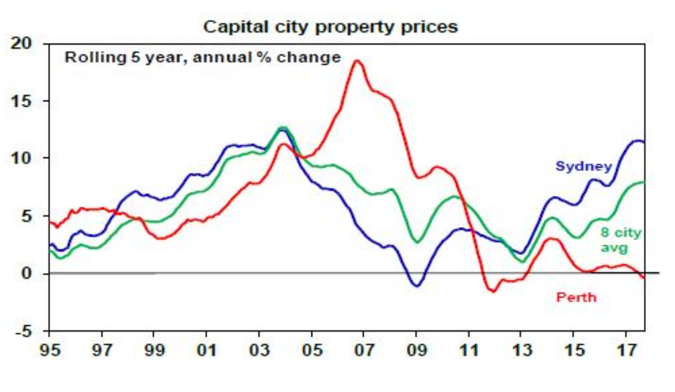
    2019-20 Investment market reflections

    2019-20 saw poor returns

    2019-20 Investment market reflections

    • Key lessons for investors from the last financial year were to: maintain a well-diversified portfolio; timing market moves is hard; beware the crowd; turn down the noise; and don’t fight the Fed.
    • With coronavirus risks still high, investment markets may see more short-term volatility. But over the next 12 months returns from a well-diversified portfolio are likely to be constrained, but okay.

    Introduction

    The past financial year was poor for investors as coronavirus knocked economies into what is likely to be their biggest hit since the 1930s. Shares were hit hard, but the blow was softened by a strong rebound in the June quarter. This note reviews the last financial year and takes a look at the outlook.

    Pre and post covid

    The past financial year can effectively be divided into two halves. The period from July last year into early this year saw generally strong returns from shares and growth assets, as fear of recession faded helped by central bank easing and a truce in the US/China trade war and gave way to expectations of some improvement in global economic growth. Despite devastating bushfires and a subdued growth outlook even the Australian share market made it to a record high in February. Against this backdrop, returns from government bonds were subdued.

    This now seems like it was a different world as it all started to fade and ultimately reverse as the coronavirus epidemic started to become a problem in China in January. Initially it was hoped it would be contained to China (which successfully controlled it allowing a reopening of its economy from March) but from late February the number of cases escalated in Europe then the US, Australia and ultimately emerging countries, resulting in severe lockdowns driving sharp economic contractions in economic activity. So, between 20th February and 23rd March share markets collapsed by around 35% dragging down commodity prices. This also saw the $US surge and the Australian dollar plunge to around $US0.55.

    However, from late March shares staged a rebound driven by policy stimulus, a decline in new covid cases, economic reopening and a rebound in economic data. From their March lows to June highs global shares rose 40% & Australian shares rose 35% and commodity prices and the $A also rebounded.

    So, despite this wild ride, for the financial year as a whole global shares returned 5.2% in Australian dollar terms. This was led by the US share market which outperformed due to a heavy tech and health care exposure, a relatively low exposure to cyclical shares and massive Fed quantitative easing. Australian shares didn’t fare so well & still lost 7.7% for the financial year.

    Cash and bank deposits had very low returns as the RBA cut the cash rate to 0.25% in March. But bonds had reasonable returns as plunging yields provided capital growth for investors. Despite the plunge in interest rates and bond yields, listed property saw double digit losses as the coronavirus driven slump in economic activity pushed up vacancies and depressed rents in retail and office properties. Returns on airports were similarly depressed weighing on direct infrastructure returns.

    This all saw small negative returns for balanced growth superannuation funds of around -1.5% after fees and taxes. Of course, it would have been much worse were it not for the June quarter rebound in shares. The hit to super returns also followed several years of strong returns and the five-year average is just over 5% which is not so bad given (pre tax) bank deposit rates averaged around 2% and inflation averaged 1.5%.

    2019-20 major asset class returns

    Source: Thomson Reuters, AMP Capital

    Like shares, Australian residential property had a roller coaster ride – first rising 10% on rate cuts and the Federal election before starting to slow as coronavirus hit.

    Key lessons for investors from the last financial year

    These include:

    • Maintain a well-diversified portfolio – while shares and listed property had a rough ride, bonds and exposure to global shares and foreign currency provided some stability. 
    • Timing markets is hard – while it always looks easy in hindsight, getting out in February at the top and then getting back in March at the low would have been very hard to time.
    • Beware the crowd at extremes – as is often the case shares hit bottom in March at a time of extreme investor pessimism.
    • Turn down the noise – the noise around coronavirus is at fever pitch making it very hard to maintain focus on long term investing, so the best thing is to turn it down a notch. 
    • Don’t fight the Fed – despite near zero interest rates and high public debt levels, policy stimulus can still be applied on a massive scale and still impacts investment markets.

    The negatives

    There are a bunch of threats which are likely to lead to a further correction in shares in the short term, ongoing bouts of volatility and constrained returns. Here are the big ones.

    • First, while some countries have got new coronavirus cases well down, it’s still on the rise globally particularly in emerging countries and the US and Victoria have seen a resurgence in cases. This is threatening a return to economically debilitating country wide lockdowns (as opposed to targeted measures). Even partial lockdowns will slow the recovery – eg, our rough estimate is that the new six-week lockdown of Melbourne, which accounts for about 20% of Australian GDP will knock nearly 1% off Australian GDP this quarter, which will slow the recovery (but not derail it as it should be offset by growth in other states). 
    • Second, the shutdowns will leave lasting collateral damage in terms of bankruptcies and higher unemployment as the embrace of technology has been sped up, companies cut costs and skills atrophy, all of which will weigh on growth.
    • Third, in Australia the main collateral risk is that the combination of high unemployment, a collapse in underlying housing demand on the back of a plunge in immigration and a depressed rental market drive a sharp collapse in home prices triggering negative wealth effects.
    • Fourth, the run up to the US election has the potential to drive increased share market volatility if it looks increasingly likely that Biden will win and raise taxes, and the risk is probably greater if President Trump decides he has nothing to lose and ramps up tensions with China and maybe Europe. With betting markets favouring a clean sweep by the Democrats some of the former is probably already priced, but an intensification of trade wars is probably not.
    • Finally, shares are expensive on traditional metrics like PEs.

    The positives

    However, there are a bunch of positives providing an offset.

    • First, several Asian countries have shown its possible to control the virus – notably China, South Korea, Taiwan and Japan. Maybe the SARS experience helps along with the culture of wearing masks. Surely, we can learn from them.
    • Second, progress is continuing to be made in terms of vaccines and treatments for coronavirus. I am a bit sceptical about a vaccine, but the latter may be contributing to lower death rates. If deaths remain low compared to the first wave there is less risk of a return to hard lockdowns (Victoria excepted!) and less self-isolation.
    • Third, policy makers remain committed to do whatever they can to support businesses, incomes and jobs with record levels of fiscal stimulus relative to GDP and massive monetary stimulus. This is different to normal recessions where it takes longer for policy makers to swing into action. To this end policy stimulus will be extended in the US and in Australia (with the Treasurer talking about another phase of income support and possibly bringing forward tax cuts). 
    • Fourth, a range of economic indicators have seen a Deep V rebound from shutdown lows starting in China and then in developed countries, suggesting significant pent up demand. This is most evident in business conditions PMIs but also in retail sales. On balance we see a gradual bumpy economic recovery from here. Australian GDP is expected to contract -4.5% this year and grow 4% next year.

    2019 20 global manufactiring and service pmi

    Source: Bloomberg, AMP Capital

    019 20 aus shares yeild vs bank deposits

    Source: RBA; AMP Capital

    • Finally, the plunge in interest rates and bond yields have increased the present value of shares and other growth assets, which explains why price to earnings multiples are so high. Or looked at another way, shares remain attractive despite lower earnings and dividends because the alternatives like bank deposit rates are even less attractive.

    What about the return outlook?

    With coronavirus risks still high, investment markets may see more volatility. But over the next 12 months returns from a well-diversified portfolio are likely to be constrained but okay.

    • After a strong rally from March lows shares remain vulnerable to short term setbacks given uncertainties around coronavirus and US/China tensions. But on a 6 to 12-month view shares are expected to see reasonable returns helped by a pick-up in economic activity & massive policy stimulus. 
    • Cash and bank deposit returns are likely to be poor at less than 1% as the RBA is expected to keep the cash rate at 0.25%. Investors still need to think about what they really want: if it’s capital stability then stick with cash, but if it’s a decent income flow then consider the alternatives. 
    • Low starting point yields are likely to result in low returns from bonds once the dust settles from coronavirus.
    • Unlisted commercial property and infrastructure are ultimately likely to benefit from a resumption of the search for yield, but the hit to economic activity and hence rents from the virus will weigh heavily on near term returns. 
    • Home prices are expected to fall by around 5 to 10% into next year as higher unemployment, a stop to immigration and the weak rental market impact.
    • Although the $A is vulnerable to bouts of uncertainty about the global recovery and US/China tensions, a continuing rising trend is likely if the threat from coronavirus recedes.

    Loans and guarantees are helpful but they leave businesses more indebted, whereas actual fiscal stimulus provides a direct boost. So actual fiscal support is a better measure and on this front Australia at 10.6% of GDP has provided by far the strongest fiscal stimulus of G20 countries. What’s more, Australia’s centrepiece JobKeeper wage subsidy is superior to approaches taken by many other countries as it keeps people “employed”, minimises confidence zapping negative headlines around unemployment, preserves the employer/employee relationship, keeps workers getting paid and provides a subsidy to struggling businesses. Unemployment is likely to rise to around 10% which is bad, but its far better than the 15% that would likely occur in the absence of JobKeeper or 20% or so unemployment in the US.

    Things to keep an eye on

    The key things to keep an eye on are: coronavirus hospitalisations and deaths, as a guide to the degree of isolation; global business conditions PMIs and unemployment; US election prospects; and Australian house prices.


    Get help making sure your investment strategies that can ride the storm…

    Speak with one of our Financial Planners, we’re here to help, either book a virtual meeting or get in contact with us on 02 9328 0876.


    Article by AMP Capital


    This article was prepared by Dr Shane Oliver. Dr Shane Oliver who provides economic forecasts and analysis of key variables and issues affecting, or likely to affect, all asset markets. He also provides economic forecasts and analysis of key variables and issues affecting, or likely to affect, all asset markets.

    Important note: While every care has been taken in the preparation of this document, AMP Capital Investors Limited (ABN 59 001 777 591, AFSL 232497) and AMP Capital Funds Management Limited (ABN 15 159 557 721, AFSL 426455) make no representations or warranties as to the accuracy or completeness of any statement in it including, without limitation, any forecasts. Past performance is not a reliable indicator of future performance. This document has been prepared for the purpose of providing general information, without taking account of any particular investor’s objectives, financial situation or needs. An investor should, before making any investment decisions, consider the appropriateness of the information in this document, and seek professional advice, having regard to the investor’s objectives, financial situation and needs. This document is solely for the use of the party to whom it is provided.

    General Disclaimer: This article contains information that is general in nature. It does not take into account the objectives, financial situation or needs of any particular person. You need to consider your financial situation and needs before making any decisions based on this information. Please seek personal financial advice prior to acting on this information.
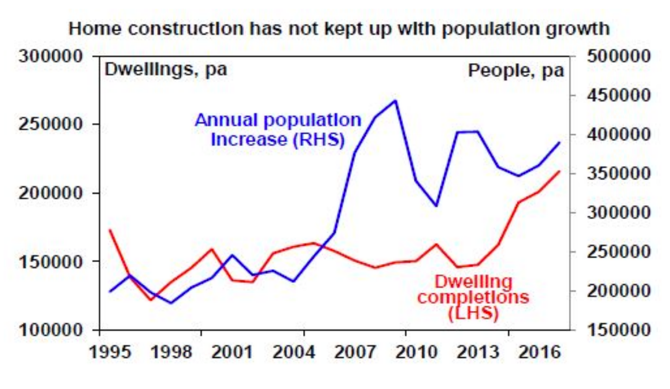
    How deep will Australia’s recession be?

    How deep will Australia’s recession be…

    How deep will Australia’s recession be?

    Introduction

    This is our 4th update since the COVID-19 crisis started. The feedback we are getting is that our SFP insights have been very welcomed, and they have represented a voice of reason in an ocean of fear. Sydney Financial Planning has been operating for 31 years. In 1991 during the recession we had to have, we were there to help guide our clients through this tough period. In 1991, 2001, 2008 and again today in 2020 when the financial markets fell dramatically, we continue to be here for you, guiding and advising you through a rough patch.

    Is this normal?

    Looking forward, is this just a normal recession we will go through or is it worse and deeper? Or is it short-lived? Will we get back to normal quickly? When will the financial markets return to normal?

    At the time of penning this article, the Australian Share Market has staged a
    staggering 20% recovery. So, congratulations to all our clients who did not panic. Congratulations to our clients who took our advice, and took advantage of this fantastic opportunity to buy in at a 40% discount.

    A great proportion of the working population has never known a recession in Australia, and others will be haunted by the last in the early 1990s. This time around, I think Australia is in for a different experience to what we’ve seen and known before – and that’s not entirely a bad thing.

    The Australian government has, rightly, sacrificed economic activity in the name of health in response to the COVID-19 crisis. It’s not alone in this, as you’d well know, major economies worldwide have done and are doing the same thing, albeit in different ways.

    An unfortunate victim in this is Australia’s almost 30-year run of economic growth as we are experiencing our first recession since 1991. The March quarter is most likely going to be negative, and the June quarter will see a big hit to economic activity thanks to the
    virus-driven shutdowns, possibly in the order of 10 percent. In other words, our economy will shrink considerably as this virus runs its course.

    Again, Australia won’t be alone in this, a global recession is likely as major powerhouses like the US and China factor in the huge economic hit of social distancing, isolation measures, and a virtual shutdown of regular activities, businesses, and services that are not essential.

    How will this affect me?

    There is a range of factors Australians will feel as we move through the recession period, and a big one will be how tough the jobs market is. There will be much higher unemployment, it will be harder to switch jobs, and it’s reasonable to expect more redundancies and terminations as the crisis continues.

    This leads to a loss in income and falling wages, which reduces the spending power of affected Australians. Compounding that, even for those who are holding on to their jobs, uncertainty will rise – people worry about the future, they worry about their income, they worry about their employment prospects. That will impact spending patterns, and how much people are willing to part with beyond the essentials.

    It’s worth pointing out some of the potential opportunities for our investors who are prepared to take a long-term view. For one, interest rates will be lower, the official cash rate is currently sitting at the all-time low of 0.25%. This will mean it’s cheaper to service a mortgage.

    The residential property market is also likely to take a hit, which could provide lower entry points for people who have struggled – particularly in cities like Sydney and Melbourne – with affordability. The same logic applies to shares. Although the market is currently more volatile, for those with a long-term outlook, there are opportunities to find value at a lower price point. This especially applies to all those reinvested dividends, if you’re in the accumulation stage.

    Finally, what we think will be different about the recession before us and those Australia has seen before, is that the current crisis is not the result of a bust after a boom. This is an enforced shutdown and a significant disruption – it was not caused by anything fundamental in the Australian economy. Because of that, we are positive that once the virus is under control, we can recover and reach a more normal functioning in a quicker way than we have before. Adding confidence to this is that government and financial support programs – notably the wage subsidy and debt payment holidays – have been applied early and aggressively and should help protect many businesses and individuals so that the economy can bounce back reasonably quickly once the virus is under control.

    Stay the course and keep healthy. This too shall pass.


    Advice team of Sydney Financial Planning


    Remember we are available to help you during this unprecedented time…

    If you have ANY questions please get in touch to speak with one of our Financial Planners we’re here to help, either book a virtual meeting of get in contact with us on 02 9328 0876.


    Article by Michal Bodi | Senior Financial Planner


    General Disclaimer: This article contains information that is general in nature. It does not take into account the objectives, financial situation or needs of any particular person. You need to consider your financial situation and needs before making any decisions based on this information. Please seek personal financial advice prior to acting on this information.
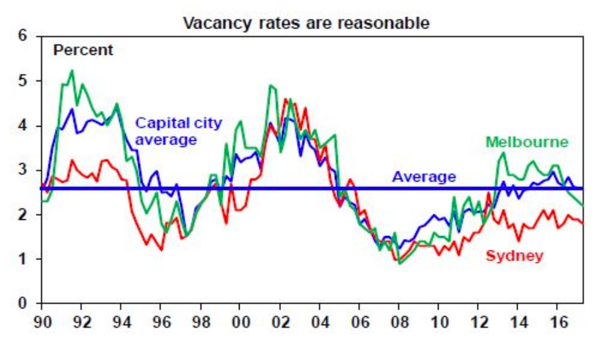
    Photo by Casey Horner on Unsplash


    Coronavirus - Recession, Depression or Economic Hit?

    Is coronavirus driving a recession, depression or an economic hit like no other?

    Coronavirus - Recession, Depression or Economic Hit?

  • There are big differences between the current disruption to economic activity – which could be very deep in the short term – and past recessions and depressions.
  • Introduction

    Global and Australian shares have fallen well beyond the 20% decline commonly used to delineate a bear market. From their highs to their recent lows major share markets have had roughly 35% falls as investors have moved to factor in a big hit to growth from coronavirus shutdowns.

    Recession now looks inevitable and they tend to be associated with deep and long bear markets, but now there is even talk of depression suggesting an even deeper bear market. In reality, there are big differences now compared to past recessions and the Great Depression, so it really looks like an economic hit like no other with very different implications for the bear market in shares. But let’s first look at past bear markets as they provide some lessons for investors regardless of the cause.

    The two bears – gummy & grizzly

    There are 2 types of bear markets in shares:

    • “gummy” bear markets with falls around 20% meeting the technical definition many apply for a bear market but where a year after falling 20% the market is up (like in 1998 in the US, 2011 and 2015-16 for Australian & global shares); and
    • “grizzly” bear markets where falls are a lot deeper and usually longer lived (like in 1973-74, US and global shares through the tech wreck or the GFC).

    I can’t claim the terms “gummy bear” and “grizzly bear” as I first saw them applied by stockbroker Credit Suisse a few years ago. But they are a good way to conceptualise bear markets. Grizzly bears maul investors but gummy bears eventually leave a nicer taste (like the lollies!). The next table takes a closer look at bear markets. It shows conventionally defined bear markets in Australian shares since 1900 – where a bear market is a 20% decline that is not fully reversed within 12 months. The first column shows bear markets, the second shows the duration of their falls and the third shows the size of the falls. The fourth shows the percentage change in share prices 12 months after the initial 20% decline. The final column shows the size of the rebound over the first 12 months from the low.

    bear markets au shares since 1900

    Based on the All Ords. I have defined a bear market as a 20% or greater fall in shares that is not fully reversed within 12 months. Source: Global Financial Data, Bloomberg, AMP Capital

    Since 1900 there have been 12 gummy bear markets (in black) and six grizzly bears (in red). Several points stand out.

    • First, gummy bear markets tend to be shorter & see smaller declines around 26% compared to 46% for the grizzly bears.
    • Second, the average rally over 12 months after the initial 20% fall is 15% for the gummy bear markets but it’s a 23% decline for the grizzly bear markets.
    • Third, the deeper grizzly bear markets are invariably associated with recession, whereas the milder gummy bear markets including the 1987 share market crash tend not to be. All the six grizzly bear markets, excepting that of 1951-52, saw either a US or Australian recession or both whereas less than half of the gummy bear markets saw recession. It’s also the case for the US share market.
    • Finally, once the bear market ends the rebound is strong with an average gain of 29%. Trying to time this is hard with many who get out on the way down finding they don’t get back in until the market has risen above where they sold!

    Recession versus depression or something else?

    So, one of the key messages from history is that if we have a recession then the bear market will likely be grizzly and severe with markets even lower than they are today in 12 months’ time. It’s not necessarily that simple though as the shock this time is very different to those seen in the past. But first the bad news. Recession now looks inevitable. There is now even talk of “depression”. While there is a huge unknown around how long it will take to control the virus and hence how long the shutdowns will last it is looking clear that the short term hit to GDP will be deeper than anything seen in the post WW2 period hence the increasing references to the pre-war depression:

    • Chinese business conditions PMIs for February fell an unprecedented 24 points due to shutdowns starting 23rd January. Consistent with this Chinese economic activity indicators are down 20% from levels a year ago. Chinese March quarter GDP could well be down 10% or so.
    • Business conditions PMIs for the US, Eurozone, Japan and Australia all plunged in March as lockdowns ramped up. The average decline for these countries composite business conditions PMIs was an unprecedented 12 pts. This takes them below levels seen in the GFC. And the shutdowns have only just started so further falls are likely in April. So like China, developed countries could conceivably see 10% or so falls in GDP centred around the June quarter.

    g3 bus conditions pmis

    Source: Bloomberg, AMP Capital

    impact to Australia GDP from covid19

    Source: ABS, AMP Capital

    • By way of example the next chart shows the industry make-up of the Australian economy. The shutdowns will see a large hit to roughly 25% of the Australian economy, particularly accommodation & culture, retailing & real estate.

    Big differences v past recessions and depressions

    But while the slump in economic activity may be deeper than anything seen in the post war period, depression may not be the best description. Most definitions of depression focus on it being over several years and seeing a very deep fall in GDP compared to a recession which is shorter and shallower. The current hit to economic activity may be very deep but it won’t necessarily be longer than past recessions. And there is good reason to believe that if the virus comes under control in the next 2-6 months and we minimize the collateral damage from the shutdowns that the hit to activity may be shorter. There are big differences between the current situation and that of past recessions and Great Depression of the 1930s:

    • First, recessions and The Great Depression (which saw GDP contract by 36% over 4 years and unemployment rise to 25% in the US and GDP fall by 9.4% in Australia with a rise in unemployment to 20%) were preceded by a period of excess in terms of investment, consumer discretionary spending, private debt growth and inflation that had to be unwound. This time around there has been no generalised period of excess and there has been no large-scale monetary tightening to bring on a downturn.
    • Second, monetary policy was tightened in the lead up to past recessions and in the early phase of the Great Depression whereas global monetary policy was eased last year and that easing has accelerated this month with rate cuts, a renewed ramp up of quantitative easing (QE) and central banks around the world establishing various ways to ensure credit flows to the economy. In the 1930s banks were simply allowed to fail. Now they are being supported by ultra-cheap funding. Much of this owes to the GFC experience which has made it easier for central banks to now ramp up QE and introduce support mechanisms.
    • Third, going into the Great Depression fiscal policy was tightened to balance budgets whereas in the last month we have seen massive and still growing global fiscal policy stimulus swamping that of the GFC. The latest US fiscal stimulus package alone is around 9% of US GDP.

    g20 countries fiscal thrust

    Source: IMF, AMP Capital

    • Fourth, there has been no trade war such as the Smoot-Hawley 20% tariffs on US imports that were met by global retaliation and saw global trade collapse in the 1930s.

    The bottom line is that while we may see the biggest hit to global and Australian GDP since the 1930s thanks to the shutdowns, there are big differences compared to the Depression suggesting that a long drawn out global downturn is not inevitable. Basically, it’s a disruption to normal activity caused by the need to stay at home. In fact, growth could rebound quickly once the virus is under control and policy stimulus impacts. Which in turn should benefit share markets and could see this latest bear market turn into a gummy bear market rather than a grizzly bear market. Of course, at this point we are still waiting for convincing evidence that markets have bottomed. And the key is that the number of new cases of coronavirus starts to slow and that collateral damage from the shutdowns are kept to a minimum.

    Closing Comment

    Wow a lot can change in a short period of time!

    In my last update I acknowledge there was a lot we did not know about this event and how it may play out. I finished with what we do know. After 31 years in Financial Planning
    I have learnt that numbers and history do not lie, that’s why we are obsessed with numbers and graphs to illustrate, our conclusions.

    I now ask you to re-read the table above, of what happened to the Australian Share market over the past 100 years when negative events occurred Globally, then look at the % gain in first 12 months after a low. Numbers don’t lie, nor history. Markets will recover, and when you’re sick you talk to the Medical Dr, when your financial affairs are sick talk to the Financial Dr. Now more than ever, you need to talk and review your situation to navigate out of here.

    Please feel free to call us, we’re here to help you.

    Bill and the team at SFP.


    Remember we are available to help you during this unprecedented time…

    If you have ANY please get in touch to speak with one of our Financial Planners we’re here to help, either book a virtual meeting of get in contact with us on 02 9328 0876.


    Article by Bill Bracey – Principal & Senior Financial Planner | Sydney Financial Planning


    This article was prepared by Dr Shane Oliver. Dr Shane Oliver who provides economic forecasts and analysis of key variables and issues affecting, or likely to affect, all asset markets. He also provides economic forecasts and analysis of key variables and issues affecting, or likely to affect, all asset markets.

    Important note: While every care has been taken in the preparation of this document, AMP Capital Investors Limited (ABN 59 001 777 591, AFSL 232497) and AMP Capital Funds Management Limited (ABN 15 159 557 721, AFSL 426455) make no representations or warranties as to the accuracy or completeness of any statement in it including, without limitation, any forecasts. Past performance is not a reliable indicator of future performance. This document has been prepared for the purpose of providing general information, without taking account of any particular investor’s objectives, financial situation or needs. An investor should, before making any investment decisions, consider the appropriateness of the information in this document, and seek professional advice, having regard to the investor’s objectives, financial situation and needs. This document is solely for the use of the party to whom it is provided.

    General Disclaimer: This article contains information that is general in nature. It does not take into account the objectives, financial situation or needs of any particular person. You need to consider your financial situation and needs before making any decisions based on this information. Please seek personal financial advice prior to acting on this information.
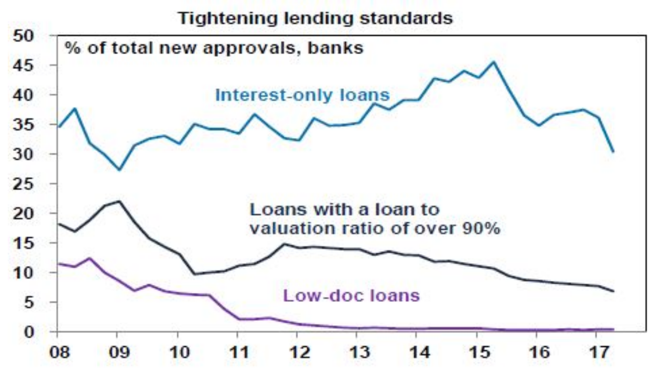
    Federal Government Stimulus Package 2020

    Further Federal Government stimulus package announced

    Federal Government Stimulus Package 2020

    The new measures include initiatives for individuals, households and businesses. Business initiatives include measures to both enhance cashflow and provide easier access to credit.
    Enabling legislation (where required) is expected to be introduced to Parliament in the sitting week commencing 23 March 2020.

    The proposed measures are briefly summarised below and will require passage of legislation and/or regulations to provide certainty as to the specifics of the proposals.

    Federal Budget: the Government has also announced that due to continuing uncertainty associated with the Coronavirus pandemic that the Federal Budget which was due to be handed down in May will be deferred until 6 October 2020.

    1. Measures to support individuals & households

    Proposed effective date: various, see below.

    Temporary early access to superannuation.

    Proposed effective date: 2019-20 and first quarter (approx.) 2020-21. Applications available from mid-April 2020.

    The Government recognises that immediate financial necessities may temporarily outweigh the stated purpose of superannuation as a retirement savings vehicle and will temporarily allow additional early access to super savings in prescribed circumstances.

    People who meet the below criteria will be allowed to access:

    • up to $10,000 of their super before 1 July 2020, and
    • up to an additional $10,000 in the three months starting from 1 July 2020 (timeframe is approximate and subject to legislation).

    Amounts released under these rules will be paid tax-free and will not affect Centrelink or DVA payments.

    Individuals eligible to apply for early release include:

    • Those who are unemployed; or
    • Those eligible to receive Jobseeker Payment, equivalent Youth Allowance, Parenting Payment, Special Benefit or Farm Household Allowance; or

    Those who on or after 1 January 2020:

    • Were made redundant; or
    • Had their working hours reduced by 20% or more; or
    • As a sole trader, their business was suspended or turnover decreased by at least 20%.

    Those eligible must apply to the ATO through the MyGov website and must self-certify that they meet the above requirements. The ATO will then process the application and issue a Determination to the applicant and their super fund.

    The super fund will be able to then pay the applicant directly. Those eligible will only be allowed one withdrawal application in each period (i.e. cannot ‘top-up’ by making a second request if an original withdrawal for less than $10,000 was made).

    Applications for early release of super under this measure are expected to commence from mid-April 2020, approval and benefit payment time frames have not been announced at the time of writing.

    Early release of super benefits under this measure will also be available to members of SMSFs.

    Accessing super benefits in times of market down-turns is usually not recommended as it may crystallise losses. However members who experience loss of employment or a significant decrease in income may find this measure provides immediate financial relief and the basis to re-build.

    Further details of this measure are available in this fact sheet released by Treasury.

    Support for retirees – temporary reduction in minimum pension drawdown requirements

    Proposed effective date: Financial years 2019-20 and 2020-21.

    Similar to measures that applied following the 2008 Global Financial Crisis, the Government has proposed a 50% reduction in the minimum income drawings required from account based pensions and similar products for the 2019-20 and 2020-21 income years.

    This measure is designed to allow those whose circumstances permit to reduce income payments from their superannuation based pensions or income streams so as to minimise the need to sell down assets in depressed markets.

    Those who have already taken 50% or more of the required minimum payment in the 2019-20 financial year could contact their fund and cease any further payments until 30 June (subject to passage of regulations/legislation).

    This measure is not compulsory. Individuals who need the income or simply do not wish to reduce their income payments need not take action.

    Superannuation pensioners who are funding their income requirements from a cash account may also decide to take no action.

    Details of this measure are available in this Fact Sheet released by Treasury.

    Support for retirees and income support recipients – further reduction in deeming rates

    Proposed effective date: 1 May 2020.

    Adding to the 12 March 2020 announcement, the Government has announced a further 0.25% reduction in deeming rates.

    This will mean that part-rate pensioners and allowees will have less income assessed from their financial investments. If a recipient is income tested, the effect of the reduced deeming rate may result in an increase in social security entitlements.

    Any increase in the amount of income support received due to the reduction in deeming rates will commence to flow through to clients’ bank accounts from 1 May 2020.

    The following table illustrates the new deeming rates:

    Table 1: Reduction in deeming rates

    sfp e16 001 reduction in deeming rates

    Payments to income support recipients (households)

    Proposed effective date: various, see below.

    The Government will now provide two payments of $750 to eligible social security, veteran and other income support recipients (including concession card holders). Each $750 payment is a set amount, regardless that the recipient may have multiple eligibility (e.g. be an income support recipient and concession card holder).

    The first payment will be made to those receiving eligible income support or other benefits as at 12 March 2020, or those who have applied for a benefit as at that date (or up to 13 April 2020) and are subsequently approved.

    The second payment will be available to those who are eligible income support recipients or concession card holders as at 10 July 2020 and will be paid automatically from 13 July 2020. However, those who are receiving a payment that is eligible to receive the Coronavirus supplement (see below) will not receive this second $750 payment.

    Each eligible person in a household can receive the payment (e.g. a pensioner couple would receive a total of $1,500 in each round of payments).

    The payments will be exempt from tax and not included in the income test for social security, veteran or Farm Household Allowance payments.

    Eligible recipients must be residing in Australia. For the first payment, eligible benefits include:

    • Age Pension
    • Disability Support Pension
    • Pension Concession Card
    • Carer Payment and Allowance
    • Commonwealth Seniors Health Card
    • Veteran and War Widow(er) payments
    • Veteran Gold Card
    • Youth Allowance
    • Newstart Allowance/Jobseeker payment
    • Farm Household Allowance
    • Family Tax Benefit
    • Parenting Payment
    • Austudy
    • Partner Allowance

    The first payment will be made from 31 March 2020 with 90% of payments expected to be made by mid-April 2020.

    The payment will be made automatically to income support recipients. Those whose only qualifying benefit is a concession card will be contacted to confirm bank account details.

    In addition, eligibility criteria for benefits such as Sickness Allowance and Youth Allowance or other study related payments will be relaxed where the recipient can demonstrate inability to work or lack of compliance is due to Coronavirus related causes.

    To be eligible for the second payment the person must be residing in Australia and receiving one of the payments or concession cards listed above except for payments which receive the Coronavirus supplement (see below).

    These excluded payments include: Jobseeker Payment, equivalent Youth Allowance, Parenting Payment, Special Benefit or Farm Household Allowance.

    The Government Fact Sheet on Payments to Households is available from Treasury.

    Enhanced income support for individuals

    Proposed effective date: 27 April 2020

    The Government is temporarily expanding eligibility to income support payments and establishing a new temporary ‘Coronavirus supplement’. The supplement will be paid at the fixed rate of $550 per fortnight for six months commencing 27 April 2020 and is in addition to existing income support payments.

    Those eligible for the supplement include existing and new recipients of the following payments:

    • The Jobseeker Payment (previously Newstart Allowance and other payments transitioning to the Jobseeker Payment);
    • Youth Allowance (YA) Jobseeker Payment;
    • Parenting Payment (partnered and single);
    • Farm Household Allowance; and
    • Special Benefit recipients.

    For the period of the Coronavirus supplement there will also be expanded access to the payments listed above.

    The Jobseeker payment (and YA Jobseeker payment) will be available to permanent employees who lose their jobs. These payments will also be available to sole traders, self-employed and contract or casual workers whose reduced income meets the income test criteria.

    Asset testing of Jobseeker payment, YA Jobseeker payment and Parenting Payment will be waived for the period of the supplement.

    The one week ordinary waiting period has already been waived and the Liquid Assets Waiting Period (LAWP) will also be waived for those eligible for the supplement. Those already serving a LAWP will have the remainder waived.

    Income maintenance periods and compensation preclusion periods will continue to apply. Claimants for the Jobseeker payment will have to certify that they are not receiving or eligible for paid employer leave or accessing income protection payments.

    At this time measures are also being taken to streamline the application process including reduced documentation requirements and relaxation of mutual obligation and study requirements where these are impacted by the Coronavirus.

    Details of this measure are available in this Fact Sheet released by Treasury.

    2. Measures to support small and medium size employers

    Proposed effective date: Various – see below

    With reference to the tax-free payment announced by the Government on 12 March 2020 to boost cash flow for small and medium size businesses.

    The Government has now indicated it will enhance that previously announced tax-free cash flow boosting payment. Instead of the previously announced $25,000 maximum, the government is to now provide up to $100,000 (minimum payment of $20,000) to eligible small and medium-sized businesses. Payments will now also be made to eligible not for-profits (NFPs including charities) that employ people.

    Small and medium-sized business entities (including NFPs/charities) with aggregated annual turnover under $50 million and that employ workers are eligible.

    The payments will only be available to active eligible employers established prior to 12 March 2020. However, charities which are registered with the Australian Charities and Not-for-profits Commission will be eligible regardless of when they were registered, subject to meeting other eligibility requirements. This recognises that new charities may be established in response to the Coronavirus pandemic.

    Under the enhanced arrangements, tax-free payments will be made in two stages.

    First stage

    Eligible businesses that withhold tax to the ATO on their employees’ salary and wages will under the first stage receive a payment equal to 100% (up from 50%) of the amount withheld, up to a maximum payment of $50,000.

    Eligible businesses that pay salary and wages will receive a minimum payment of $10,000 (up from $2,000) even if they are not required to withhold tax.
    The tax-free payment in this first stage will be delivered by the ATO as a credit in the activity statement system from 28 April 2020 upon businesses lodging eligible upcoming activity statements.

    Second stage

    In the second stage, additional payments will be made in the July – October 2020 period. To qualify for the additional second stage payments, the entity must continue to be active.

    Eligible entities will receive the additional payments equal to the total of all of the boosting cash flow for employers payment they received under the first stage. This means that eligible entities will receive at least $20,000 (2 x $10,000) minimum, up to a total of $100,000 (2 x $50,000) maximum combined under both payments.

    For monthly activity statement lodgers, the additional second stage payments will be delivered as an automatic credit in the activity statement system. This will be equal to a quarter of their total first stage Boosting Cash Flow for Employers payment and received following the lodgement of their June 2020, July 2020, August 2020 and September 2020 activity statements (up to a total of $50,000).

    For quarterly activity statement lodgers, the additional second stage payments will also be delivered as an automatic credit in the activity statement system. This will be equal to half of their total first stage Boosting Cash Flow for Employers payment and received following the lodgement of their June 2020 and September 2020 activity statements (up to a total of $50,000).

    Further details of this measure are available in this Fact Sheet released by Treasury.

    Other measures announced to support the cash flow needs of small and medium-sized business entities include:

    Under a ‘Coronavirus SME Guarantee Scheme’, the government will provide a guarantee of 50% to SME lenders to support new short-term unsecured loans to SMEs. The Scheme will guarantee up to $40 billion of new lending. According to the government, this will provide businesses with funding to meet cash flow needs by further enhancing lenders’ willingness and ability to provide credit.

    The government is also cutting red tape by providing a temporary exemption from responsible lending obligations for lenders providing credit to existing small business customers. This reform is aimed at helping small businesses get access to credit quickly and efficiently.

    As always I want to reiterate that myself and the team at SFP are here to answer ANY questions you may have during this time. Stay safe in these uncertain times, we’re in this together.


    Bill and the team at SFP.


    If you have ANY questions during this unprecedented time…

    Please get in touch to speak with your Financial Planner we’re here to help, either book a virtual meeting of get in contact with us on 02 9328 0876.


    Bill Bracey – Principal & Senior Financial Planner | Sydney Financial Planning


    General Disclaimer: This article contains information that is general in nature. It does not take into account the objectives, financial situation or needs of any particular person. You need to consider your financial situation and needs before making any decisions based on this information. Please seek personal financial advice prior to acting on this information.
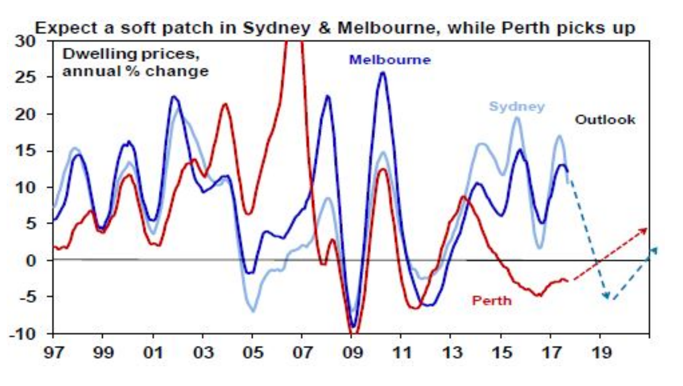
    Coronavirus and Financial Markets Melt Down

    Coronavirus and financial markets melt down. What to do?

    Coronavirus and Financial Markets Melt Down

    Maybe I was wrong? Australians rushing out buying toilet paper and fighting over it like it was gold being handed out for free.

    Some wise person once said:

    “Off with the head and on goes a pumpkin!”

    Thank god my clients still have their own head and use the knowledge they have gained through us and are not making irrational decisions about their investments.

    Yes, the phone rang, and yes, we are all concerned, but the vast majority asked me then same question.

    Q: “Bill, in all your correspondence you have sent us this calendar year – is this what you meant when you said, “This is how the rich get richer and the poor get poorer”?

    A: YES!

    Then most asked me…

    Q: “Is the time right now to start to invest when assets values have fallen greatly?”

    A: YES! (but I also say) patience grasshopper.


    This crisis will eventually pass, as investors and Australians become accustomed to the new normal that included the new coronavirus COVID-19, becoming a normal part of daily life along with the flu, obesity, car accidents and other medical issues.

    The difficult part is the ‘unknown’ as we don’t know how long the dislocation phase will last, where we need to reduce social interaction and possible isolation for a limited time. This has significant economic impacts and greatly increases the probability of a recession.

    The global markets have moved from raging Bull to Bear Market. How long will this last and when is it good to start investing again?

    That’s the Million-dollar question.

    The answer is; nobody knows. The best advice is everybody’s situation is vastly different and you need individual high-quality advice.

    What I do know is;

    • That we are in a bear market and we don’t know how far away the bottom is.
    • That right now there is possibly some phenomenal buying opportunities.
    • That markets perform over time and bounce back as seen in the below table.

      sfp e15 001 us stock markets 10 worst days

      Source: Schroders. Refinitv data correct as at 3 March, 2020. Data shown is for the S&P 500 Total Return Index, which includes price increases and dividend payments. Past performance is not a guide to future returns. 413199

    • This is a period of adjustment because we are moving from a long Bull market and nobody can ever pick the bottom of the Bear Market (nor the top of the Bull Market for that matter).
    • If you buy somewhere towards the bottom of the market, there is exceptional value and money to be made.
    • In times like this, the poor unadvised panic and sell at the bottom, and the well-advised rich buy from the poor. That’s how the Rich get Richer!
    • I’ve started investing part of my spare cash back into to the market.
    • I’ve been through many of these volatile times before I’ve learnt what to do and how to best advise clients, as do all our Financial Planners at Sydney Financial Planning.

    If you still have questions and things are not clear; I urge you to arrange to talk with your Financial Planner.


    Bill Bracey and the advice team


    Have you set things up to weather this trend?

    If you need your personal situation reviewed by your Financial Planner or you don’t have a planner yet, get in contact with us on 02 9328 0876.


    Bill Bracey – Principal & Senior Financial Planner | Sydney Financial Planning

    General Disclaimer: This article contains information that is general in nature. It does not take into account the objectives, financial situation or needs of any particular person. You need to consider your financial situation and needs before making any decisions based on this information. Please seek personal financial advice prior to acting on this information.

    2020 plunge in shares

    The plunge in shares – seven things investors need to keep in mind

    2020 plunge in shares

  • Shares may still have more downside and the uncertainty around the coronavirus crisis is very high, but we are of the view that it’s just another correction.
  • Key things for investors to bear in mind are that: corrections are normal; in the absence of recession, a deep bear market is unlikely; selling shares after a fall locks in a loss; share pullbacks provide opportunities for investors to buy them more cheaply; while shares may have fallen, dividends are smoother; and finally, to avoid getting thrown off a long-term investment strategy it’s best to turn down the noise during times like this.
  • Introduction

    The plunge in share markets over the last week has generated much coverage and consternation. This is understandable given the rapidity of the falls – with US shares having their fastest 10% fall from an all-time high on record – and the uncertainty around the coronavirus (Covid-19) and its impact on economic activity. From their highs to recent lows US shares have fallen 13%, Eurozone shares have fallen 16%, Japanese and Chinese shares have fallen 12% and Australian shares have fallen 12%. This note looks at the issues for investors and puts the falls into context.

    What’s driving the latest plunge?

    The plunge basically reflects two things.

    • After very strong gains from their last greater than 5% correction into August last year, share markets had become vulnerable to a correction.
    • The uncertainty around the impact of the coronavirus outbreak which is on the verge of becoming a pandemic and its impact on global growth has unnerved investors dramatically. Shares had recovered from their initial fall on the back of the virus into early February on signs that the number of new cases in China was falling (which is continuing), limited cases outside China and expectations that policy easing would limit any damage. This has been blown apart in the last week as cases have popped up en masse in Italy, South Korea and Iran, more cases have appeared elsewhere around the world and this has resulted in expectations of a deeper and longer hit to global growth.

    After big falls shares have become technically oversold, measures of negative investor sentiment such as the VIX (or fear) index and demand for option protection have spiked. So, shares could have a short-term bounce. But given the uncertainties around Covid-19 – with more cases in the US and Australia likely to pop up – the situation could get worse before it gets better, so the share pullback could have further to go – notwithstanding short-term bounces.

    Considerations for investors

    Sharp market falls with headlines screaming that billions of dollars have been wiped off the share market are stressful for investors as no one likes to see the value of their investments decline. The current situation is doubly stressful because of fears for our own and others health – particularly for the elderly. However, several things are worth bearing in mind:

    First, while they all have different triggers and unfold a bit differently to each other, periodic corrections in share markets of the order of 5%, 15% and even 20% are healthy and normal. For example, during the tech/dot-com boom from 1995 to early 2000, the US share market had seven pull backs greater than 5% ranging from 6% up to 19% with an average decline of 10%. During the same period, the Australian share market had eight pullbacks ranging from 5% to 16% with an average fall of 8%. All against a backdrop of strong returns every year.

    During the 2003 to 2007 bull market, the Australian share market had five 5% plus corrections ranging from 7% to 12%, again with strong positive returns every year. More recently, the Australian share market had a 10% pullback in 2012, an 11% fall in 2013 (the taper tantrum), an 8% fall in 2014, a 20% fall between April 2015 and February 2016, a 7% fall early in 2018, a 14% fall between August and December 2018 and a 7% fall into August last year. And this has all been in the context of a gradual rising trend. And it has been similar for global shares – with the last big fall in US shares being a 20% plunge into Christmas eve 2018. See the next chart. While they can be painful, share market corrections are healthy because they help limit a build-up in complacency and excessive risk taking.

    sfp e14 001 corrections normal

    Source: Bloomberg, AMP Capital

    sfp e14 002 Australian shares climb a wall of worry

    Source: Bloomberg, AMP Capital

    Related to this, shares climb a wall of worry over many years with numerous events dragging them down periodically, but with the long-term trend ultimately up & providing higher returns than other more stable assets. Bouts of volatility are the price we pay for the higher longer-term returns from shares.

    Second, the main driver of whether we see a correction (a fall of 5% to 15%) or even a mild bear market (with say a 20% decline that turns around relatively quickly like we saw in 2015-2016) as opposed to a major bear market (like that seen in the global financial crisis (GFC)) is whether we see a recession or not – notably in the US as the US share markets tends to lead for most major global markets. The next table shows US share market falls greater than 10% since the 1970s. I know it’s heavy – but I like this table! The first column shows the period of the fall, the second shows the decline in months, the third shows the percentage decline from top to bottom, the fourth shows whether the decline was associated with a recession or not and the fifth shows the gains in the share market one year after the low. Falls associated with recessions are highlighted in red.

    sfp e14 003 falls in us market greater than 1970s

    Source: Bloomberg, AMP Capital

    Several points stand out:

    • First, share market falls associated with recession tend to be longer and deeper. 
    • Second, after the low the, share markets generally rebound sharply – which invariably makes it very hard for investors to time, as by the time they realise what has happened and get back in the market is above where they sold. 
    • Finally, as would be expected the share market rebound in the year after the low is much greater following falls associated with recession.

    So, whether a recession is imminent or not in the US is critical in terms of whether we will see a major bear market or not. In fact, the same applies to Australian shares. Our assessment is that a US/global recession is not inevitable. We have not seen the excesses – in terms of overall debt growth (although housing debt is a source of risk in Australia), overinvestment, capacity constraints and inflation – that normally precede recessions in the US, globally or Australia. And we have not seen the sort of monetary tightening that leads into recession. In fact, monetary conditions remain very easy. However, the uncertainty around the coronavirus outbreak and the likelihood of economic shutdowns designed to contain it beyond those in China do suggest a greater than normal risk on this front. That said even if there were a recession growth would likely rebound quickly once the virus came under control as economic activity sprang back to normal helped by policy stimulus.

    Third, selling shares or switching to a more conservative investment strategy or superannuation option after a major fall just locks in a loss. With all the talk of billions being wiped off the share market, it may be tempting to sell. But this just turns a paper loss into a real loss with no hope of recovering. The best way to guard against making a decision to sell on the basis of emotion after a sharp fall in markets (as many including me are tempted to do!) is to adopt a well thought out, long-term strategy and stick to it.

    Fourth, when shares and growth assets fall, they are cheaper and offer higher long-term return prospects. So, the key is to look for opportunities the pullback provides – shares are cheaper and some more than others. It’s impossible to time the bottom but one way to do it is to average in over time.

    Fifth, while shares have fallen, dividends from the market haven’t. They will come under some pressure as the economy and profits take a hit from a deeper and longer coronavirus outbreak. But companies like to smooth their dividends over time – they never go up as much as earnings in the good times and so rarely fall as much in the bad times. So, the income flow you are receiving from a well-diversified portfolio of shares is likely to remain attractive, particularly against bank deposits.

    sfp e14 004 aust shares offer attractive yield

    Source: RBA, Bloomberg, AMP Capital

    Sixth, shares and other related assets often bottom at the point of maximum bearishness, ie, just when you and everyone else feel most negative towards them. So, the trick is to buck the crowd. “Be fearful when others are greedy. Be greedy when others are fearful,” as Warren Buffett has said.

    Finally, turn down the noise. At times like this, negative news reaches fever pitch. Talk of billions wiped off share markets and warnings of disaster help sell copy and generate clicks & views. But we are rarely told of the billions that market rebounds and the rising long-term trend in share prices adds to the share market. Moreover, they provide no perspective and only add to the sense of panic. All of this makes it harder to stick to an appropriate long-term strategy let alone see the opportunities that are thrown up. So best to turn down the noise.

    Concluding Comment

    So in summary as I suggested in January in my update to you, times like this offer opportunity and we have seen times like this before. This is where the rich get richer and the poor non advised, get poorer.

    Please take time to watch my 5 minute video that explains what you should be doing with this market.


    Now more than ever its important to keep your nerve and shut out the media who pump FEAR into the masses.

    Please feel free to contact us at Sydney Financial Planning, we are experienced at dealing with volatile times and know what to do.

    Bill Bracey and the team


    Have you set things up to weather this trend?

    If you need your personal situation reviewed by your SFP Planner or you don’t have a planner yet, get in contact with us on 02 9328 0876.


    Bill Bracey – Principal & Senior Financial Planner | Sydney Financial Planning


    This article was prepared by Dr Shane Oliver. Dr Shane Oliver who provides economic forecasts and analysis of key variables and issues affecting, or likely to affect, all asset markets. He also provides economic forecasts and analysis of key variables and issues affecting, or likely to affect, all asset markets.

    Important note: While every care has been taken in the preparation of this document, AMP Capital Investors Limited (ABN 59 001 777 591, AFSL 232497) and AMP Capital Funds Management Limited (ABN 15 159 557 721, AFSL 426455) make no representations or warranties as to the accuracy or completeness of any statement in it including, without limitation, any forecasts. Past performance is not a reliable indicator of future performance. This document has been prepared for the purpose of providing general information, without taking account of any particular investor’s objectives, financial situation or needs. An investor should, before making any investment decisions, consider the appropriateness of the information in this document, and seek professional advice, having regard to the investor’s objectives, financial situation and needs. This document is solely for the use of the party to whom it is provided.

    General Disclaimer: This article contains information that is general in nature. It does not take into account the objectives, financial situation or needs of any particular person. You need to consider your financial situation and needs before making any decisions based on this information. Please seek personal financial advice prior to acting on this information.

    Economy review of 2019 and outlook for 2020

    Review of 2019, outlook for 2020 – the beat goes on

    Economy review of 2019 and outlook for 2020

  • 2020 is likely to see global growth pick up with monetary policy remaining easy. Expect the RBA to cut the cash rate to 0.25% and to undertake quantitative easing.
  • Against this backdrop, share markets are likely to see reasonable but more constrained & volatile returns, and bond yields are likely to back up resulting in good but more modest returns from a diversified mix of assets.
  • The main things to keep an eye on are: the trade wars; the US election; global growth; Chinese growth; and fiscal versus monetary stimulus in Australia.
  • 2019 – growth down, returns up

    Christmas 2018 was not a great one for many investors with an almost 20% slump in US shares from their high in September to their low on Christmas Eve, capping off a year of bad returns from share markets and leading to much trepidation as to what 2019 would hold. But 2019 has turned out to be a good year for investors, defying the gloom of a year ago. In fact, some might see it as perverse – given all the bad news around and the hand wringing about recession, high debt levels, inequality and the rise of populist leaders. Then again that’s often the way markets work – bottoming when everyone is gloomy then climbing a wall of worry. The big global negatives of 2019 were:

    • The trade war and escalating US-China tensions generally. A trade truce and talks collapsed several times leading to a new ratcheting up of tariffs before new talks into year end. 
    • Middle East tensions flared periodically but without a lasting global impact & the Brexit saga dragged on although a near-term hard Brexit looks to have been avoided.
    • Slowing growth in China to 6%. This largely reflected an earlier credit tightening, but the trade war also impacted.
    • Slowing global growth as the trade war depressed investment & combined with an inventory downturn and tougher auto emissions to weigh on manufacturing & profits.
    • Recession obsession with “inverted yield curves” – many saw the growth slowdown as turning into a recession.

    But it wasn’t all negative as the growth slowdown & low inflation saw central banks ease, with the Fed cutting three times and the ECB reinstating quantitative easing. This was the big difference with 2018 which saw monetary tightening.

    Australia also saw growth slow – to below 2% – as the housing construction downturn, weak consumer spending and investment and the drought all weighed. This in turn saw unemployment and underemployment drift up, wages growth remain weak and inflation remain below target. As a result, the RBA was forced to change course and cut interest rates three times from June and to contemplate quantitative easing.The two big surprises in Australia were the re-election of the Coalition Government which provided policy continuity and the rebound in the housing market from mid-year.

    While much of the news was bad, monetary easing and the prospect it provided for stronger growth ahead combined with the low starting point resulted in strong returns for investors. Investment returns for major asset classes 2019

    *Yr to date to Nov. Source: Thomson Reuters, Morningstar, REIA, AMP Capital

    • Global shares saw strong gains as markets recovered from their 2018 slump, bond yields fell making shares very cheap and monetary conditions eased. This was despite several trade related setbacks along the way. Global share returns were boosted on an unhedged basis because the $A fell.
    • Emerging market shares did well but lagged given their greater exposure to trade and manufacturing and a still rising $US along with political problems in some countries.
    • Australian share prices finally surpassed their 2007 record high thanks to the strong global lead, monetary easing and support for yield sensitive sectors from low bond yields.
    • Government bonds had strong returns as bond yields fell as inflation and growth slowed, central banks cut rates and quantitative easing returned.
    • Real estate investment trusts were strong on the back of lower bonds yields and monetary easing.
    • Unlisted commercial property and infrastructure continued to do well as investors sought their still relatively high yields. However, Australian retail property suffered a correction.
    • Commodity prices rose with oil & iron up but metals down.
    • Australian house prices fell further into mid-year before rebounding as the Federal election removed the threat to negative gearing & the capital gains tax discount, the RBA cut interest rates and the 7% mortgage test was relaxed.
    • Cash and bank term deposit returns were poor reflecting new record low RBA interest rates.
    • The $A fell with a lower interest rates and a strong $US.
    • Reflecting strong gains in most assets, balanced superannuation funds look to have seen strong returns.

    2020 vision – growth up, returns still good

    The global slowdown still looks like the mini slowdowns around 2012 and 2015-16. Business conditions indicators have slowed but remain far from GFC levels. See next chart.

    Global manufacturing PMI vs bank policy direction

    While the slowdown has persisted for longer than we expected – mostly due to President Trump’s escalating trade wars – a global recession remains unlikely, barring a major external shock. The normal excesses that precede recessions like high inflation, rapid growth in debt or excessive investment have not been present in the US and globally. While global monetary conditions tightened in 2018, they remained far from tight and the associated “inversion” in yield curves has been very shallow and brief. And monetary conditions have now turned very easy again with a significant proportion of central banks easing this year. See chart. The big global themes for 2020 are likely to be:

    • A pause in the trade war but geopolitical risk to remain high. The risks remain high on the trade front – with President Trump still ramping up mini tariffs on various countries to sound tough to his base and uncertainty about a deal with China, but he is likely to tone it down through much of 2020 to reduce the risk to the US economy knowing that if he lets it slide into recession and/or unemployment rise he likely won’t get re-elected. A “hard Brexit” is also unlikely albeit risks remain. That said geopolitical risks will remain high given the rise of populism and continuing tensions between the US & China. In particular, the US election will be an increasing focus if a hard-left candidate wins the Democrat nomination.
    • Global growth to stabilise and turn up. Global business conditions PMIs have actually increased over the last few months suggesting that monetary easing may be getting traction. Global growth is likely to average around 3.3% in 2020, up from around 3% in 2019. Overall, this should support reasonable global profit growth.
    • Continuing low inflation and low interest rates. While global growth is likely to pick up it won’t be overly strong and so spare capacity will remain. Which means that inflationary pressure will remain low. In turn this points to continuing easy monetary conditions globally, with some risk that the Fed may have a fourth rate cut.
    • The US dollar is expected to peak and head down. During times of uncertainty and slowing global growth like over the last two years the $US tends to strengthen partly reflecting the lower exposure of the US economy to cyclical sectors like manufacturing and materials. This is likely to reverse in the year ahead as cyclical sectors improve.

    In Australia, strength in infrastructure spending and exports will help keep the economy growing but it’s likely to remain constrained to around 2% by the housing construction downturn, subdued consumer spending and the drought. This is likely to see unemployment drift up, wages growth remain weak and underlying inflation remain below 2%. With the economy remaining well below full employment and the inflation target, the RBA is expected to cut the official cash rate to 0.25% by March, & undertake quantitative easing by mid-year, unless the May budget sees significant fiscal stimulus. Some uptick in growth is likely later in the year as housing construction bottoms, stimulus impacts and stronger global growth helps.

    Implications for investors

    Improved global growth and still easy monetary conditions should drive reasonable investment returns through 2020 but they are likely to be more modest than the double-digit gains of 2019 as the starting point of higher valuations and geopolitical risks are likely to constrain gains & create some volatility:

    • Global shares are expected to see returns around 9.5% helped by better growth and easy monetary policy. 
    • Cyclical, non-US and emerging market shares are likely to outperform, particularly if the US dollar declines and trade threat recedes as we expect.
    • Australian shares are likely to do okay but with returns also constrained to around 9% given sub-par economic & profit growth. Expect the ASX 200 to reach 7000 by end 2019.
    • Low starting point yields and a slight rise in yields through the year are likely to result in low returns from bonds.
    • Unlisted commercial property and infrastructure are likely to continue benefitting from the search for yield but the decline in retail property values will still weigh on property returns.
    • National capital city house prices are expected to see continued strong gains into early 2020 on the back of pent up demand, rate cuts and the fear of missing out. However, poor affordability, the weak economy and still tight lending standards are expected to see the pace of gains slow leaving property prices up 10% for the year as a whole.
    • Cash & bank deposits are likely to provide very poor returns.
    • The $A is likely to fall to around $US0.65 as the RBA eases further but then drift up a bit as global growth improves to end 2019 little changed.

    What to watch?

    The main things to keep an eye on in 2020 are as follows:

    • The US trade wars – we are assuming some sort of de-escalation in the run up to the presidential election, but Trump is Trump and often can’t help but throw grenades.
    • US politics: the Senate is unlikely to remove Trump from office if the House votes to impeach and another shutdown is also unlikely but both could cause volatility as could the US election if a hard-left Democrat gets up (albeit unlikely). 
    • A hard Brexit looks like being avoided but watch UK/EU free trade negotiations through the year.
    • Global growth indicators – like the PMI shown in the chart above need to keep rising.
    • Chinese growth – a continued slowing in China would be a major concern for global growth.
    • Monetary v fiscal stimulus in Australia – significant fiscal stimulus could head off further RBA rate cuts and quantitative easing.
    • Low interest rates – look like they’re here to stay for some time yet, that means low returns for cash.
    • Fixed Interest and Bonds – WILL REMAIN LOW YIELDING FOR INVESTORS IN THE SHORT TO MEDIUM TERM, assets like shares and property, can and will have volatility, these assets usually increase in times of extended low interest. I call it ” There’s no Other Option Theory”, IN SHORT, if you’re only getting approx. 1.5 % on cash and can ride out volatility, there really is no other option..

    Concluding comment

    Over time and studying economics for over 120 years, we’ve seen times like this before and what usually happens; is the rich get richer and the poor get poorer.

    The reason why? the rich can borrow money cheaply and can afford to borrow at low cost. Sadly the poor cannot and are forced to sell assets cheaply. Unfair as this is, it’s our job to use this knowledge to help our clients build wealth.

    Now more than ever it’s important to have an ongoing advice relationship with an experienced Financial Planner. Make sure you’re having your regular review with one of our experienced planners and start taking advantage of the knowledge we have to help build wealth.

    Happy New Year to all our clients and hang onto your hats for yet another interesting investment year.

    Bill Bracey and the SFP team.


    Have you set things up to weather this trend?

    If you need your personal situation reviewed by your SFP Planner or you don’t have a planner yet, get in contact with us on 02 9328 0876.


    Bill Bracey – Principal & Senior Financial Planner | Sydney Financial Planning


    Original article prepared by Dr Shane Oliver. Dr Shane Oliver who provides economic forecasts and analysis of key variables and issues affecting, or likely to affect, all asset markets. He also provides economic forecasts and analysis of key variables and issues affecting, or likely to affect, all asset markets.

    Important note: While every care has been taken in the preparation of this document, AMP Capital Investors Limited (ABN 59 001 777 591, AFSL 232497) and AMP Capital Funds Management Limited (ABN 15 159 557 721, AFSL 426455) make no representations or warranties as to the accuracy or completeness of any statement in it including, without limitation, any forecasts. Past performance is not a reliable indicator of future performance. This document has been prepared for the purpose of providing general information, without taking account of any particular investor’s objectives, financial situation or needs. An investor should, before making any investment decisions, consider the appropriateness of the information in this document, and seek professional advice, having regard to the investor’s objectives, financial situation and needs. This document is solely for the use of the party to whom it is provided.

    General Disclaimer: This article contains information that is general in nature. It does not take into account the objectives, financial situation or needs of any particular person. You need to consider your financial situation and needs before making any decisions based on this information. Please seek personal financial advice prior to acting on this information.