Volunteering Abroad
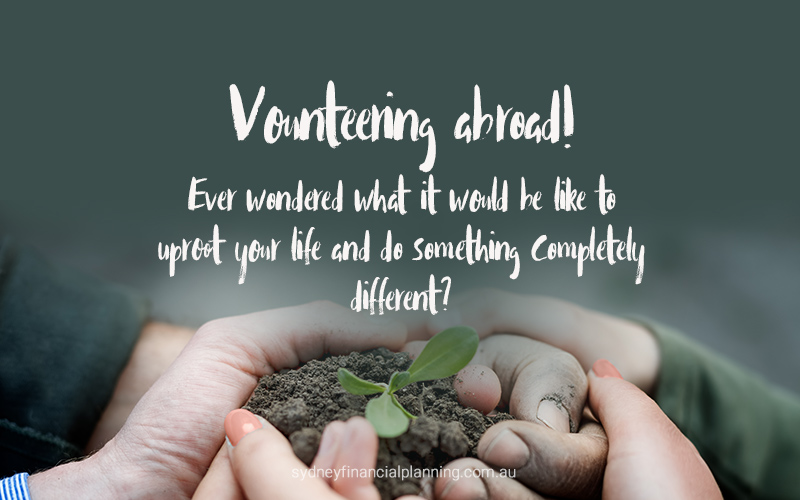
People of all ages do just that by volunteering abroad. In places like Mongolia, Thailand, Romania, Mexico or Fiji, volunteers are needed every day. You could use your skills and experience on projects from archaeology, journalism, environment, to human rights, teaching, sports and healthcare. Whatever your specialisation, if you have the desire to enrich a community, there is a project for you.
Some people volunteer as a ‘gap year’ before they get on with career or study, and more people are viewing the opportunity as a way to broaden their career experience or as a personal test for themselves while they do something worthwhile.
And the good news is that many groups place great value on older volunteers. They recognise that with age, comes experience, skills and patience that younger volunteers can’t offer. Recent years have witnessed a massive growth in the amount of retired volunteers, with teaching and care being very popular areasi.
Volunteering is an exciting way to experience a place differently – building a bridge so a community can safely cross a river during high tide is something you won’t forget in a hurry!
Getting started
Numerous groups organise volunteer opportunities overseas. Some, like Projects Abroad, actively seek professionals who can make a difference in some of the world’s poorest communities.
Your professional association might also organise volunteering trips, including law societies, medical or engineering associations. Use your professional association as a starting point or try some internet research. Check the volunteer group you choose with the Australian government to make sure they’re legitimate.
Things to consider
Before deciding to volunteer abroad:
- Be clear on your reasons. Know why you want to do it as you’ll be putting your life on hold in an unfamiliar place with a complete change in lifestyle and living conditions. Be clear with your organisers why you’re doing it – you’ll get more from the experience and so will the community you work with. If you’re volunteering with another person, be sure your ambitions are well aligned.
- Research. Don’t leave it up to others to decide where you’ll go. Investigate your preferred places, including the political and cultural environment. Will you easily adapt to the culture and living conditions?What are the social norms?
- Choose carefully. Look into the group you want to go with. Are they reputable and acknowledged by Australia?Register your travel plans with the Australian government in case you need support. The organisation you choose will have a big impact on your experience so ask for references from past volunteers like you.
- Organise things at home. Organise your life at home before leaving. Do you have a power of attorney? Consider how your financial affairs will be dealt with while you’re gone. If you’ve got investments, who will make decisions in your absence? Don’t hijack your financial future by ignoring your responsibilities while away, and don’t forget to organise your estate plan, including a current and legal will.
- Safety. Ultimately your personal safety is your utmost concern. Ask as many questions as you need to be satisfied that the project is safe for you.
- Follow the advice provided. Your volunteer group will provide preparation advice and what to do while away. Follow this advice. It could make the difference between enjoying your time and being too ill to perform.
- Know the costs. Be clear on your budget. Consider reserving cash for emergencies. And some projects can drain your health so set money and time aside to recover.
Lastly, have fun! Volunteering abroad is one of the most amazing experiences you’re ever likely to have so make the most of it. You could really make a difference to a community by being part of their life for a short time. Be open to the experience, give generously of your time and knowledge, and reap the rewards for a lifetime.
Been thinking of taking yourself on a volunteering experience?
And want to make sure your finances are in place? it could be helpful to speak with your SFP advisor on 02 9328 0876.
i http://www.projects-abroad.com.au/why-projects-abroad/older-volunteers/
Article by – AMP Life Limited.
General Disclaimer: This article contains information that is general in nature. It does not take into account the objectives, financial situation or needs of any particular person. You need to consider your financial situation and needs before making any decisions based on this information. Please seek personal financial advice prior to acting on this information.