Tag: Financial Coach

How to lead a happier life

However, living a happy life doesn’t always come easy. Concerns about money, relationships and the future can often stand in the way of living the life you want. The good news is there are ways to take charge of your happiness.

Measuring happiness

It may sound simple – but what is happiness? How do we quantify happiness?

The World Happiness Report, published by the United Nations Sustainable Development Solutions Network, uses six key variables to determine a country’s happiness levels:

1. Income
2. Healthy life expectancy
3. Social support (having someone to count on in times of trouble)
4. Generosity
5. Freedom
6. Trust (measured by the absence of corruption in business and government)

Countries that rank highly in these six areas tend to have ‘happier’ populations, with individual’s reporting higher life satisfaction.i

Australia ranked highly in the World Happiness Report 2017, coming in equal ninth place with Sweden.i Norway was first, followed by Denmark, Iceland, Switzerland, Finland and the Netherlands.

Canada and New Zealand were just ahead of Australia, in seventh and eighth place, respectively. The US fell to 14th in 2016 (from third in 2007) due to reduced social support and increased corruption.i

So, as a country we’re doing well – but what about happiness on a personal level?

Achieving happiness each day doesn’t need to be an elusive goal. By building a sense of purpose, strong personal relationships and financial control, you could be well on your way to maximising your happiness.

A sense of purpose

Off the south coast of Japan lies Okinawa, an archipelago that boasts some of the longest living people in the world.ii Along with various other lifestyle factors, their pursuit of other goals lead to a sense of wellbeing and give more meaning to life.

Okinawans have a strong sense of purpose – what they call their ‘ikigai’.ii An ikigai is what drives you to get out of bed every day, your reason for being. It could be sharing your knowledge and skills with others, looking after your family, cooking delicious food, playing a sport or musical instrument, or advocating for others.

Finding an ikigai, whatever it might be, and trying to live it each day could increase your happiness.iii Ask yourself, what is my passion? How do I find meaning in life? When do I feel most at peace or energised?

Strong personal relationships

Enjoying close relationships with caring, supportive people is a key ingredient of wellbeing.iv Having someone by your side to share your thoughts, dreams and fears with, and who makes you feel loved and valued, can help you overcome the obstacles life throws your way. But where to start?

Think about who you reach out to – or have reached out to in the past – to connect and share with. Keep in touch with these people, and put in the effort to rekindle any relationships you’ve been too busy for lately.

Join a group or club. From book clubs to sports teams, bushwalking groups to community advocacy organisations, joining a team that shares your passions is a great way to form a deep connection with someone – and even live your ikigai at the same time!

Financial control

Financial stress affects nearly one in three people in Australia, according to new research from Core Data, commissioned by Australian start-up Financial Mindfulness.v

Importantly, Core Data’s research showed that experiences of financial stress was not confined to low-income households but felt more widely across different salary brackets.v These experiences of financial stress could include being unable to pay bills on time, afford a meal with friends or holiday, or raise sufficient funds in time for something important, among others.vi

So, perhaps minimising financial stress isn’t only about how much money you have – but how well you manage it.

While the idea of reviewing your finances and setting up a budget may provoke feelings of gloom, it could be an effective way to reduce your financial stress and increase your happiness.

If you need further assistance, we are here to offer guidance to help you to achieve your financial and life goals.

Reach out

Remember, it’s not possible to be happy all the time. Many other factors play a huge role in our happiness. If things are getting you down, support is available. Contact beyondblue or call Lifeline on 13 11 14.

By finding your purpose in life, forming strong connections with others and achieving a sense of control over your finances, you can hopefully take charge of creating and maintaining your own happiness. And remember, you’re already off to a good start simply by living in Australia.


Do you want more financial control of your life?

For more help and strategies on taking care of your financial plans, speak to one of our financial planners – to make an appointment, contact us on 02 9328 0876.


i United Nations Sustainable Development Solutions Network (2017), World Happiness Report 2017
ii National Geographic, Blue Zones, Okinawa, Japan
iii World Economic Forum, 9 Lessons from the world’s Blue Zones on living a long, healthy lite
iv Australian Psychological Society (2016), APS Compass for Lile Wellbeing Survey
v Financial Mindfulness, Personal financial stress devastating Australian lives
vi Australian Bureau of Statistics, 6560.0 Household Expensitures Survey, Australia: Sumarry of results 2015-2016

Article by AMP Life, First Published March 2018

General Disclaimer: This article contains information that is general in nature. It does not take into account the objectives, financial situation or needs of any particular person. You need to consider your financial situation and needs before making any decisions based on this information. Please seek personal financial advice prior to acting on this information.


Photo by Priscilla Du Preezk on Unsplash


How to Talk Money With Children – Part 2

Part 2: Children (9-12)

Australian parents have concerns about how their children will navigate their financial future. More than two in five (45%) are concerned their children will lack the skills they need tobe financially successful once they become independent.
FPA Share the Dream Report 2018

How can I teach my tween to make good choices with their pocket money?

Clinical child psychologist and mother of three, Emma Spencer is often asked how much pocket money children get. There’s no one-size-fits-all answer, so she shares how pocket money works in her home.


1

Never just give your kids money. That is my number one rule. There’s no lesson in just handing them money. They need to understand that money is earned, and certain things have to be paid for. I don’t encourage parents to just give out money. Instead, help your child understand that with work they can earn their own money.

2

Pocket money is “earned” money from parents, it’s not an “allowance”. In my mind, there is no difference between a tween’s pocket money and a teen’s income from a part-time job. Every family is different. In our household we have a list of basic daily chores, and also weekly and monthly age-appropriate chores for which the kids earn money.

3

Help your tween budget their pocket money. Give your tween a budget. With a budget, they can learn to plan, and hopefully, not spend money they don’t have.

In our rampant consumer culture, every toy has a use by date and every piece of tech built-in obsolescence, so you get conditioned to upgrade. A budget will help you have this conversation — try try talking about it over dinner.

4

Be sure your tweens understand that online and digital purchases are made with real money, and those choices need to be budgeted just the same.

5

Don’t share everything. I think it’s important that tweens be aware of the family budget. Let them be aware of household spending and the decisions being made, but don’t worry them with topics that create stress.

Tweens are already going through a very sensitive developmental stage with lots of pressure and changes. The last thing that they need is to worry about a possibly, negative family financial situation.


From piggy bank to online bank account

There will come a time in your child’s life when they’re ready to transition from the piggy bank to something more reflective of the way adults use money. The team at Banqer explains how to make invisible money tangible.

1

Show how ‘invisible’ money is real money. For example: If you’re paying $80 for an item, take your kids to the ATM, get the money out, and get them to watch you hand it over the counter. This will help them understand what $80 really means.

2

Include tweens in basic purchasing decisions. At the supermarket, talk about why you’re purchasing one product over another. At check out, let them use your paywave card. Then next time, lift the plastic mystique and let them pay in cash, so they develop an association between the card and physical money.

3

When you feel they’re ready, give your child a prepaid debit card designed for children under 18. It’s like a regular debit card, except you have ultimate control. You can transfer money, set an allowance, and receive notifications when they transact. You can also lock and unlock the card at any time.

Teach your children about spending with a debit card by asking them to imagine paying cash first.

4

Share your household incomings and outgoings to help your child understand adult financial responsibility. Ask them to help you create spreadsheet showing all of your household expenses, including those relating to the children, so they can get a sense of how money works in everyday life.

5

If you feel comfortable, add your household income to the spreadsheet and get your kids to do the maths to see how much is left over each month. No doubt it will be a big eye opener, not to mention it will give them an appreciation for the work you do.


Next month we will be covering the final age group Teens ages 13-18.

Download the eBook – How to Talk Money with Children PDF

Download the full report on research into raising the Invisible Money Generation – FPA Share the Dream PDF


Need some help on how to guide your teens be money wise?

Why not book an appointment or give us a call and arrange to speak with one of our advisors, contact us on 02 9328 0876.

Article by – FPA and Money & Life | www.moneyandlife.com.au

General Disclaimer: This article contains information that is general in nature. It does not take into account the objectives, financial situation or needs of any particular person. You need to consider your financial situation and needs before making any decisions based on this information. Please seek personal financial advice prior to acting on this information.


Photo by Annie Spratt on Unsplash


How to deal with financial stress

These were the findings from the inaugural Financial Stress Index, compiled by global research firm CoreData on behalf of Aussie group, Financial Mindfulness, which indicated financial stress is not only being experienced by low-income households in 2017.i

Findings from the research

Statistics from the Financial Stress Index revealed the following about financially stressed Aussiesi

  • More than 66% felt money worries led to feelings of fear, anxiety and/or depression
  • More than 60% felt their physical health was affected by financial stress
  • About 75% said they argued about money with their partner or family
  • More than 70% said they had problems sleeping due to money concerns
  • Nearly nine out of 10 said they often avoided social functions due to financial stress.

What defines financial stress?

According to the Australian Bureau of Statistics, there are two financial stress indicators-these include financial-stress experiences and missing-out experiencesii

Examples of financial-stress experiences:

  • You’re unable to pay various bills on time
  • You spend more money than you receive
  • You can’t raise $2,000 in a week for something important
  • You seek assistance from friends, family or welfare and community groups.

Examples of missing-out experiences:

  • You’re not able to afford a night out once a fortnight
  • You can’t afford a week-long holiday once a year
  • You can’t afford friends or family over for a meal once a month
  • You aren’t able to cover any recreational activities.

Actions that could help turn things around

Create a budget

Writing down what you earn, owe and spend could help you to create a workable budget, and at the same time let you quickly identify areas where you could be saving.

Save a bit of money regularly

Even a small amount of cash deposited on a frequent basis could go a long way towards your savings goals. In fact, 41% of Aussies say they save just a little at a time_;;;

Pay cash and avoid credit card use

Credit cards are handy but they’ll often cost you as they typically charge high interest rates on top of the amount you’ve already taken out.

Put some emergency cash aside

This will help next time you bust your phone or need a last minute trip to the dentist. Plus, an emergency fund means you won’t have to rely on high interest borrowing options.

Talk money with your partner

One in two Aussie couples admit to arguing about moneyiv, so if you haven’t already, sit down and make sure you’re on the same page, and that both parties’ goals are being considered.

Call other providers

You more than likely have several product and service providers, and figures show you could save more than a grand annually on energy alone just by switching from the highest priced plan to the most competitive on the markeP

Consider the value of a back-up plan

Whether it’s life insurance, income protection (which provides up to 75% of your income if you can’t work due to illness or injury), or contents insurance to cover items that may be lost, damaged or stolen, there are a range of insurances that could help should the unexpected happen.

Care about your future income

The government’s Age Pension alone is unlikely to be able to cover a comfortable or even modest lifestyle in retirementvi, so putting a little extra into super could reduce the potential of further financial stress later on.

Where to go for assistance

If you or someone you know are feeling financially stressed, there is help and information available. We are always here to assist. Alternatively, visit the beyondblue website or phone Lifeline on 13 11 14.


Do you want more financial control of your life?

For more help and strategies on taking care of your financial plans, speak to one of our financial planners – to make an appointment, contact us on 02 9328 0876.


i CoreData / Financial Mindfulness Financial Stress Index – 2017 full press release
ii ABS – Household Expenditure Survey, Australia: Summary of Results, 2015-16
iii ASIC’s MoneySmart – How Australians Save Money table 1
iv Finder – Heated conversations: 1 in 2 Aussie couples argue about finances
v Mozo: Sick of high energy bills? Aussies willing to change providers could be saving over $1,000 a year
vi The ASFA Retirement Standard – June quarter 2017

Article by AMP Life, First Published January 2018

This article contains information that is general in nature. It does not take into account the objectives, financial situation or needs of any particular person. You need to consider your financial situation and needs before making any decisions based on this information.


7 money personalities

Are you the friend that shouts more than what you can afford, or the one that’s happy with a handout because no one knows struggle street like you do?

When it comes to money and people’s behaviour, you may have a few labels or preferred ways of describing those nearest and dearest to you – and surprise surprise, they may do for you too.

I mean, how many times have you heard someone say so-and-so is stingy, or a show pony, or was born with a silver spoon in their mouth, or on the flip side, too generous for their own good?

If it’s something you’ve been thinking about, we’ve listed some common money personalities that may shed some light on where change, or consistency, may be of benefit to you.

Which personality type are you?

1. The scrooge

Generosity is not your strong suit and whether or not there’s a reason for it, you don’t like giving and you don’t like spending, unless maybe it’s on someone else’s credit card.

You might be under the assumption you’re doing it tougher than everyone else (whether that’s true or not) and may tend to favour people in your life who are financially beneficial to you, even if you’re a financial burden on them.

2. The gambler

You spend more than what you can afford and then spend the rest of the time trying to make ends meet. Whether it’s on the races, high-risk investments, designer labels or anything that drains you of cash, you tend to operate under a cloud of secrecy.

These behaviours can often be damaging to you and those around you due to a lack of financial security. If you do need assistance, the Gambling Helpline is available on 1800 858 858

3. The show pony

You buy only the best clothes, phones, accessories and even things you’ll never use as a status symbol. You host parties on your credit card and generally prioritise possessions over all else.

You’re more than likely racking up some debt in order to keep up with the Joneses, while you probably know a lot of scrooges who are more than happy to take whatever it is you’re willing to give.

4. The spoiled

You’re happy to sit back and relax as you’ve got your parents, a partner or an income coming from somewhere that ensures you’re able to live the lifestyle you’ve become accustomed to.

The situation however is probably stunting your ambition to do things for yourself, which may create issues down the track should no one be there to do it for you.

5. The enabler

You’re probably quite sensible when it comes to spending. You may even have quite a lot of cash stashed away which you’ve cautiously saved over the years. Your downfall however is associating with those who are often spoiled or scrooges – those who function on the back of your hard work.

You give them money and you even loan them money that you know they’ll never pay back. They resist being money smart because they know you’ll always have their back. And, despite the fact you may think you’re helping, you’re more than likely hindering their ability to help themselves.

6. The mentor

You’re often seen as the sensible one and your success generally comes down to hard work and not necessarily the biggest pay cheque.

You’ve always had a budget in place to ensure you live within your means. You pay your bills on time. You save for the future. You compare your providers every 12 months. And, you’ve even got a little left over to put toward the fun stuff.

7. The free spirit

You probably identify with a number of money personalities to a degree. Some days you’re a scrooge because you have to be, sometimes you’re a show pony when you’ve got cash to blow, and sometimes you lend money to people you shouldn’t.

You know you have the potential to be a mentor but you’re a bit of a procrastinator and not a massive fan of hard work. However, you’ve often wondered what financial success you could have if you did spend an afternoon sorting out your finances and mapping out things to do on your bucket list.

Knowing which personality or personalities you resonate with when it comes to money could help you to make better decisions around the way you spend and save, and potentially work with others.


Need a hand with your money matters?

For more help and strategies on identifying your money personality, speak to your financial planner at SFP. Or if you don’t have a planner yet book an appointment, contact us on 02 9328 0876.


Article by © AMP Life Limited. First published July 2018

This article contains information that is general in nature. It does not take into account the objectives, financial situation or needs of any particular person. You need to consider your financial situation and needs before making any decisions based on this information.


Delayed Gratification

Can delayed gratification help you with your finances?

Delayed Gratification

The “marshmallow test”

Instant gratification was first explored about 40 years ago by psychologist, Walter Mischel, in what has become known as the ‘marshmallow test’. This experiment tested children’s ability, or inability, to curb their urge to have one marshmallow immediately (instant gratification) rather than wait and receive two marshmallows, as promised to them, at a later time (delayed gratification).ii

This test still seems relevant today, so it’s not surprising that many of us choose to eat our marshmallow now, rather than wait, and possibly get a bigger reward at a later date.

In today’s materialistic, throwaway society, we’ve been bombarded with messages convincing us that instant gratification makes us feel better. Combine that with the pace of modern life giving us easy access to credit and rapid changes in technology, instant gratification is tempting us all.

But while instant gratification might make us feel good for a while, it may not help us achieve our longer term goals.

Delayed gratification has its own rewards

Delayed gratification, by exercising self­control, allows you to resist the urge to have an instant reward now with the aim of a better reward down the track.iii

For example, you could give up your daily coffee and put the money aside to save for your next holiday, go without sugary treats to help you lose weight, or contribute to your super to help you save for a comfortable retirement.

And while exercising self-control isn’t easy, resisting temptation can have its own rewards, such as imagining how you can indulge yourself once you’ve finally achieved your goal!

How to use delayed gratification to help with your finances

The next time you want to impulse-buy online or at the checkout, pause and think about whether you really need to spend the money now. Divert your impluse and think about what you could do with the money instead.

Some ways you could use delayed gratification to help achieve your longer term goals:

  • Save up enough money before making a purchase to avoid credit card debt or a personal loan. When you do run up a debt, make sure you can afford to pay it off when the bill comes in or try
    to pay it off as soon as possible.
  • If you invest in a term deposit, don’t get tempted to take it out before the maturity date. Savour the wait so you don’t lose the interest you’ve earned.
  • If you’re saving up a deposit to buy property, try to save up for a bigger deposit so you’ll potentially borrow less in future. Of course, this may mean you are vulnerable to future market or price changes.
  • Reinvest any dividends you might get from your shares to increase your total number of shares-this could potentially give you greater returns in the longer term.

Take control of your future

Exercising delayed gratification can help you to take control of many aspects of your life, so why not start with your finances?

Whether your goal is to be debt-free, save enough to buy a property or to have a comfortable retirement, we can help you. Call us for professional advice on how to achieve your financial goals.


Need some help getting started?

Whether your goal is to be debt-free, save enough to buy a property or to have a comfortable retirement, we can help you. Call us for professional advice on how to achieve your financial goals on 02 9328 0876.


Article by © AMP Life Limited.


i https://www.apa.org/helpcenter/willpower-gratification.pdf
ii https://www.apa.org/helpcenter/willpower-gratification.pdf
iii https://www.psychologytoday.com/basics/self-control


This article contains information that is general in nature. It does not take into account the objectives, financial situation or needs of any particular person. You need to consider your financial situation and needs before making any decisions based on this information.


Be a senior entrepreneur

Be a senior entrepreneur on your own terms!

Be a senior entrepreneur

Retirement is no longer the destination it used to be. If you’re like many Aussies who are heading into their later years after a lifetime of developing skills and expertise, you undoubtedly have more to offer, not less. If you’re thinking about starting your own business or considering how you’ll keep sharing your skills and experience in your later years, you’re not alone. 

Many Aussies are blazing the trail into self-employment after retirement. And one of the effects of the increasing number of people venturing beyond retirement is the rising number of groups forming to provide guidance and help for older Aussies as they navigate through change in the digital age. 

Many older Aussies are far from ready to retire into the armchair just yet. Life after work can be a time for harnessing passions and creating new ways to help others or generate income.

If you’re thinking about going out on your own, you may be aiming to find your true purpose—what you really want to do. Are you inspired by ideas about getting involved in an area that interests you personally, creating something new or just giving back? New ventures can give you fresh energy and a renewed sense of purpose. 

Here are some things for you to consider if you’re thinking about foraying into the world as a senior entrepreneur: 

1. What do you love doing?

Find ways to be involved in doing the things you love. Follow your passion and aim to reap rewards on all levels: financially, mentally and emotionally. Working on something that interests you personally can be more sustainable and rewarding because a labour of love doesn’t feel like work. 

2. Find like-minded people.

Find people who share your interests regardless of any age differences. Discussing ideas with people experienced in the areas you may not be familiar with can lift your ideas from the drawing board into reality, without you having to pay for expensive mistakes. Communities like Hub Australia provide co-working services for small businesses. 

3. Start small.

By following in the footsteps of other successful people, you can start with small steps and test your ideas and decisions along the way without it costing you dearly. You’ll be able to see if an idea works or not—and adapt quickly as you learn what your market wants. Because there are no guarantees in business, it can be costly to risk everything on one idea. 

4. Get financially organised. 

The most valuable thing you can do to help yourself is to get on top of things financially. If your savings are on the line and the way you’ll earn money is changing, come and have a chat with us. You don’t have to do it all alone—together we can make sure everything’s arranged so you’ll be better off, not worse.

Help is at hand

If you’re aiming to go out on your own, consider contacting organisations like the SeniorPreneurs Foundation or Elderberry—groups like these can help you connect with other people who are forging ahead to become their own bosses and continue sharing their invaluable skills and experience on their own terms.

As you’re weighing up the pros and cons or wondering if or how you can become a senior entrepreneur, come and see us. We can help you manage the financial implications of being in business and any impacts on your government entitlements.


You have some great ideas, but have a few more questions?

We are always here to help guide you on your financial journey. Contact us for advice on how to get started or have your current situation reviewed, call us on 02 9328 0876.


General Disclaimer: This article contains information that is general in nature. It does not take into account the objectives, financial situation or needs of any particular person. You need to consider your financial situation and needs before making any decisions based on this information. Please seek personal financial advice prior to acting on this information.

No change, nothing changes

If you change nothing, nothing will change

No change, nothing changes

So I asked him if he wanted my help. It was obvious to me that all he needed to do was strengthen the base. He refused and laughed.

I left. About twenty minutes later I heard a frustrating cry. Then silence. Then he came out with his head down and asked me to help him.

I thought what a champion. He worked out he needed my help. But more importantly, he’s done something about it and asked for it. He figured that he simply had to change his attitude. Even though his pride was telling him otherwise, his desire to succeed has prevailed. I felt pride only a father can feel.

I think we all find ourselves in this situation from time to time. We want to move forward but something is holding us back. It could be fixed by a simple change of looking at the problem or an objective point of view. But we’re afraid to show our vulnerability. It might look like we failed.

But failure is never admitting that we are wrong and that we need to change our thinking. That’s called a progress. Failure is refusing change, getting stuck and not moving forward.

The liberating sentiment of change is one of the most rewarding feelings. But we need to allow ourselves to experience it first. We need to be prepared to put our hand up. Even if no one around has done it before, even if it means taking a step outside the herd.

If our desire to achieve something is strong enough, if we want to experience something new, our only option is to change the status quo. It’s our obligation.

And that’s when the magic happens. That new experience is worth every try.

When was the last time you allowed yourself to climb your wall of change? I’d be honoured to hear about it.


Need some help getting started?

Whether your goal is to be debt-free, save enough to buy a property or to have a comfortable retirement, we can help you. Call us for professional advice on how to achieve your goals on 02 9328 0876.


Article by Michal Bodi | Senior Financial Planner


General Disclaimer: This article contains information that is general in nature. It does not take into account the objectives, financial situation or needs of any particular person. You need to consider your financial situation and needs before making any decisions based on this information. Please seek personal financial advice prior to acting on this information.

Time the most valuable asset

You don’t pay me for my time

Time the most valuable asset

One of his assistants explained the process to me step by step.

I was really grateful for that – I was getting a little freaked out, thinking about someone sticking sharp tools into my eye while I was watching.

I had to wait a little longer and then I was taken through to the surgery…

The doctor’s assistants and a nurse started preparing my eye – cleaning the skin around it, putting on the protective material, adjusting the lights and laying out all the tools.  I was laying there for about 20 minutes before the actual specialist came in.  He sat down next to me, looked into my eye and did a few tiny but precise moves with his tools.  Within a minute he was done and said, ‘There you go, all fixed.’  I thought, ‘wow, that was quick.’

As I was waiting to pay, there was a guy in front of me who’d had the same procedure.  ‘That’s $745, sir,’ said the secretary.

He shook his head and said, ‘Wow, that’s a hell of an hourly rate!’. The specialist overheard him. He came out of his office and walked over to the guy. He smiled and said, ‘You don’t pay me for my time.’ Then he turned around and went back to his office. He didn’t need to say anything else.

I was gobsmacked!  This guy was spot on!  I immediately thought of the work I do with my clients.

It’s not about billable hours, or the amount of time I spend in front of my client.  It’s all about the outcomes we can achieve together.  I create and build the fundamentals that lead to the life my clients want to live. The value of that can rarely be expressed in numbers. 


Still have some questions?

If you want to discuss how we can help you with financial advice. Call us to arrange an appointment on 02 9328 0876.


Article by Michal Bodi | Senior Financial Planner

Photo by Brooke Lark on Unsplash


General Disclaimer: This article contains information that is general in nature. It does not take into account the objectives, financial situation or needs of any particular person. You need to consider your financial situation and needs before making any decisions based on this information. Please seek personal financial advice prior to acting on this information.


Courage to change

The fear of the new creates the average

Courage to change


I can’t even begin to tell you how incredibly proud I am of the people in the second group.

Why? Because it’s easier to keep doing what the crowd is doing, it’s safer not to stand out. It’s common to keep talking about the dreams you have forever, and letting the fear of the new hold you back.

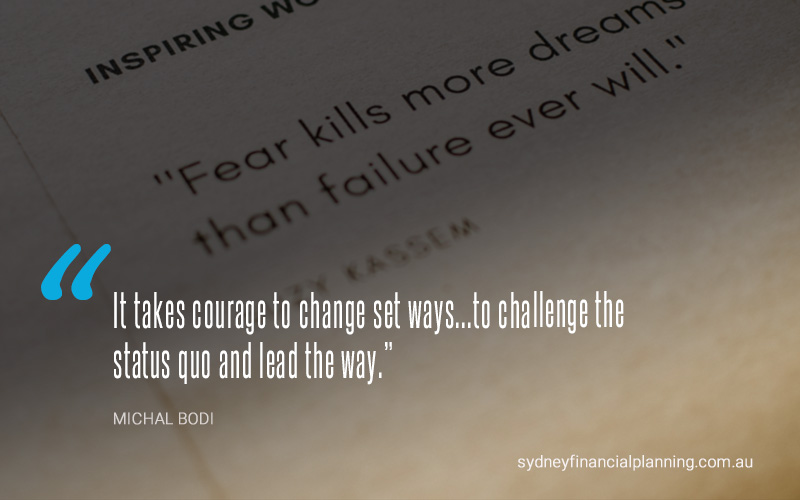
But it takes courage to change set ways, to challenge the status quo, and to lead the way.

It’s true what people say – we really don’t know what we don’t know.  We can never improve our lives, create a life balance, achieve happiness or gain a competitive advantage if we’re not open to new ideas and not prepared to do something different.

There are moments when someone questions the way we do things, or even the direction we’re heading in.  And they’ll show us what would clearly be an improvement.  It might even be us, realising this on our own.  But how often do we actually do something about it?  How often do we take the first step and start working to change?

Yes, but … the famous words that justify and defend the status quo – no matter how average it is.  It’s easier to stick with what we’ve got, than to take that first step.

Procrastination is poison.  What a waste.


Do you need some help with the first step?

It can really help to create a financial roadmap with the help of a professional. Why not call us to arrange an appointment on 02 9328 0876.


Article by Michal Bodi | Senior Financial Planner

General Disclaimer: This article contains information that is general in nature. It does not take into account the objectives, financial situation or needs of any particular person. You need to consider your financial situation and needs before making any decisions based on this information. Please seek personal financial advice prior to acting on this information.


Day One!

It all starts with a single step. All you need to do is start

Day One!

How to stop procrastinating and start getting ahead

Why? Well, it’s got a lot to do with our personality, our ego, the fact that we’re so busy all the time and the actual process of admitting that what we’ve been doing is wrong. 

It can be especially difficult to change when we’re surrounded by same people with the same views as us. Why should I stand out?

Generations Y and Z…

Time is our most valuable asset and we’re all running out of it.For that very reason I would like to dedicate the next section to our sons and daughters, grandsons and granddaughters – the young people with still so much time on their hand.

When you’re young, it feels nice to have a first job, still live at home, spend the money on travelling and going out.

Let’s pause for a second and think about where you are at the moment

How much of your life have you already lived and how much you still have to live – a lifetime!!! What an opportunity…

What you may not fully realise day by day (because you just don’t) is that the time is on your side and you will never (ever) be in this position again. 

Use that competitive advantage! You don’t want to end up like the vast majority of adults – looking back in ten or more years’ time, realising what a massive opportunity you had… And you blew it!

What I’m talking about is the power of ‘doing’.

What can you do? You have two choices:

  1. Choice 1: Do nothing and spend every cent. This is what most of you will do. Just like everyone else (I thought you wanted to be different?)
  2. Choice 2: Start implementing tiny changes into your spending habits. Time is your best mate here. Time will do the rest, as long as you stay committed.

Remember, if you change nothing, nothing will change. The change doesn’t need to happen all at once. You can start with baby steps. 

One year later, you will definitely be in a better position than if you’d done nothing.

There are many ways to put money aside but here’s a fun example to start getting ahead – something that I call the reverse version of “The 52 week savings challenge”:

  1. You start with $52 that you put away in the first week – that is the biggest commitment you need to make. It gets easier from here.
  2. The next week it’s only $51. And as you continue, you decrease the money you put away, by a dollar every week, until you will end up with only a dollar contribution in the last week, a year later!

Over the course of the year, you will save exactly $1,378.

It’s a first step, it’s something. It can eventually give you that competitive advantage.

This can be used as a nice little deposit into an investment plan which can one day be converted into an investment property deposit. It will give you that competitive advantage.

It can be the difference between having to work every night to earn extra money for your ski trip compared to having a passive income to fund your travels so you can spend more time with your friends.


Is it One Day or Day One? all you need to do is start…

Do anything, just start…maybe it’s time to have an honest conversation about doing something about your future? Call us to arrange an appointment to speak with one of our advisors on 02 9328 0876.


General Advice Warning: This advice may not be suitable to you because it contains general advice that has not been tailored to your personal circumstances. Please seek personal financial advice prior to acting on this information.
Investment Performance: Past performance is not a reliable guide to future returns as future returns may differ from and be more or less volatile than past returns.

Life is here and now!

Rehearsal? Life is here and now!

Life is here and now!

From generation to generation, the answers haven’t changed much – fire fighter, doctor, movie star or sports champ. Few of us ever follow through on this earliest example of goal setting.

Flash forward to the final days of secondary school, and the same questions start to take on a more serious face. School grades, financial realities and the looming weight of adulthood seemingly reduce the options to a more realistic field.

Suddenly, that aspiring movie star or sports champ finds him or herself pouring coffees to fund studies, then attached to a mundane desk job and wondering how the best years disappeared.

Many of us treat the vast bulk of our life as a rehearsal for a time when the universes of health, wealth and happiness converge to form our idea of paradise at some point in an indeterminable future. But, as many of our Facebook friends remind us on a daily basis via myriad motivational JPEGs and messages, life is here and now and, like our day-to-day existence, needs a decent plan to deliver on our dreams.

Only after you have clearly identified what it is you want from your life can you make good decisions regarding money and the role you want it to play. Yes, money. It’s going to be mighty hard to climb your literal or metaphoric Mt Everest without a thorough financial plan.

Today is your life as much as tomorrow, and the best approach for achieving financial freedom is one that creates a balance between the two. At the same time, don’t aim for Mt Kosciusko when it’s Everest you really want. So let’s get started:

Review your current situation

You need to be honest with yourself about where you are now. To find out where you stand financially, draw up a budget showing income and outgoings. Once you know exactly what you spend each month, you can look at how to cut costs to create additional income.

Goals to live by

Set out your goals in writing. Most people find it helps to clarify whether they really want something. It is also part of the process involved in working out how to achieve it. Expect that there will be some compromises along the way; you might like the idea of saving up to buy a motorcycle and travelling around Australia, but your partner may be dreaming of buying a beach shack.

Understand exactly what is involved as you are deciding both the final outcome and the journey involved in getting there. In other words, your long-term goals determine how you will live your life today.

Be prepared for the unexpected

You may also need to adjust a goal to reflect what is happening in the outside world, or alter what you are doing to ensure your goal is reached as originally planned. To combat this you need to regularly review your strategy and monitor where things are headed, and also prepare for that rainy day when something unexpected happens.

At the heart of this process, never forget that time in your childhood when you dreamed of being that movie star or sports champ. With our help incorporating your goals into the financial planning process, you can still live out your dreams, whatever they may be.


Still have some questions?

If you want to discuss your financial future and plans one of our advisors, book a coffee or call us to arrange an appointment on 02 9328 0876.

This article contains information that is general in nature. It does not take into account the objectives, financial situation or needs of any particular person. You need to consider your financial situation and needs before making any decisions based on this information.

Re-designing lives for the better

We’re all about re-designing lives for better

Re-designing lives for the better

Your Best Interests (www.yourbestinterests.com.au) is about financial advice and the difference it makes to the lives of everyday Australians.

Sharing the real life stories of single Mum, Helen and her teenage daughter, Lauren and young widower, Lisa; Your Best Interests is a TV series that explores the real life challenges, concerns, hopes and dreams of these women as they come to terms with their very different life circumstances.

Helen’s Story

When Helen divorced, it was her teenage daughter, Lauren that urged her to seek financial help. Alone, with a home that needed renovating, a daughter to support and desire to travel, Helen couldn’t imagine how she’d ever be able to live the life she wanted. Watch how with the help of a professional financial adviser, she managed to change that with realistic plans for a future she didn’t think possible.

Your Best Interest - Helen

Working with Bill Bracey as their financial adviser, Helen and Lauren embark on a journey of discovery as they come to learn more about their personal priorities, managing money, new options and opportunities that open up as they re-build their lives and take control of their financial wellbeing.

Your Best Interest - Helen and Lauren

The program is produced by the Association of Financial Advisers (AFA), Australia’s oldest association representing financial advisers, who believe that great advice is in the best interests of more Australians.The show will screen on Channel 4Me (74) AND on the Business and Finance section of the 4Me website next Tuesday 30 June at 8pm AEST.

Also check out the link to the promo video – https://vimeo.com/album/3441676/video/130820167


Do you have some bigger goals you want to plan for?

It can really help to create a financial roadmap with the help of a professional. Why not call us to arrange an appointment on 02 9328 0876.


General Disclaimer: This article contains information that is general in nature. It does not take into account the objectives, financial situation or needs of any particular person. You need to consider your financial situation and needs before making any decisions based on this information. Please seek personal financial advice prior to acting on this information.

Financial stress keeping us awake

Financial stress keeping you awake at night?

Financial stress keeping us awake

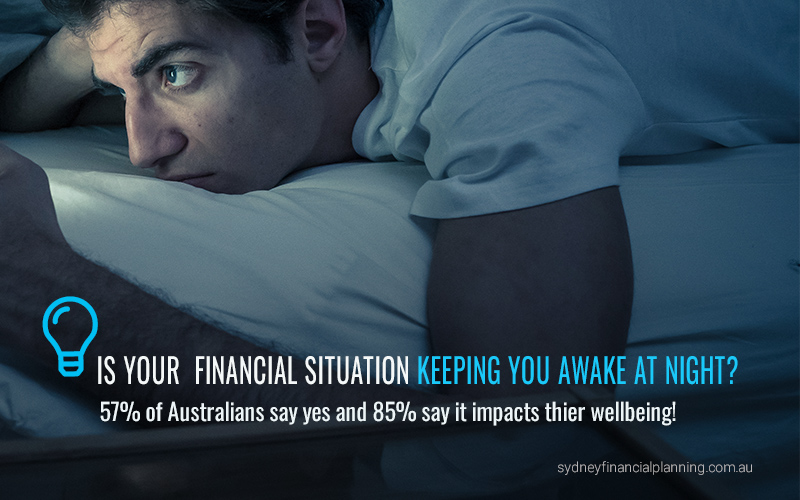
According to the Financial Fitness Whitepaper, almost 57% of Australians are worried about their current financial situation and 85% say it impacts their wellbeing.1

Generation Z AKA the iGen

The youngest generation are most concerned about covering everyday expenses2, such as food and transport. According to the Australian Bureau of Statistics3, the cost of living continues to rise, which just adds to financial woes. Also, research produced by the Financial Planning Association4 notes that the ease of cashless transactions is hindering the youngest generation and those to come.

Millennials

Generation Y (millennials) are those who are doing it the toughest when it comes to financial stress. For many millennials, it’s work-related stress that keeps them up at night, as well as fears they won’t have enough money for retirement and pressure associated with property prices.5

Generation X

With worries about at least one financial issue at any given time, Generation X are losing sleep over the ability to pay living expenses and what the future holds financially.6

Baby Boomers

While many would believe Baby Boomers are the most well-off generation, they are struggling with the stress of health care and insurance bills, as well as retirement savings.2

What to do

Everyone suffers from it in some varying degree, but stress is one of the worst things for our health, especially our sleep. Poor sleep can lead to weight issues, poor concentration and productivity, and can create a greater risk of heart disease and stroke. It’s also linked to diabetes, depression and lower immunity. Sleep is important. Don’t let your financial stress affect your quality of life.

Sorting through your financial stress is just one way you can get better quality sleep. We can help set up a financial plan, find ways to ease the tension and strategise for the future.


Let us help you get better sleep and ease the stress.

Speaking with one of our financial advisors is a good place to start. Make a booking or call us on 02 9328 0876 to arrange a meeting.


1: Mortgagechoice.com.au. (2019). Financial Fitness Whitepaper. Available at: https://www.mortgagechoice.com.au/about-us/insights/financial-fitness-whitepaper-2019/ [Accessed 28 Oct. 2019].
2: McDowell, E. (2019). Money problems are keeping every generation up at night — check out the biggest financial stressors for every age group. Business Insider Australia. Available at: https://www.businessinsider.com.au/biggest-financial-problems-facing-each-generation-2019-6 [Accessed 28 Oct. 2019].
3: Abs.gov.au. (2016). Media Release – Inflation continues to be subdued (Media Release). [online] Available at: https://www.abs.gov.au/ausstats/abs@.nsf/lookup/6401.0Media Release1Dec 2016 [Accessed 28 Oct. 2019].
4: Erem, C. (2018). The ‘invisible-money generation’ may be in financial trouble, says Financial Planning Association. Mozo.com.au. Available at: https://mozo.com.au/debit-cards/articles/the-invisible-money-generation-may-be-in-financial-trouble-says-financial-planning-association [Accessed 28 Oct. 2019].
5: Banney, A. (2018). Financial stress keeping Australians awake at night. finder.com.au. Available at: https://www.finder.com.au/financial-stress-keeping-australians-awake-at-night [Accessed 28 Oct. 2019].
6: https://s3.mapmyplan.com.au. (2015). The financial fitness of working Australians. Available at: https://s3.mapmyplan.com.au [Accessed 28 Oct. 2019].

General Disclaimer: This article contains information that is general in nature. It does not take into account the objectives, financial situation or needs of any particular person. You need to consider your financial situation and needs before making any decisions based on this information. Please seek personal financial advice prior to acting on this information.


4 Gift-Giving Personalities

Australia’s four gift-giving personalities

4 Gift-Giving Personalities

The FPA created a Gift-Giver Personality Quiz to help people identify their own gift-giving preferences, and those of others within their social networks.


Heartfelt Gift-Giving

Heartfelt Givers

  • Spend $103/per month on gifts
  • Least likely to bulk buy gifts (29%)
  • More likely to be female (57%)
  • Most likely to value the gift of seeing a financial planner (64%)


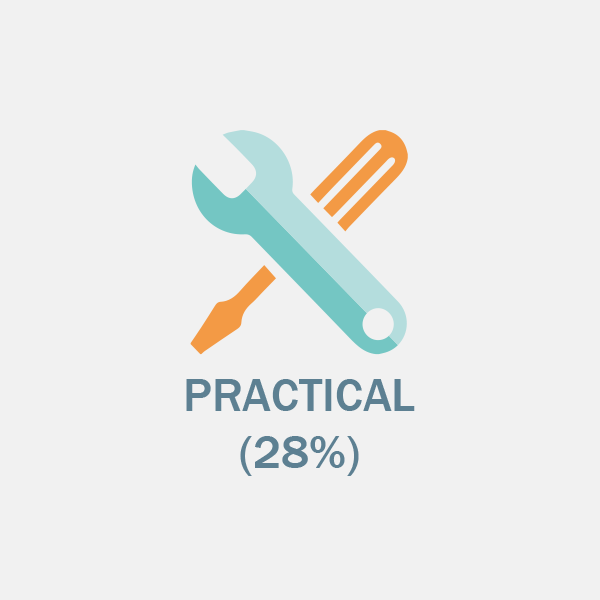
Practical Gift-Giving

Practical Givers

  • Spend $104/month on gifts
  • Most likely to budget for gifts (40%)
  • Highly value the gift of seeing a financial planner (60%)
  • Most likely to be older (66% are Gen X or Baby Boomers)


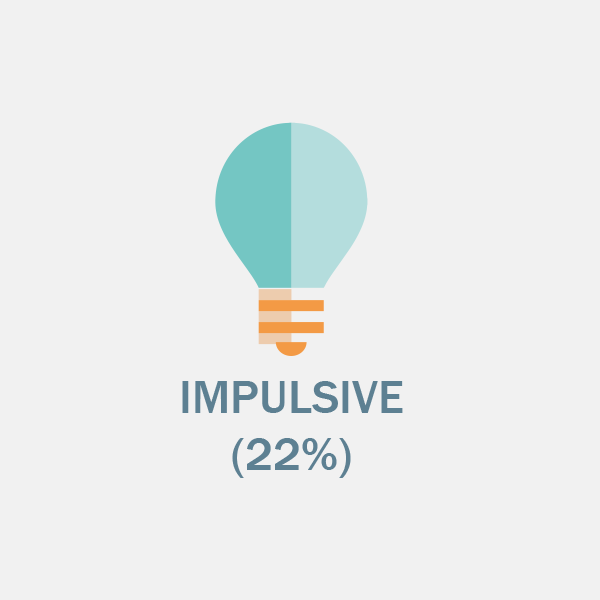
Impulsive Gift-Giving

Impulsive Givers

  • Spend the most on gifts at $112/month
  • More likely to be female (61%)
  • Least likely to budget for gifts (24%)
  • Highly likely to value the gift of seeing a financial planner (61%)


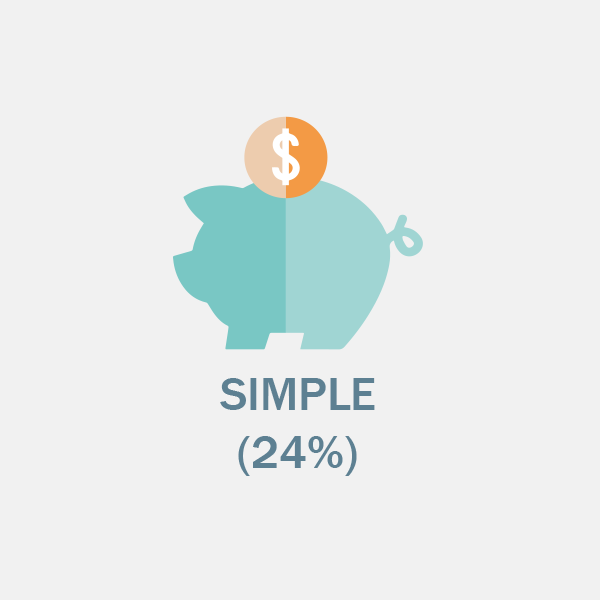
Simple Gift-Giving

Simple Givers

  • Spend the least on gifts at $85/month
  • Least likely to value the gift of seeing a financial planner (53%)
  • Unlikely to budget for gifts (25%)
  • Prefer to give cash or an easy gift such as wine or chocolate


Discover your gift-giving personality

Take FPA Gift-Giver Personality Quiz and discover detailed personality profiles with fascinating insights about buying behaviours, preferences and habits.

The FPA “Gifts that Give” national survey of Australians reveals some truly fascinating insights into how we think, buy, plan and spend our money on those we love the most. Did you know Australia is a generous generation and spends nearly $20 billion a year on gifts? This 19-page report is a fascinating read and a great conversation starter with friends and families.

Download the Goodness of Giving eBook.

Download the full report – Gifts that Give.


Would you like some help with reviewing your financial behaviour?

Why not book a meeting with one of our finanical planners to review your saving and spending goals. Make a booking or call us on 02 9328 0876 to arrange a meeting.


Aricle by FPA Gifts that Give Research Report & Money & Life

General Disclaimer: This article contains information that is general in nature. It does not take into account the objectives, financial situation or needs of any particular person. You need to consider your financial situation and needs before making any decisions based on this information. Please seek personal financial advice prior to acting on this information.


10 ways to enjoy summer without spending a fortune

If you’ve been saving for something big or are just cringing at the thought of how you’ll keep your budget intact over summer, don’t freak out yet. There are plenty of ways you can still have fun without spending all your savings or racking up serious debt on your credit card.

How to take on summer without spending a fortune

1

Diarise your upcoming events

Knowing what’s happening and how much you’re likely to fork out will help you to manage your cash and allocate what you need for each occasion.
2

Take turns entertaining at home

This can significantly reduce the money you and your mates spend on eating out, particularly if everyone is happy to bring their favourite signature dish, juice of choice or fruit sorbet when temperatures are running high.

3

Make the most of the warm weather

Hit the beach, head to the local playground, or pack a picnic basket and enjoy a barbecue at a nearby park. It won’t involve entry fees and depending where you go, you could load up the fishing rods or even a footy for a friendly game.

4

Look out for meal and beverage specials

There are plenty of places where you can find two-for-one offers and other great deals. Websites like TheHappiestHour can give you some ideas and you may even find some new alfresco venues you haven’t been to along the way.

5

Travel smart

Carpool, get a lift, catch public transport, or ride a bike. Too many Taxis and Ubers can drain funds, particularly if you’re not keeping a record of how often you use them.

6

Cut accommodation costs

Bunk with mates, house-sit, swap accommodation, volunteer your skills for a place to stay, or have a staycation where you check out attractions close to home.

7

Search for holiday deals online

Look at comparison websites for flights, accommodation and transport. Doing your homework can often mean more spending money in your pocket.

8

Stick to using cash as much as possible

When you pay in cash, there’s no risk of you having to pay added interest charges. Plus, leaving your cards at home means you’re less likely to go over your budget as you can’t say—I’ll just take out another $100.

9

Trade with friends

If you’ve got more outings than outfits lined up, rather than hit the shops, borrow something from a mate. It doesn’t have to stop with clothes either. You could exchange homes for the week, swap movies, or trade sporting gear like bikes and fishing rods.

10

Research free events

Look up what’s on in your local area. There are often a variety of things happening over summer, such as food and wine festivals, street fairs and markets.

Whatever your agenda over summer, it’s important to have a realistic plan when it comes to your money. Give yourself some room for movement and still aim to avoid that financial hangover.


Is it time to get some extra help with your money mangement?

Why not book an appointment to discuss your situation with one of our advisors, contact us on 02 9328 0876.


Article by – © AMP Life Limited.

Love and money? It’s not about control

Our approach to managing household finances can make a big difference to the health of a relationship. Thankfully, the old line about “I earn the money. She spends it” no longer has relevance in modern relationships. Today’s lifestyles, housing commitments and our career ambitions mean that in many households both adults work, each making a valuable contribution to overall income.

Yet the question of who controls the purse strings continues to throw up some interesting responses. There’s no shortage of research on this issue, and the general gist is that the majority of men say they make the financial decisions in a household while the majority of women believe they control the money. Confusing, right?

Harness the power of two

The thing is, the real issue shouldn’t be who controls the cash but rather how you manage your finances as a couple.

This is an area where there are plenty of variations, and there’s no right or wrong approach. Some couples like to maintain almost entirely separate financial lives by only pooling money where necessary to pay the mortgage or rent and other shared bills. Others maintain a joint account, pooling most or part of each individual pay packet to cover household expenses, and holding only a limited quantity of cash in individual accounts to cover personal spending like hobbies or treats.

Exactly how you run your system is entirely a matter of choice, and it is a case of determining what works best for you and your partner. Maintaining multiple bank accounts can mean paying more in bank fees though this can be a small price to pay if it gives you both a degree of financial independence – this in itself can be a relationship saver.

Know what works for you

There is virtually no limit to the options available to divide and share a household’s combined income and expenses. What matters is that you take the time to devise a system that works for you. Be prepared to fine-tune your approach, or scrap it altogether, if it isn’t living up to expectations. The whole point of the exercise is to work as a team.

At the very least, both parties of a couple should know where household money is being spent. Having a clear idea of your combined financial position could stand you in good stead – and help you avoid unpleasant surprises if the relationship ever hits the rocks.

In our experience though, working together to achieve shared financial goals can really strengthen a relationship over time.

Contact us for a tailored plan of action that can help you and your spouse or partner achieve financial harmony – and harness the power of two.


Need some help getting started?

Why not book an appointment to discuss any aspects or questions on setting up your financial lives together, contact us on 02 9328 0876.


Article by – Paul Clitheroe AM
Paul Clitheroe AM, co-founder and Executive Director of ipac securities limited, Chairman of the Australian Government Financial Literacy Board and Chief Commentator for Money magazine.

General Disclaimer: This article contains information that is general in nature. It does not take into account the objectives, financial situation or needs of any particular person. You need to consider your financial situation and needs before making any decisions based on this information. Please seek personal financial advice prior to acting on this information.


Lessons from the blue zones: secrets of a long life

We explore how to live longer and uncover the Blue Zones’ secrets of a long life.

There are five global hotspots where researchers have identified that people live longer, healthier lives than the rest of us. Known as the Blue Zones they are:

  • Okinawa, Japan
  • Sardinia, Italy
  • Nicoya, Costa Rica
  • Ikaria, Greece
  • Loma Linda, California.

What’s their secret?

These communities each have a high rate of residents over 100 years old, suffer less of the diseases that commonly affect people in other parts of the developed world, and enjoy more years of healthy life.

The formula for these fountains of youth appears to be the following nine lifestyle habits. While some are obvious, others might surprise you…i


1

Move:

We all know exercise is good for us, but this isn’t about pumping iron or running marathons. It’s about staying active through regular, everyday movements like doing the housework, gardening and walking.

2

Have a sense of purpose:

It could be anything, but knowing why you get out of bed in the morning is identified as a contributor to a healthier life and can add up to seven years to your life expectancy.

3

Reduce stress:

It isn’t that Blue Zone residents don’t experience stress, it’s about what they do to relieve it. While their methods range from prayer to napping to practicing mindfulness, what’s common is that they prioritise stress relief.

4

Eat less:

Instead of overindulging, Blue Zone residents stop eating before they’re full. They also eat their smallest meal by early evening, and don’t eat for the rest of the day.

5

Eat less meat:

This one comes as no real surprise given the links between meat consumption and cancer, but most of the Blue Zone residents are semi-vegetarian, favouring beans, legumes, fruit and vegetables over meats.

6

Drink alcohol:

Blue Zone researchers found it’s ok to drink regularly, as long as it’s in moderation (1-2 glasses a day), and alcohol is consumed with friends and/or food.

7

Spirituality or religion:

It seems the sense of belonging to a faith or belief-based community – regardless of the belief – is beneficial to health. Research shows that attending faith-based services four times per month can add from four to 14 years to your life expectancy.

8

Put family first:

Blue Zone residents commit to a life partner – which can add up to three years to life expectancy, and have a strong sense of family, from caring for their aging relatives to nurturing their children.

9

Have a tribe:

Be it your family or friends, having a social circle that combats loneliness and encourages good habits such as being active, positive and not smoking is good for longevity.

Funding a long and happy retirement

Living longer means you might need more money to fund your retirement or you may need to stretch the money you have further. If you’re worried you might outlast your money we can help you to maximize your wealth and manage your finances accordingly.

Whatever your agenda over summer, it’s important to have a realistic plan when it comes to your money. Give yourself some room for movement and still aim to avoid that financial hangover.


Are you worried you might outlast your money?

We are always here to help and can review your personal situation with you. Make a booking with one of our financial planners or call us on 02 9328 0876.

i https://www.bluezones.com/2016/11/power-9/

Article by AMP Life Limited

General Disclaimer: This article contains information that is general in nature. It does not take into account the objectives, financial situation or needs of any particular person. You need to consider your financial situation and needs before making any decisions based on this information. Please seek personal financial advice prior to acting on this information.