Tag: Debt Reduction

How to deal with financial stress

These were the findings from the inaugural Financial Stress Index, compiled by global research firm CoreData on behalf of Aussie group, Financial Mindfulness, which indicated financial stress is not only being experienced by low-income households in 2017.i

Findings from the research

Statistics from the Financial Stress Index revealed the following about financially stressed Aussiesi

  • More than 66% felt money worries led to feelings of fear, anxiety and/or depression
  • More than 60% felt their physical health was affected by financial stress
  • About 75% said they argued about money with their partner or family
  • More than 70% said they had problems sleeping due to money concerns
  • Nearly nine out of 10 said they often avoided social functions due to financial stress.

What defines financial stress?

According to the Australian Bureau of Statistics, there are two financial stress indicators-these include financial-stress experiences and missing-out experiencesii

Examples of financial-stress experiences:

  • You’re unable to pay various bills on time
  • You spend more money than you receive
  • You can’t raise $2,000 in a week for something important
  • You seek assistance from friends, family or welfare and community groups.

Examples of missing-out experiences:

  • You’re not able to afford a night out once a fortnight
  • You can’t afford a week-long holiday once a year
  • You can’t afford friends or family over for a meal once a month
  • You aren’t able to cover any recreational activities.

Actions that could help turn things around

Create a budget

Writing down what you earn, owe and spend could help you to create a workable budget, and at the same time let you quickly identify areas where you could be saving.

Save a bit of money regularly

Even a small amount of cash deposited on a frequent basis could go a long way towards your savings goals. In fact, 41% of Aussies say they save just a little at a time_;;;

Pay cash and avoid credit card use

Credit cards are handy but they’ll often cost you as they typically charge high interest rates on top of the amount you’ve already taken out.

Put some emergency cash aside

This will help next time you bust your phone or need a last minute trip to the dentist. Plus, an emergency fund means you won’t have to rely on high interest borrowing options.

Talk money with your partner

One in two Aussie couples admit to arguing about moneyiv, so if you haven’t already, sit down and make sure you’re on the same page, and that both parties’ goals are being considered.

Call other providers

You more than likely have several product and service providers, and figures show you could save more than a grand annually on energy alone just by switching from the highest priced plan to the most competitive on the markeP

Consider the value of a back-up plan

Whether it’s life insurance, income protection (which provides up to 75% of your income if you can’t work due to illness or injury), or contents insurance to cover items that may be lost, damaged or stolen, there are a range of insurances that could help should the unexpected happen.

Care about your future income

The government’s Age Pension alone is unlikely to be able to cover a comfortable or even modest lifestyle in retirementvi, so putting a little extra into super could reduce the potential of further financial stress later on.

Where to go for assistance

If you or someone you know are feeling financially stressed, there is help and information available. We are always here to assist. Alternatively, visit the beyondblue website or phone Lifeline on 13 11 14.


Do you want more financial control of your life?

For more help and strategies on taking care of your financial plans, speak to one of our financial planners – to make an appointment, contact us on 02 9328 0876.


i CoreData / Financial Mindfulness Financial Stress Index – 2017 full press release
ii ABS – Household Expenditure Survey, Australia: Summary of Results, 2015-16
iii ASIC’s MoneySmart – How Australians Save Money table 1
iv Finder – Heated conversations: 1 in 2 Aussie couples argue about finances
v Mozo: Sick of high energy bills? Aussies willing to change providers could be saving over $1,000 a year
vi The ASFA Retirement Standard – June quarter 2017

Article by AMP Life, First Published January 2018

This article contains information that is general in nature. It does not take into account the objectives, financial situation or needs of any particular person. You need to consider your financial situation and needs before making any decisions based on this information.


 

How Australians will use their tax return

This year more than 75% of Australians expect to receive a tax return, with a large portion of the population planning to use the money they receive to take the edge off their financial commitments.i

We look at the most common ways people intend on using their tax return and what other ways you could invest this money to get ahead.

How people intend on using their tax return

According to a finder.com.au survey of more than 2,000 Australians, the most common ways people said they’d use their tax return was towardsii:

Savings (31%)
Household bills (23%)
A holiday (12%)
Home loan repayments (10%)
Credit card debt (6%).

Other ways you could use your refund

Put it into super

Contributing a lump sum of money into your super is generally a good way to grow your retirement savings, as what your employer contributes mightn’t be enough for you to live comfortably in the years after you finish working.

Other benefits of contributing to super, depending on your circumstances, may include special tax treatment or other government incentives.

Also note-the value of your investment in super can go up and down, contribution caps do apply, and there are rules around when you can access this money.

Pay off your education debt

According to government estimates, the average debt for a tertiary student in Australia is currently $19,100, with the average time taken to clear that debt more than eight years.iii

For many, making a dent in their loan or paying it off in one fell swoop will be a great idea, but given the low-cost nature of Australia’s higher education loan program, maintaining compulsory student repayments while addressing other debts or financial goals could also be worth investigating.

Create an emergency fund

Given more than one in two people wouldn’t have enough savings to last three months if they lost their job tomorrowiv, an emergency fund can provide peace of mind when it comes to unexpected bills.

It can also reduce the need to rely on high interest borrowing options, such as credit cards or applying for payday loans, which can often be an expensive form of finance and create unwanted debt.

Invest elsewhere

Whether it’s property, managed funds, direct shares or term deposits, consider your situation, in particular the amount of time you have to invest and your attitude to risk.

If you’re young, you may have time to ride out market highs and lows, and therefore be willing to take on more risk in the hope of achieving higher returns.

On the other hand, if you’re a bit older, you may prefer a more conservative approach as market changes could be harder to recover from as you move toward or if you’re already in retirement.


If you’d like some advice on the best ways to use your tax return.

Why not book a coffee appointment to speak with one of our financial planners or alternatively call us on 02 9328 0876.


i, ii https://www.finder.eom.au/press-release-jul-2017-were-a-nation-o1-savers-at-tax-time-31-o1-aussies-will-save-tax-return
iii http://www.aph.gov.au/About_Parliament/Parliamentary_Departments/Parliamentary_Library/ pubs/rp/rp1617/Quick_Guides/HELP
iv https://www.finder.eom.au/press-release-may-2017-10-million-aussies-couldnt-last-jobless

Article by – AMP Life Limited.

This article contains information that is general in nature. It does not take into account the objectives, financial situation or needs of any particular person. You need to consider your financial situation and needs before making any decisions based on this information.


Energy Savers

Reduce your bills with these household items

Energy Savers

1. Energy-efficient products

Energy-efficient appliances-fridges, washing machines, microwaves and air conditioners, can literally save you hundreds of dollars each year in running costs, with such appliances accounting for up to 33% of people’s home energy use, Australian Government figures show.i

The energy rating label is mandatory for a range of equipment so you can easily assess the energy consumption on the appliances you’re looking at.

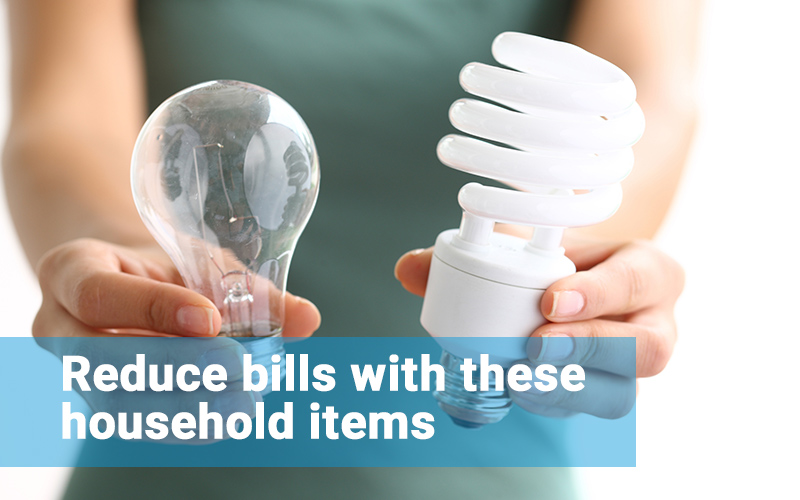
Likewise, energy-efficient light bulbs often use about 25% to 80% less energy than traditional incandescent light bulbs and generally last three to 25 times longer.ii

2. Water-efficient appliances

The Australian Government estimates by 2021 Australians could save more than $1 billion on their water and energy billsiii by using more water-efficient appliances and fixtures, specifically water-efficient

In addition, rain water tanks, which can be just as useful in urban areas as they are in rural zones, can generate cost savings. Tanks range from around $700 to $2000iv and rebates may apply.

3. Solar power systems

Solar power systems, which generate free electricity, are becoming increasingly popular, with about 1.63 million roof top systems installed across the country as
at 1 January 2017.v

While there are upfront costs involved, solar power systems are becoming more affordable. Plus, they require little maintenance and generally last 20 years or more. Rebates here may also apply.

Marcus Dorreen, Director of Retail at energy services company Evergen (co-owned by CSIRO), says pre and post-retirees are showing increasing interest in solar batteries, with 50% of inquiries coming from people over age 55, with owners of solar battery systems reporting electricity-cost savings of up to 80%.

4. Programmable thermostats

On average, 40% of energy used in homes across Australia is for heating and cooling.vi Using thermostats and timers to make sure you’re only heating a room as much as you need (and as required) can save you considerable money, depending on your usage.

5. Vegetable and herb gardens

Data from The Australia Institute shows 52% of all Australian households are growing some of their own food, with a further 13% intending to do so.vii

Of the top five reasons to grow food at home, saving money was the second most popular response at 62%. Statistics indicate however that it’s not until people are saving more than $250 a year (which only 16% of people are), that real cost savings are achieved.

6. Beverage supplies

If you’re in the habit of buying a $4 bottle of water, coffee or smoothie every day, then your take-away drink of choice is costing you over $1,400 over a 12-month period.

Investing in a reusable drinking bottle, blender or espresso machine could save you hundreds of dollars per year.

7. Extended warranties

Extended warranties cost you a little more upfront but if you have a home appliance or device that breaks, particularly an expensive one like a fridge or laptop, you’ll be comforted to know you won’t be slogged with a high repair bill. Plus, if the equipment can’t be fixed, the company will usually replace it.

Saving money and the environment

There are big and small investments you can make around the home today that will pay for themselves and help save hundreds, or even thousands of dollars, over the months and years ahead.

An added benefit is that many of these investments can lessen our impact on the environment at the same time!


Looking for more guidance on budgeting?

We can review your current situation and help you get to where you want to be. Call us to arrange an appointment with one of our advisors on 02 9328 0876.


i http://www.yourhome.gov.au/energy/appliances
ii http://energy.gov/energysaver/how-energy-efficient-light-bulbs-compare-traditional-incandescents
iii http://yourenergysavings.gov.au/water/water-home-garden/water-efficient-appliances-fixtures
iv https://www.choice.com.au/home-improvement/water/saving-water/buying-guides/rainwater-tanks
v http://yourenergysavings.gov.au/energy/solar-wind-hydro-power/solar-power
vi http://yourenergysavings.gov.au/energy/heating-cooling/understand-heating-cooling
vii http://www.tai.org.au/content/grow-your-own>


This article contains information that is general in nature. It does not take into account the objectives, financial situation or needs of any particular person. You need to consider your financial situation and needs before making any decisions based on this information.
 

Earn more, spend less

Earn more, spend less

Earn more, spend less

Are you living from pay to pay? Sick of borrowing money from family? Do you own a credit card? Perhaps you’re drowning in debt? Maybe you just want some extra cash for weekend splurging? If you fit-the-bill for any (or all) of these categories, keep reading…

It’s time to get a grip on your financial affairs and rethink your values, particularly those related to money. Stop and ask yourself ‘what is truly important in your life?’ It’s so easy to get caught up in our lifestyles that we fall out of touch with our values system and subsequently we end up spending money on unnecessary things.

Below are five techniques to help you attain financial freedom and rekindle your values.

1. Clear out your casa.

Assign a weekend to go through your garage, cupboards and wardrobe to find things you can sell online. Create a profile on sites like Gumtree or eBay and list all of your available products. Not only will you earn more money, this exercise will free up room around your home and teach you to be minimalistic.

2. “A penny saved is a penny earned”.

Review your bank statements to sift out all of the random one-off expenses and ongoing, but underutilised direct debits. If you have a gym membership you never use, cancel it – outside is free! If you own a subscription to a magazine or smart phone apps that aren’t providing any value, get rid of them. If you’re spending a small fortune at restaurants and bars, make an effort to spend more time at home and away from temptation. You have to be brutal and disciplined when it comes to cutbacks.

3. Change your psych.

Instead of forgoing and giving things up – “savour” them instead. Giving up something to save money can make you feel deprived. That is, unless you shift your way of thinking to start “savouring” instead of “giving up.” Don’t feel you have to change your lifestyle; merely change the frequency of your indulgences. Go to the movies weekly? Try once a month instead. It’s psychologically much easier to tell yourself you’re not giving anything up, you’re just going to savour it more.

4. Overtime.

Ask your boss if you can put in a few extra hours at work each week. If this isn’t possible, look for an additional part-time job that will bring you in extra money or sell your products and services online.

5. Compare the Market.

Make sure you’re paying as little as possible for your credit cards loans, utilities, insurance, and phone and internet connections. Use price comparison services to find out if you’re paying over the odds. If you’ve been with the same service providers for many years, there’ll be a good chance switching could save you money or you might be rewarded with a loyalty discount.


Don’t know where to start?

For more help and to take a fresh look at the way you manage your money, speak to your financial adviser at SFP. Or if you don’t have an adviser yet, contact us on 02 9328 0876.


General Disclaimer: This article contains information that is general in nature. It does not take into account the objectives, financial situation or needs of any particular person. You need to consider your financial situation and needs before making any decisions based on this information. Please seek personal financial advice prior to acting on this information.


6 ways to reduce your credit card

6 ways to reduce your credit card debt once and for all

6 ways to reduce your credit card

Now, perhaps that’s no drama if we’re not paying too much to access credit and we’re managing to avoid interest charges by paying back what we owe on time. 

But we paid a collective $1.5 billion in fees in 2016-17.i And we’re taking out new credit cards at an increasing rate. Two in five Australians are juggling more than one credit cardi and 300,000 new credit cards accounts were opened over the five years to 2017, bringing the total number of cards in Australia to a staggering 14 millionii

So given all this it’s not surprising that almost one in five of us are struggling with credit card debt.iii

Getting to grips with your existing debt…

If you’ve realised you might have a problem with your credit card debt, it’s time to take back control. Sit down, take a deep breath and work out a step-by-step plan. 

  • Stop all but essential spending on your credit card. Try and get by without your credit card and use cash wherever possible while you work on your plan. You could even set yourself a challenge not to spend any money for a week!
  • It sounds basic, but start by listing how many cards you have and what you’re paying for them in interest.
  • If you have more than one card, start chipping away at the low-hanging fruit. Consider paying the card with the highest interest rate off first or if the rates are similar, work on clearing the smallest debt.
  • If you can’t pay a card off in full, see if you can pay more than the minimum each month to reduce your balance more quickly and save on interest. It could be worth setting up a direct debit on your payday to pay a fixed amount.
  • Once you’ve paid off a card, close the account and work towards having a single card to help make your finances easier to manage.
  • If you feel that your interest rate is too high, you could consider transferring any remaining balance to a card with a lower interest rate or rolling the debt into an existing personal loan or mortgage, these tend to have lower interest and fees. Many providers offer great rates to consolidate, but make sure you pay the card off during any honeymoon period with the new provider so that you don’t start accruing interest. Check the fine print – what interest rate will you pay after any promotional period ends? You don’t want to just kick the can down the road.
  • If all else fails, don’t be afraid to ask for help from your credit provider. There may be a way you can work out a spending plan that takes into account your financial circumstances.

…make sure you don’t build up more credit card debt…

Congratulations. You’ve consolidated your debt, set up a direct debit, closed a few cards and set yourself well on the way to pay off any remaining debt. 

But how do you make sure you don’t fall into the same credit trap again? It’s all about developing more healthy financial habits.

  • Reduce your credit card limit to take temptation off the table.
  • Try not to use credit to pay for the basics like food, groceries and utility bills. See if there are any ways you could adjust your household budget or make savings elsewhere so you’re only using credit as a last resort.
  • Avoid cash advances because they may attract higher interest rates.
  • Be wary of store cards and any fees you’ll pay – they are just another form of credit card.
  • Keep track of your spending

…and take advantage of credit card reforms

The good news is that the Government is introducing reforms on 1 January 2019 to help Australians manage their credit card debt.

  • You can cancel your card or lower your limit online for all new accounts.
  • You won’t be charged any back-dated interest.
  • And you’ll be assessed on your capacity to repay your debt when you ask for an increase.iv

Once the credit card’s sorted, it could be time to move on to any other debts you might have. Come and speak to us about taking control of your overall debt. 


Is your credit card debt sinking you?

Speaking with one of our financial advisors would be a good place to start. Make a booking or call us on 02 9328 0876 to arrange a meeting.


i Australian Securities & Investments Commission, REP 580 Credit card lending in Australia, July 2018, The credit card market in Australia, section 81, pg. 17, https://asic.gov.au/regulatory-resources/find-a-document/reports/rep-580-credit-card-lending-in-australia/
ii Australian Securities & Investments Commission, REP 580 Credit card lending in Australia, July 2018, Snapshot of the market, 2012-17, section 92, pg. 20, https://asic.gov.au/regulatory-resources/find-a-document/reports/rep-580-credit-card-lending-in-australia/ 
iii Australian Securities & Investments Commission, REP 580 Credit card lending in Australia, July 2018, section 99, pg. 24, https://asic.gov.au/regulatory-resources/find-a-document/reports/rep-580-credit-card-lending-in-australia/ 
iv National Consumer Credit Protection Amendment (Credit Cards) Regulations 2018, Schedule 1 – Amendments, https://www.legislation.gov.au/Details/F2018L00504/Explanatory%20Statement/Text 

General Disclaimer: This article contains information that is general in nature. It does not take into account the objectives, financial situation or needs of any particular person. You need to consider your financial situation and needs before making any decisions based on this information. Please seek personal financial advice prior to acting on this information.