Tag: Saving Strategies

Managing your money

Managing your money – Budgeting in plain English

Managing your money

Do you need a budget?

A budget allows you to see how much money is coming in and going out. It helps you ensure there is enough money to cover your expenses and is an effective way to make sure you are not spending more than you can afford. More importantly, a budget can help you work out how much of your income you can put towards saving for your future, without impacting your everyday needs.

Everyone can benefit from having a budget. The purpose of a budget is not to make you go without or to force you to save. It simply allows you to manage your money in a more controlled and effective way and to understand where you are spending your money.

How do you start a budget?

Write down your normal income and expenses over the period of a month. Income can be grouped into categories such as work and income you receive from investments or other sources. Similarly, expenses can be grouped into categories such as food, clothes, entertainment and so on. This makes it easy to see exactly where your money is being spent.

A budget can help you decide what you want to spend your money on, and how much you can save.

Making your budget work

This step-by-step guide will help you build a budget that works best for you. If you have combined expenses with a partner, it is important that you work it out together.


13

Choose a timeframe

You could choose a weekly, fortnightly or monthly timeframe for your budget. Many people choose to budget on a period that matches their pay period, which makes it easier to match regular expenses with the money coming in.

2

Workout your total income

It is important to know exactly how much income you receive. This influences how much you can spend. Include any income you receive from investments, investment properties, work and any other sources.

3

Calculate your expenses

Document all your expenses, including amounts you pay towards debt. Having a clear picture of where your money is going allows you to calculate how much you can afford to save. It also helps you identify areas where you may be spending too much.4

4

Work out your surface deficit

Subtract your total expenses from your total income. If your income is greater than your expenses you will have a ‘surplus’. If your expenses are more than your income you will have a ‘deficit’.

5

Double check

  • Does your budget reflect what is actually happening?
  • Is it realistic?

If you think your budget is not quite right, then make alterations so it is accurate.

6

Track and update

Keep track of your expenses and your income, and if anything changes, update your budget. If something unexpected comes up, add this to your budget, and see if you are able to get back on track without disruption or delay. Most importantly, review your budget thoroughly at least twice a year. This will help you maintain control of your money and prevent you running into unnecessary cash flow problems.

Sticking to your budget

Be realistic

If your budget is too strict, it will be harder for you to stick to it.

Spend less than you earn

If you have a cash deficit, review your expenses and cut back where you can.

Include your goals

If you are planning an expensive holiday (or other savings goal such as home renovations or a new car), include these expenses in your budget and start saving.

Review your progress

Check how much is left in the bank each month and how much you have spent. Compare this with your budget to see how you have fared. If your budget differs from reality, you may need to make some adjustments.

Reward yourself

Managing your money in an effective way takes practice. When you are comfortable that your budget is accurate and you are able to stick to it, reward your hard work and treat yourself!

What if the unexpected happens?

Life always has a way of throw-fluiding us surprises. The financial consequences of these should not be understated. Try to keep a buffer in your budget so that when this does happen you will be able to minimise any financial strain.

Remember, if something does happen that turns your budget upside down – don’t panic. Staying calm and working out how to manage unexpected circumstances is the best way to regain control of the situation.


Looking for some help with your money management?

It really helps to get a professional perspective on things, why not arrange to meet with one of our advisors to discuss your situation. Call us to arrange an appointment on 02 9328 0876.


Photo by Rawpixel on Unsplash


General Disclaimer: This article contains information that is general in nature. It does not take into account the objectives, financial situation or needs of any particular person. You need to consider your financial situation and needs before making any decisions based on this information. Please seek personal financial advice prior to acting on this information.

Inspiration under $10

10 experiences for $10

Inspiration under $10

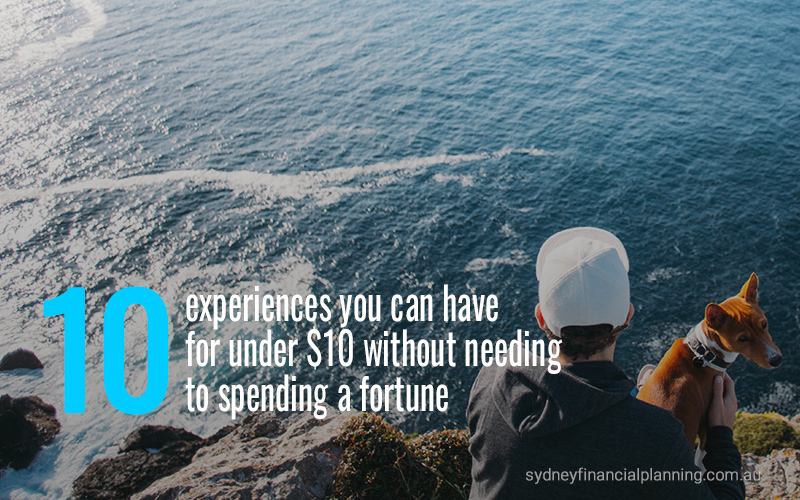
1. Get near some water

If you live in Australia, you probably live within 50km of the coastline.i And if you don’t, there’s a good chance you live near another type of water source – a river, dam, lake or even the local pool.
Research shows that being in blue space (near a body of water) is great for your overall wellbeing. The smells and sounds can be a calming influence on your mind, while the body and immune system will benefit from being amongst nature.ii

2. Save by shopping in the local markets

You may be surprised about the number of markets held throughout the week that cater to different interests and needs. And you might pick up some bargains. For example, perhaps you’d like to check out the local farmer’s produce, pick up some art, or clothing from a designer who’s just starting out.

The easiest way to find the local markets in your area (or an area you’d like to visit) is to do an online search, then pop those dates in your diary so you know when they’re coming up. Most markets are held close to public transport and usually have reasonably priced food.

3. Go to the movies

Many cinemas have one day in the week that’s cheaper than the rest (usually a Tuesday, costing between $10-12). If you have a concession card, or are a member of a health fund or association, you may get even better deals.

Visit the website of your local cinema to find the best options, and since the snacks at cinemas can cost an arm and a leg, bring some from home.

4. Get walking

You may be across the range of walks available in national and state parks, but there’s likely to be some in and around the area you live too. Sydney and Melbourne have free walking tours, and many local councils offer self-guided walks (meaning you can download and follow directions to see and learn about different sites in your area).

Simply search for self-guided walks in your local area. And if you’re interested in joining a group, get involved in the free walking groups run by the heart foundation.

5. Discover your local community events

If you haven’t already, visit your local council’s website. They often list a raft of family friendly and interesting events that are happening in your area – usually all summarised in a calendar, to download and have at hand. And if your council’s events aren’t to your liking, you can also search for events happening in surrounding council areas or an area you’d like to visit.

6. Check out the local library

While we’re on the topic of things the local council offers, it can be a good idea to become a member of your local library (if you’re not already). And if you’re rolling your eyes at this thought, but it’s been a while since you’ve visited one, here’s why they’re good:

  • Most have regular events and movie nights, often with some great speakers
  • There’s usually free Wi-Fi, so you can search the net to your heart’s content without worrying about how much data you’re using
  • There’s access to the local and international paper and magazines to read at your leisure
  • If you have young children or grandchildren, there are usually free activities held there one or two days a week, as well as child friendly play areas
  • And that’s not to mention all the books.

To find out more about what events your local library has, look them up online, or just pop in and ask.

7. Visit a museum or art gallery

Research the galleries and museums in your local area. Sometimes, unless there’s a special exhibition, entry can be free, so all you’ll need to pay is the cost to get there. If you’re a member of a health fund or association, you could get other discounts too.

But, if you don’t live near a gallery or museum, don’t fret. Many of world’s best galleries have virtual online tours

For example, you could visit Paris’ famous Louvre museum. There are lots of other options too, simply search online for virtual gallery tour and you’ll see loads of different virtual tours, some with access to guided talks, and some that are interactive which can be a fun activity to do with kids.

8. Get into some online learning

While we’re on the topic of going online there are lots of other things you can do too. Like:

  • Signing up to free online courses like highbrow (gohighbrow.com)
  • Getting inspired by interesting people in the ted talks series (ted.com)
  • Or searching for free online study in a topic that interests you.

9. Have a picnic

For the days you just want to get outside in the nice weather, it can be easy to forget the humble picnic. Pack some food, coffee, your book and go to the local park to sit under a tree. You may be surprised at just how relaxing it is.

10. Go to a meditation class

It’s not for everyone, but if you’re interested in the health benefits that come with meditationiii, you might want to try a free class. Just search online for free meditation classes in your area – some require a donation to come along, but only what you’re willing to give.


Have some bigger goals you want to plan for?

It can really help to create a financial roadmap of where you want to go. Why not call us to arrange an appointment on 02 9328 0876.


i Australian population review 2017. www.worldpopulationreview.com/countries/australia-population
ii Benefits of water. Lifehack blog. www.lifehack.org/424336/ science-explains-how-staying-near-water-can-change-our-brains
iii Benefits of meditation. Psychology today blog, 2013. www.psychologytoday.com/blog/feeling-it/201309/20-scientific-reasons-start-meditating-today


This article contains information that is general in nature. It does not take into account the objectives, financial situation or needs of any particular person. You need to consider your financial situation and needs before making any decisions based on this information.


Energy Savers

Reduce your bills with these household items

Energy Savers

1. Energy-efficient products

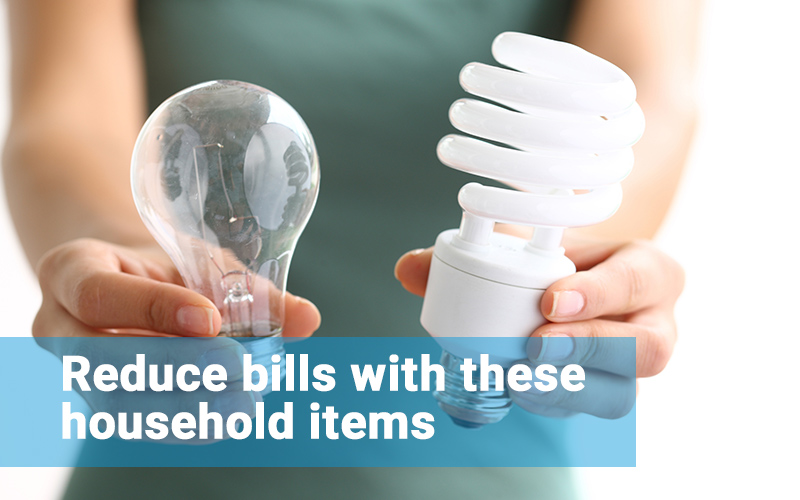
Energy-efficient appliances-fridges, washing machines, microwaves and air conditioners, can literally save you hundreds of dollars each year in running costs, with such appliances accounting for up to 33% of people’s home energy use, Australian Government figures show.i

The energy rating label is mandatory for a range of equipment so you can easily assess the energy consumption on the appliances you’re looking at.

Likewise, energy-efficient light bulbs often use about 25% to 80% less energy than traditional incandescent light bulbs and generally last three to 25 times longer.ii

2. Water-efficient appliances

The Australian Government estimates by 2021 Australians could save more than $1 billion on their water and energy billsiii by using more water-efficient appliances and fixtures, specifically water-efficient

In addition, rain water tanks, which can be just as useful in urban areas as they are in rural zones, can generate cost savings. Tanks range from around $700 to $2000iv and rebates may apply.

3. Solar power systems

Solar power systems, which generate free electricity, are becoming increasingly popular, with about 1.63 million roof top systems installed across the country as
at 1 January 2017.v

While there are upfront costs involved, solar power systems are becoming more affordable. Plus, they require little maintenance and generally last 20 years or more. Rebates here may also apply.

Marcus Dorreen, Director of Retail at energy services company Evergen (co-owned by CSIRO), says pre and post-retirees are showing increasing interest in solar batteries, with 50% of inquiries coming from people over age 55, with owners of solar battery systems reporting electricity-cost savings of up to 80%.

4. Programmable thermostats

On average, 40% of energy used in homes across Australia is for heating and cooling.vi Using thermostats and timers to make sure you’re only heating a room as much as you need (and as required) can save you considerable money, depending on your usage.

5. Vegetable and herb gardens

Data from The Australia Institute shows 52% of all Australian households are growing some of their own food, with a further 13% intending to do so.vii

Of the top five reasons to grow food at home, saving money was the second most popular response at 62%. Statistics indicate however that it’s not until people are saving more than $250 a year (which only 16% of people are), that real cost savings are achieved.

6. Beverage supplies

If you’re in the habit of buying a $4 bottle of water, coffee or smoothie every day, then your take-away drink of choice is costing you over $1,400 over a 12-month period.

Investing in a reusable drinking bottle, blender or espresso machine could save you hundreds of dollars per year.

7. Extended warranties

Extended warranties cost you a little more upfront but if you have a home appliance or device that breaks, particularly an expensive one like a fridge or laptop, you’ll be comforted to know you won’t be slogged with a high repair bill. Plus, if the equipment can’t be fixed, the company will usually replace it.

Saving money and the environment

There are big and small investments you can make around the home today that will pay for themselves and help save hundreds, or even thousands of dollars, over the months and years ahead.

An added benefit is that many of these investments can lessen our impact on the environment at the same time!


Looking for more guidance on budgeting?

We can review your current situation and help you get to where you want to be. Call us to arrange an appointment with one of our advisors on 02 9328 0876.


i http://www.yourhome.gov.au/energy/appliances
ii http://energy.gov/energysaver/how-energy-efficient-light-bulbs-compare-traditional-incandescents
iii http://yourenergysavings.gov.au/water/water-home-garden/water-efficient-appliances-fixtures
iv https://www.choice.com.au/home-improvement/water/saving-water/buying-guides/rainwater-tanks
v http://yourenergysavings.gov.au/energy/solar-wind-hydro-power/solar-power
vi http://yourenergysavings.gov.au/energy/heating-cooling/understand-heating-cooling
vii http://www.tai.org.au/content/grow-your-own>


This article contains information that is general in nature. It does not take into account the objectives, financial situation or needs of any particular person. You need to consider your financial situation and needs before making any decisions based on this information.


Tax Tips

Five handy tax tips you should know

Tax Tips

 You’re probably well aware you can claim a tax deduction for general work-related expenses. But did you know you may be able to claim if:

  1. You take a course or study. You may be able to claim a portion of self-education expenses if it’s related to your ability to earn an income.
  2. You travel to inspect your investment property. You may be able to claim for expenses like pest control fees, body corporate, rates, utility bills, advertising and marketing costs. Be aware, from 1 July 2017 this opportunity will no longer be available.
  3. You belong to a union. You may be able to claim your union fees as a deduction.
  4. You wear a uniform for work. You may be able to claim for buying and cleaning a uniform that you need to wear for work.
  5. You work from home. You may be able to claim for running costs such as heating, cooling, lighting and cleaning, and even interest on any loans for work equipment, like a home computer. But you must keep detailed records—check out the ATO’s guide to home office expenses. 

Working out your tax deductions can be complex. Your tax accountant can help you work out what you can and cannot claim. 

Five ways to boost your super at tax time

There are plenty of ways to benefit from super’s favourable tax treatment, regardless of how much you earn and how old you are. 

  1. You can claim up to $500 in government co-contributions if you’re a low to middle income earner and you make after-tax contributions of up to $1,000 to your super.
  2.   You can receive a tax offset of up to $540 if your spouse is a low-income earner and you contribute up to $3,000 in after-tax contributions towards their super.
  3.   You can contribute up to $30,000 in before-tax contributions to your super at the ‘concessional’ tax rate of 15% (or 30% tax if you earn more than $300,000 pa in 2016-17) —or $35,000 if you’re aged 50 or over. It’s important to note that concessional contributions will be reduced to just $25,000 for everybody during the 2017-18 financial year regardless of your age.
  4. You can contribute up to $180,000 a year (or up to $540,000 before 1 July 2017 if you’re eligible to use the ‘bring-forward’ rules) in after-tax contributions. Since this is from your after-tax income the full contribution reaches your super account, and no tax is deducted when the contribution reaches your super fund.
  5.   You can start a transition to retirement strategy once you’ve reached your super preservation age (the age at which you can access your super)—this can allow you to draw up to 10% of your super as a pension. 

So, as the end of the financial year approaches, now is the time to ensure you are fully aware of all the tax deductions you can claim, as well as taking advantage of investing in super, before major changes take affect.


Still have some questions?

Contact us before June 30 so we can help with strategies to make your money work for you. Call us to arrange an appointment on 02 9328 0876.


General Disclaimer: This article contains information that is general in nature. It does not take into account the objectives, financial situation or needs of any particular person. You need to consider your financial situation and needs before making any decisions based on this information. Please seek personal financial advice prior to acting on this information.

Spouse contributions: Win/Win!

Spouse contributions: Win/Win!

Spouse contributions: Win/Win!

Building a nest egg is crucial to funding yourselves through retirement. If your spouse is a low-income earner or taking a breather from the 9-5 grind, there’s a fair chance their super contributions are pretty seldom. By contributing into your partner’s superannuation account, you could be eligible for a tax rebate.

The Criteria:

  • You must be married or in a de facto relationship which includes same-sex couples and you must be living together
  • Contributions must be after-tax (non-concessional)
  • Both must be Australian residents
  • The recipient must be under the age of 65, however, if they are aged between 65 and 69 they must meet work test requirements
  • For the current financial year (2016-17), the receiving spouse’s income must be  $10,800 or less for you to qualify for the full tax offset and less than $13,800 for you to receive a partial tax offset

The Benefits:

  • You can claim an 18% tax offset for your after-tax contributions (capped at $540)
  • To redeem the maximum $540 rebate you need to contribute a minimum of $3,000 into your partner’s super fund
  • If their income exceeds $10,800, you’re still eligible for a partial tax offset. However, once their income reaches $13,800, you’ll no longer be eligible, but you can still make contributions on their behalf
  • Bear in mind, any contributions you make will count towards your partner’s non-concessional contributions cap. The current limit is $180,000 per year.

NB: From 1 July 2017 the government will increase access to the spouse contributions tax offset by raising the lower income threshold from $10,800 ($13,800 cut off) to $37,000 ($40,000 cut off).  Another thing to be aware of is the reduction of the non-concessional contributions cap from $180,000 to $100,000 per year from 1 July 2017.

The Warnings:

  • If either of you exceed the super cap limits, additional tax and penalties may apply
  • The value of your’s and your partner’s investment in super can fluctuate. Before making contributions, make sure you both understand the associated risks linked to your investment options
  • Generally speaking, you’ll need to have reached your preservation age, which will be between 55 and 60 before you can access your super.


Rules around spouse contributions can be complex so it’s a good idea to check with us to ensure the approach you and your partner take is the right one.


With the June 30 deadline looming, we’re here to help…

It’s important that you talk to us about your situation so we can help you take full advantage of any opportunities. Call us to arrange a meeting with one of our planning team on 02 9328 0876.

General Disclaimer: This article contains information that is general in nature. It does not take into account the objectives, financial situation or needs of any particular person. You need to consider your financial situation and needs before making any decisions based on this information. Please seek personal financial advice prior to acting on this information.
Earn more, spend less

Earn more, spend less

Earn more, spend less

Are you living from pay to pay? Sick of borrowing money from family? Do you own a credit card? Perhaps you’re drowning in debt? Maybe you just want some extra cash for weekend splurging? If you fit-the-bill for any (or all) of these categories, keep reading…

It’s time to get a grip on your financial affairs and rethink your values, particularly those related to money. Stop and ask yourself ‘what is truly important in your life?’ It’s so easy to get caught up in our lifestyles that we fall out of touch with our values system and subsequently we end up spending money on unnecessary things.

Below are five techniques to help you attain financial freedom and rekindle your values.

1. Clear out your casa.

Assign a weekend to go through your garage, cupboards and wardrobe to find things you can sell online. Create a profile on sites like Gumtree or eBay and list all of your available products. Not only will you earn more money, this exercise will free up room around your home and teach you to be minimalistic.

2. “A penny saved is a penny earned”.

Review your bank statements to sift out all of the random one-off expenses and ongoing, but underutilised direct debits. If you have a gym membership you never use, cancel it – outside is free! If you own a subscription to a magazine or smart phone apps that aren’t providing any value, get rid of them. If you’re spending a small fortune at restaurants and bars, make an effort to spend more time at home and away from temptation. You have to be brutal and disciplined when it comes to cutbacks.

3. Change your psych.

Instead of forgoing and giving things up – “savour” them instead. Giving up something to save money can make you feel deprived. That is, unless you shift your way of thinking to start “savouring” instead of “giving up.” Don’t feel you have to change your lifestyle; merely change the frequency of your indulgences. Go to the movies weekly? Try once a month instead. It’s psychologically much easier to tell yourself you’re not giving anything up, you’re just going to savour it more.

4. Overtime.

Ask your boss if you can put in a few extra hours at work each week. If this isn’t possible, look for an additional part-time job that will bring you in extra money or sell your products and services online.

5. Compare the Market.

Make sure you’re paying as little as possible for your credit cards loans, utilities, insurance, and phone and internet connections. Use price comparison services to find out if you’re paying over the odds. If you’ve been with the same service providers for many years, there’ll be a good chance switching could save you money or you might be rewarded with a loyalty discount.


Don’t know where to start?

For more help and to take a fresh look at the way you manage your money, speak to your financial adviser at SFP. Or if you don’t have an adviser yet, contact us on 02 9328 0876.


General Disclaimer: This article contains information that is general in nature. It does not take into account the objectives, financial situation or needs of any particular person. You need to consider your financial situation and needs before making any decisions based on this information. Please seek personal financial advice prior to acting on this information.


Savvy Spending

Be savvy with your spending this Christmas

Savvy Spending

Take control of your spending so you can enjoy quality time with friends and family.

Here are some easy ways to spread Christmas cheer without burning a hole in your pocket. 

  • Create a budget for your seasonal shopping. Segment your spending into smaller categories such as presents, food, decorations, travel and donations. Important household expenses should be a key priority. You don’t want to miss a payment on your mortgage, insurance, or car. These should be taken care of first before you splash your cash.
  • Make a list and check it twice. Write a list of the people you need to buy for and what you intend to buy them. This will give you a good indication of what you can and can’t afford. Don’t forget those that look after you during the year such as your local barista, dry cleaner, gardener etc. A little can go a long way.  
  • Spare a thought for those less fortunate by volunteering time if monetary gifts aren’t an option or a donation isn’t enough.  
  • Get in early. Don’t get caught out making panic purchases at the eleventh hour because you’ve put off buying gifts and supplies. Spread your spending over the month(s) by shopping early, and make sure you tick items off your list as you go.  
  • Try to avoid using your credit card and resist the temptation of spending beyond your means. Credit card interest rates can add 20% on top of the purchase price if you don’t meet the due date on your credit card statement.  
  • Shop with cash and only go into a store if you have your list with you. This will help keep your budget in check and eliminate unnecessary spending.  
  • We all have our favourite shops. Make sure you follow them on social media and subscribe to their email alerts so you can be the first to know when they have a sale or special offer.  
  • If you can send a gift digitally such as a card, e-book or gift voucher, then do it. This will keep your postage costs down, especially if you have friends and family overseas.  
  • If you’re Christmas shopping online, be frugal. Before you start, google your way to a discount or coupon codes that you can use at the checkout.  
  • Want versus need. Sure, we all love a bit of splurging and spoiling, but if you find yourself second-guessing a purchase at the checkout, chances are you already know it belongs back on the shelf. This is also a great question to ask yourself when buying for kids – don’t go over the top on expensive gifts they have a short life span, buy them something constructive and long lasting.
  • Don’t be roped in with store card discount offers or special options to pay over a longer period of time. Whilst these offers may seem like a deal, they could end up costing you over time. Remember: If it sounds too good to be true, it probably is!  
  • Great presents don’t have to be pricey. If you’re an exceptional cook or home brewer, whip up a batch of tasty treats.
  • Start a new tradition with a family Secret Santa! This way everyone gets a gift and nobody breaks the bank. A great idea for the adults in the family.  
  • Minimise meal costs by asking everyone to bring a plate of food and a bottle of wine.  
  • Ditch the expensive wrapping paper and gift bag. Replace them with handmade gift decorations – get the kids on the job.  
  • Recycle your gifts. If the red wine your neighbour bought you doesn’t tickle your fancy, re-gift it to someone who would appreciate it. Don’t let these gifts go to waste.  
  • If you’ve accumulated frequent flyer or rewards points over the year, now is a great time to redeem them for trips, accommodation and gifts.  

The Christmas-New Year period should be relaxing and enjoyable rather than financially stressful. The easiest way to alleviate any financial pressure is to plan in advance and work within a budget.


Make your Christmas fun – not a financial burden?

It can really help to create a financial roadmap with the help of a professional. Why not call us to arrange an appointment on 02 9328 0876.


General Disclaimer: This article contains information that is general in nature. It does not take into account the objectives, financial situation or needs of any particular person. You need to consider your financial situation and needs before making any decisions based on this information. Please seek personal financial advice prior to acting on this information.

Top 5 Money Tips for Kids

Top 5 tips for teaching your children about money

Top 5 Money Tips for Kids

1. Start in preschool

They say old habits die hard, so the sooner you start talking to your children about money the sooner they can appreciate its value. From my experience the general thinking is, once a child becomes a teenager they are ready to start having money discussions. I believe this is too late.

I’m not saying you should sit your 2 year old down and start talking about the “rule of 72” or “pay yourself first”; rather introduce your child to the concept that money is valuable at the same time you do so with other concepts, such as right and wrong and cleaning up after themselves.  It pays to appreciate the value of money early.

2. Work for pocket money

Once your child understands the value of money we encourage our clients to introduce the concept of work for reward. Note that this is different to bribing your child by offering money to get them to do something. I’m talking about good old fashioned hard work in addition to those things we all have to do like tidy up after ourselves and keep our room clean. We encourage our clients to draw up a job chart of age appropriate “big ticket” chores such as washing the car, cleaning the bathroom, vacuuming, doing the dishes and mowing the lawn. We tick jobs off when they’re done and money then exchanges hands. Trading sweat for money reinforces the principle that money is earned and you need to work hard if you want more of it. Money doesn’t grow on trees.

3. Only empty half the bank

We have a rule at home that you can take up to half of the money out of your account to buy something you want – you have to leave the other half in there. This teaches kids that we don’t need to spend all the money we have saved on a single item. If we want to buy a new match box car for $5 we have to wait until we have saved $10 in our bank before we can take the money out. Rainy days happen for kids too!

4. Budget on holidays

Having a set amount of money to last over the holidays is a good way to show your kids how to spend money each day and make sure your money doesn’t run out. Helping your kids “average out” their pocket money introduces them to the concept of budgeting which will hold them in good stead for their adult lives.A budget each day keeps the holiday fun, yay!

5. Help teenagers get a job 

Helping your teenager apply for and find a casual or part time job whilst they’re still at school introduces them to valuable responsibilities and skills around employment that will benefit them later in life. This also provides kids with some independence and builds self-confidence and time management skills.We ask our clients to work with their child to draw up a spending budget for their pay. Setting goals for big ticket purchases reinforces the rules we have introduced earlier in life, like budgeting and only emptying half the savings account. Independent teenagers – not as dangerous as it sounds!

The Key to Success…

The above are just a few ways to successfully introduce good money habits to your children. Our clients have told us the key to their success is to be consistent and just do it! We concur: action and execution is what most often separates success from failure.


Don’t know where to start?

For more help and to take a fresh look at the way you’re managing your own money, speak to your financial adviser at SFP. Or if you don’t have an adviser yet, contact us on 02 9328 0876.


General Disclaimer: This article contains information that is general in nature. It does not take into account the objectives, financial situation or needs of any particular person. You need to consider your financial situation and needs before making any decisions based on this information. Please seek personal financial advice prior to acting on this information.

Re-designing your life

The Change – Staying on track after a Divorce

Re-designing your life

You firstly call your best friends for help and guidance. They give you some practical and emotional support, but most are not suited to help you.

After digesting the initial shock, in the next stage people go into self-preservation mode. It’s all about priorities here. My best advice is – see your financial planner. Their objective point of view will help you sort out your priorities in the order of – your children, yourself and your ex-partner.

‘Although I’m a financial planner myself, it wasn’t by accident that, I’ve had my own personal planner to ask for guidance and to assist me see things less emotionally ’.

The solutions are not always straight forward of course. One partner may gain a major asset like the family home but struggle to meet everyday costs because of the drop in household income. Conversely, separating finances may mean one partner taking on more debt to buy another house or car. Being the main determinant of building personal wealth and independence, the tremor of changes in your income may also affect the long term ability to meet life goals and aspirations.

Where there are children, considerations like meeting their future education needs, health care and other expenses, as well as the cost of holidays, excursions and visits to either parent or grandparents, all have to be discussed and agreed on.

Looking ahead

It’s true that the challenges may be considerable but with these challenges comes the opportunity to plan for a different future, a new future. Many people easily fall into the emotional trap of prolonged legal arguments and courts. The general rule here is – only go to a court if someone takes you. Initiating long and emotional court battles can cost you hundreds of thousands of dollars and years of your life you never get back. This is the time to build your new life, not lose whatever you have left.

Wills and estate plans may also have to be re-thought and re-written, while a review of the ownership of life insurance policies is essential. Property settlement might sound as though it just involves the house, but it also covers everything from investments, superannuation and trusts, right through to cars and companies.

With the best intentions you may think, “Don’t we just take half each?”, but the complexities of both life and the law mean that it may not be that simple, and you normally require the expertise of financial and legal professionals, working together to reach a clear understanding of the way forward.

By sitting down and talking with your financial planner you can tap into their experience. This will provide you with real support when the emotional challenges you face may be complex, and your life is taking a new direction.

blog content ybi helen 4

After meeting Helen from Your Best Interests TV show and, during filming of her story, I felt very privileged to be able to help her move on, so she could start to build a new wonderful life. Prior to meeting me, she was stuck in purgatory, neither going forward or backwards. Now she’s looking forward to the rest of her life, and feels she is in control of her life again. When I watched the first cut, I quietly sat with my wife. Then I cried. Not because my first TV performance was so bad. Rather because I felt proud to be a positive catalyst in the lives of this mother and her daughter.


Still have some questions?

If you want to discuss rebuilding your live after a life change such as divorce it pays to seek some professional advice. Call us to arrange an appointment with one of our advisors on 02 9328 0876.


Article by Bill Bracey | Principal & Senior Financial Planner

General Disclaimer: This article contains information that is general in nature. It does not take into account the objectives, financial situation or needs of any particular person. You need to consider your financial situation and needs before making any decisions based on this information. Please seek personal financial advice prior to acting on this information.

5 habits to become financially secure

5 habits to become financially secure

5 habits to become financially secure

Believe it or not, being secure financially doesn’t involve magic or an outrageous stroke of luck.

More often than not, it results from good habits, such as keeping track of your finances, cutting back on expenses, and planning ahead.

Here are five habits you can develop

That will help you become the awe of your friends and family!

1

Set Goals

It’s time to take control of your financial security and a great place to start is to identify short, medium, and long-term financial goals.

These might be saving for a family holiday, making additional contributions to your superannuation, paying off expensive credit card debt, or just keep it simple and save a set amount each pay-day.


2

Regular check-ups

Creating a budget is an incredibly important step to achieving your goals as you work towards your financial security.

Rest assured it’s easier than you think using a good budgeting tool. And there are plenty of helpful apps and websites out there to choose from. We tested a few and liked the simplicity of ASIC’s MoneySmart Budget planner.

  • Calculate your household’s monthly income: Look at your payslips or bank statements to see how much is going into your account on an average month.
  • Tally your monthly expenses: Check your bank statements, bills, and receipts to see how much you’re spending. Don’t forget to factor in the big ticket items you purchase less often.
  • Remember your goals: Make an allowance to put some of your income aside to achieve your goals. Can you afford to save 20% of your income or do you start a bit lower?
  • Crunch the numbers: You’ll now have a summary of how much you’re saving, or losing each month. Don’t forget to save a copy.
  • Find saving measures: Boost your savings, identify and cut back on unnecessary expenses. That might include take-away coffee, restaurants, or subscription services you rarely use.

The first few months of sticking to your budget will be the toughest, so start by setting a realistic budget. Sticking to consistent saving will mean that you can build up an amount that can be used for a significant goal, like paying off a car loan, or saving a deposit for your first home.


3

Optimise your bank accounts

Give your saving efforts a big boost with the checklist below:

  • Streamline banking – Get paid into an account that’s not accessible by debit card. Pay off your monthly essentials first, such as rent and utilities, then transfer your budgeted savings into a separate account.
    Finally, only put as much as you’ll need in a spending account. That’s this month’s budget.
  • Bank fees – How much are fees eating into your savings and spending accounts? If you don’t know, find out, then shop around for a better deal.
  • Credit cards – Tackle your outstanding credit card balance, check to see if you own any credit cards you no longer need. The sooner you can stop using them and pay off the balance the sooner you will have extra money to put towards your goals. Remember late payment fees and interest can really put a dent into your savings.


4

Track your spending

You need to keep your eye on the ball at all times. That’s because it’s one thing to create a budget and set financial goals, but entirely another to stick to them.

So set aside 15-30 minutes each week or fortnight to make sure you’re keeping on track. This regular review is also a good opportunity to identify any expenses you don’t really need. Your streamlined bank accounts should
make this very simple to track your progress.

Notice the spring in your step if you’ve stuck to your budget and saved towards your goals. Remember how good that feels!


5

Plan for the unexpected

Your income is fundamental to achieving your financial goals, so for financial security, you should be confident that you have adequate protection in place.

Ask yourself how quickly you would burn through your savings if you were unable to work for three to five months? Or even longer?

By having different types of insurance you can help protect yourself and your family when you need it the most.

Taking out the right cover for you means that you can be confident that if something unexpected did occur, your efforts to become financially secure are protected.


Would you like to explore options to help meet your financial goals?

Connect with one of our planners to review your current financial position, either book a virtual meeting or call us on 02 9328 0876.


Article by Sydney Financial Planning


General Disclaimer: This article contains information that is general in nature. It does not take into account the objectives, financial situation or needs of any particular person. You need to consider your financial situation and needs before making any decisions based on this information. Please seek personal financial advice prior to acting on this information.

Photo by Fuu J on Unsplash

Salary Sacrificing

Everything you need to know about salary sacrificing

Salary Sacrificing

“What is salary sacrificing?”

“Salary sacrificing (also known as salary packaging) is an arrangement between you and your employer, where you can use your pre-tax income to purchase some items or services. Your taxable income is therefore reduced and as a result, so is your tax bill. For many, it’s a win/win situation.1

There are a lot of rules.

But there are two key points to remember.

  1. Salary sacrificing depends on your employer and you both must agree on the arrangement.
  2. Arrangements must be made in advance – you cannot sacrifice money that you’ve already been paid.

What to salary sacrifice for?

The most common way to use a salary sacrifice arrangement is to boost your superannuation, buy electronics such as laptops and devices, purchase cars and even buy a new home.

Superannuation – the contributed portion of your income will be taxed at a much lower rate (15% as opposed to 32.5% for an average weekly Australian wage of $1,238.30).2

Buying a house – salary sacrificing through super is especially beneficial for first-home buyers who are now able to withdraw up to $30,000 plus earnings to purchase their first home. If you don’t use this towards your first home, any salary sacrificed contributions will have to stay in your super until you retire, or you can pay a special tax to access it sooner.3″

“Purchasing a new car – the most popular way is a novated lease. Your employer takes the repayments and running costs out of your pre-tax income and you get to enjoy the car. Just make sure you’re buying a car within your means.3

Purchasing devices – there are some rules to keep in mind, including the device must be portable and used primarily for work.4

Is it worth it?

Salary sacrificing is a useful tool that can help you achieve your financial goals, as long as you’re smart about it. Don’t purchase something you don’t necessarily need just because of the possible tax breaks. Making these decisions alone can be confusing, which is why it’s always a smart move to discuss your options with the experts: us.

If you would like more information on salary sacrificing, feel free to get in touch with us anytime.”


Interested in finding out your options?

Speaking with one of our financial advisors would be a good place to start. Make a booking or call us on 02 9328 0876 to arrange a meeting.


1: Australian Government Australian Securities & Investments Commission (2019). Available at: www.moneysmart.gov.au/managing-your-money/income-tax/salary-packaging [Accessed 28 Oct. 2019].
2. Australian Government, Australian Taxation Office (2019). Salary sacrificing super. Available at: www.ato.gov.au/Individuals/Super/Growing-your-super/Adding-to-your-super/Salary-sacrificing-super [Accessed 28 Oct. 2019].
3. Wright, P. (2019). A beginner’s guide to salary sacrificing your house, superannuation and car – ABC Life 3 Mar. Available at: www.abc.net.au/life/what-salary-packaging-is-and-how-it-works/10830070 [Accessed 28 Oct. 2019].
4: Chapman, M. (2016). Five things you didn’t know you could salary sacrifice. Available at: https://www.moneymag.com.au/salary-sacrifice [Accessed 28 Oct. 2019].

General Disclaimer: This article contains information that is general in nature. It does not take into account the objectives, financial situation or needs of any particular person. You need to consider your financial situation and needs before making any decisions based on this information. Please seek personal financial advice prior to acting on this information.

 

New year financial goals

Take control of your finances now for the new financial year

New year financial goals

And if you didn’t set any goals – or if you have strayed off track – this is the perfect time to get organised, write a checklist and stick with it! 

Don’t wait until 1 July to start. Kick off now with these practical tips: 

1

Set some goals

Think about what you want to achieve this financial year. Is it to save for something special, to curb your spending or to reduce your debts? Once you know what you’re aiming for you can set and achieve your goals.


2

Understand where your money goes

If you’re running out of money before payday, or you’d just like to get a better understanding of where your money goes, it’s probably a good idea to start tracking your spending.

3

Set a budget

Get serious about managing your budget.

If you don’t already have a budget, now’s a good time to set one. Use AMPs budget calculator to work out your expenditure and find out how much you could put aside each payday.

4

Get your super sorted

Find out if you have any lost super and how you can consolidate it to avoid paying multiple fees. Or read about how you can boost your super and possibly lower your tax bill.

5

Consolidate your debt

Now might be the time to get rid of extra credit cards and opt for a single card with a lower interest rate and less fees. See Canstar for a comparison of credit cards.

If you have a home loan, consider increasing your loan amount and using the extra money to pay off your other debts. A home loan usually has a lower interest rate than debts such as credit cards, so this will help you to avoid paying higher interest rates.

If you don’t have a home loan, consider getting a personal loan at a lower interest rate to help you pay off your debts sooner.

6

See where you can make savings on big ticket items

Take advantage of end of financial year sales to buy big ticket items, such as cars, whitegoods or furniture. And be sure to do your research on products and prices, shop around and don’t be afraid to bargain.

Make sure you get the best rates available on your frequent bills such as insurance and energy. Use comparison websites, such as comparethemarket.com.au to compare product benefits and costs and check Canstar to see how your interest rates and financial products stack up.

7

Commit to better money habit

Resolve to curb any costly bad habits that can drain your finances, such as paying for things that you can do yourself. Do you really need to outsource house cleaning or washing the car?


What else should you think about?

Working on your finances can be a bit daunting at any time, not just when the new financial year is drawing close. So if you’d like help with working out your financial goals contact us today for some help.

Do you find it hard to stay on track?

Speaking with one of our financial advisors would be a good place to start. Make a booking or call us on 02 9328 0876 to arrange a meeting.


Source:© AMP Life Limited. First published May 2019

General Disclaimer: This article contains information that is general in nature. It does not take into account the objectives, financial situation or needs of any particular person. You need to consider your financial situation and needs before making any decisions based on this information. Please seek personal financial advice prior to acting on this information.


How to play catch up with your super

How to play catch up with your super

How to play catch up with your super

Putting more money into the tax-friendly framework of superannuation to help you enjoy a fulfilling retirement… it’s one of those things that seems like a no brainer, especially with the benefit of hindsight. 

In a recent report Australians in retirement said that making extra super contributions was the most common change they would make if they could have their time again. 

So the theory’s all well and good. But back in the real world it’s not always so easy. 

There are times in our lives when it may be hard to free up the funds for super.

  • When you’re taking time off work to care for a newborn baby
  • When you’re looking after elderly relatives
  • When you’re concentrating on reducing the mortgage, paying the bills and simply putting food on the table.

But there may be other times when you have more capacity to direct some money into super. 

The good news is that new legislation means you may be able to put more into super at a concessional rate of tax. 

But first, a reminder about the super taxation rules. 

What are concessional contributions?

Concessional contributions into super get special tax treatment. For most of us, that means you’ll pay less tax on your super contributions than you do on your income. 

Concessional contributions can generally be made two ways.

  • By you through personal deductible super contributions.
  • By your employer through salary sacrifice or super guarantee (SG) payments.

There’s a cap on how much can be put into your super at the concessional tax rate each year. The cap has fluctuated over the years but at the moment it’s $25,000. 

Until recently, your cap was reset every year – so if you didn’t put the full $25,000 into super you lost your entitlement to any unused amount. But if you’re eligible, you can now carry forward any unused amount for up to five years.

Who is eligible to make catch up concessional contributions?

It’s a good idea to be across the rules so that you can plan ahead.

  • The ability to make a catch-up concessional contribution applies to people whose total superannuation balance was less than $500,000 on 30 June of the previous financial year.
  • The five-year carry-forward period started on 1 July 2018 so the 2019-20 financial year is the first one when you can actually make extra concessional contributions using any unused super contribution cap.
  • Work test rules still apply for people aged 65 or over.
  • The usual notice requirements continue to apply for personal deductible contributions.
  • Unused amounts can be carried forward regardless of your total superannuation balance but expire after five years.


How to boost your super in the lead-up to retirement – Ashlea’s story

Ashlea knows she needs to save for a comfortable retirement. But right at the moment she’s paying for the kids’ education and then there’s the mortgage to cover. It’s not the right time. So Ashlea makes do with her employer’s SG payments of $5,000 a year. 

Fast forward three years and things have changed. Ashlea’s youngest daughter has just graduated from high school, she’s chipped away at the mortgage on the family home and she’s secured a promotion at work so she’s earning more income. It’s the right time to start playing catch-up with her super. 

Until recently, Ashlea would generally have been limited to the $25,000 concessional contribution cap. But now she can use her unused cap amounts from previous years to put more into her retirement savings. 

She could put as much as $85,000 into her super as concessional contributions—that’s her unused cap amounts from the previous three years added to the current year cap. 

She decides to make a personal tax deductible super contribution of $45,000 on top of her $5,000 SG payment so this means she still has $35,000 in unused contributions that will roll over to the following year. 

However, if her extra payments take her super over the $500,000 threshold, she wouldn’t be able to use the unused concessional contribution amounts in future years unless her balance falls below $500,000 again. Please see the table below. 

  2018-19 2019-20 2020-21 2021-22
SG payment $5,000 $5,000 $5,000 $5,000
Extra 
contributions
$0 $0 $0 $45,000
Total 
concessional 
contributions
$5,000 $5,000 $5,000 $50,000
  2018-19 2019-20 2020-21 2021-22
Unused cap 
rolled over
$20,000 $40,000 $60,000 $35,000


The new rules could prove particularly useful for anyone who’s spent time out of the workforce to catch up with their super, as well as people approaching retirement wanting to maximise their retirement savings and minimise their tax.

What other ways can you boost your super?

There are plenty of other ways to boost your retirement savings.

  • You can make super contributions to a lower earning spouse and receive a tax offset.
  • You can receive a government co-contributions if you earn below a certain amount.
  • You can contribute up to $100,000 to your super as a non-concessional after-tax contribution. If you’re under 65, you can bring forward two years of this cap, allowing you to contribute a total of $300,000 at a time.


What does your retirement savings look like?

For more help and to take a fresh look at the way you can have the retiremnt you imagine, speak to your financial adviser at SFP, book a coffee or call us on 02 9328 0876.


Article by AMP Life Limited

General Disclaimer: This article contains information that is general in nature. It does not take into account the objectives, financial situation or needs of any particular person. You need to consider your financial situation and needs before making any decisions based on this information. Please seek personal financial advice prior to acting on this information.

 

6 ways to reduce your credit card

6 ways to reduce your credit card debt once and for all

6 ways to reduce your credit card

Now, perhaps that’s no drama if we’re not paying too much to access credit and we’re managing to avoid interest charges by paying back what we owe on time. 

But we paid a collective $1.5 billion in fees in 2016-17.i And we’re taking out new credit cards at an increasing rate. Two in five Australians are juggling more than one credit cardi and 300,000 new credit cards accounts were opened over the five years to 2017, bringing the total number of cards in Australia to a staggering 14 millionii

So given all this it’s not surprising that almost one in five of us are struggling with credit card debt.iii

Getting to grips with your existing debt…

If you’ve realised you might have a problem with your credit card debt, it’s time to take back control. Sit down, take a deep breath and work out a step-by-step plan. 

  • Stop all but essential spending on your credit card. Try and get by without your credit card and use cash wherever possible while you work on your plan. You could even set yourself a challenge not to spend any money for a week!
  • It sounds basic, but start by listing how many cards you have and what you’re paying for them in interest.
  • If you have more than one card, start chipping away at the low-hanging fruit. Consider paying the card with the highest interest rate off first or if the rates are similar, work on clearing the smallest debt.
  • If you can’t pay a card off in full, see if you can pay more than the minimum each month to reduce your balance more quickly and save on interest. It could be worth setting up a direct debit on your payday to pay a fixed amount.
  • Once you’ve paid off a card, close the account and work towards having a single card to help make your finances easier to manage.
  • If you feel that your interest rate is too high, you could consider transferring any remaining balance to a card with a lower interest rate or rolling the debt into an existing personal loan or mortgage, these tend to have lower interest and fees. Many providers offer great rates to consolidate, but make sure you pay the card off during any honeymoon period with the new provider so that you don’t start accruing interest. Check the fine print – what interest rate will you pay after any promotional period ends? You don’t want to just kick the can down the road.
  • If all else fails, don’t be afraid to ask for help from your credit provider. There may be a way you can work out a spending plan that takes into account your financial circumstances.

…make sure you don’t build up more credit card debt…

Congratulations. You’ve consolidated your debt, set up a direct debit, closed a few cards and set yourself well on the way to pay off any remaining debt. 

But how do you make sure you don’t fall into the same credit trap again? It’s all about developing more healthy financial habits.

  • Reduce your credit card limit to take temptation off the table.
  • Try not to use credit to pay for the basics like food, groceries and utility bills. See if there are any ways you could adjust your household budget or make savings elsewhere so you’re only using credit as a last resort.
  • Avoid cash advances because they may attract higher interest rates.
  • Be wary of store cards and any fees you’ll pay – they are just another form of credit card.
  • Keep track of your spending

…and take advantage of credit card reforms

The good news is that the Government is introducing reforms on 1 January 2019 to help Australians manage their credit card debt.

  • You can cancel your card or lower your limit online for all new accounts.
  • You won’t be charged any back-dated interest.
  • And you’ll be assessed on your capacity to repay your debt when you ask for an increase.iv

Once the credit card’s sorted, it could be time to move on to any other debts you might have. Come and speak to us about taking control of your overall debt. 


Is your credit card debt sinking you?

Speaking with one of our financial advisors would be a good place to start. Make a booking or call us on 02 9328 0876 to arrange a meeting.


i Australian Securities & Investments Commission, REP 580 Credit card lending in Australia, July 2018, The credit card market in Australia, section 81, pg. 17, https://asic.gov.au/regulatory-resources/find-a-document/reports/rep-580-credit-card-lending-in-australia/
ii Australian Securities & Investments Commission, REP 580 Credit card lending in Australia, July 2018, Snapshot of the market, 2012-17, section 92, pg. 20, https://asic.gov.au/regulatory-resources/find-a-document/reports/rep-580-credit-card-lending-in-australia/ 
iii Australian Securities & Investments Commission, REP 580 Credit card lending in Australia, July 2018, section 99, pg. 24, https://asic.gov.au/regulatory-resources/find-a-document/reports/rep-580-credit-card-lending-in-australia/ 
iv National Consumer Credit Protection Amendment (Credit Cards) Regulations 2018, Schedule 1 – Amendments, https://www.legislation.gov.au/Details/F2018L00504/Explanatory%20Statement/Text 

General Disclaimer: This article contains information that is general in nature. It does not take into account the objectives, financial situation or needs of any particular person. You need to consider your financial situation and needs before making any decisions based on this information. Please seek personal financial advice prior to acting on this information.


Holiday budgeting tips – How to avoid a travel debt hangover

What a trip…you’re not going to kiss the tarmac or anything but it’s good to be home! You post the final selfie to Instagram on your mobile but as you flick back to the home screen you notice your banking app. A nagging thought disturbs your post-holiday reverie. 

You haven’t logged on since you left Australia. But it was all so slick. The days of sewing travellers’ cheques into your pants and wiring FedEx cheques around the world are long gone. Even the little Thai fishing village had a workable ATM that pumped out baht. And pretty much everywhere accepted your credit card. Luckily you extended the limit before you left, all it took was a few clicks. You also vaguely remember setting a daily budget…that didn’t last long. But hey, you’re not in Rome every day of the year. 

Hang on though…you did hit it pretty hard in London’s West End. And then there were the five days at the Airbnb near Lake Como. After all, if it’s good enough for George and Amal, it’s good enough for you. Come to think of it, the previous week scooting up and down the French Riviera wasn’t cheap. And way back at the start of the trip those Sangrias in Barcelona kept on coming… 

Slowly your heart sinks and you close the screen down, hastily shoving the phone back in your pocket. It can wait another hour at least, at least until you’ve got home and brewed a strong cup of coffee. 

You’ve heard of jetlag, now brace yourself for debt-lag

We know how to avoid jetlag. Stay hydrated, get as much sleep as possible and go easy on the complimentary inflight beverages. 

But what about debt-lag? You don’t want to arrive back home with a spring in your step but a hole in your wallet. 

And it doesn’t have to be the trip of a lifetime. Even if it’s just the annual family holiday down the coast, it’s all too easy to let your spending get out of control. 

Here are a few tips you might want to consider that could help you avoid a travel debt hangover. 

Budgeting tips before you go…

  • Pre-pay the big-ticket items. Look for good deals and pay in advance for flights, accommodation and tours. The more you can pay for before you go, the less you’ll have to pay for at short notice with a potentially hefty local mark-up.
  • Do your homework on fees and charges. You may want to give yourself a choice of how to pay—a debit card with lower fees, a pre-paid travel card so there are no surprises and a credit card for emergencies.
  • Work out your holiday budget. Think about how much you’re willing to spend—it could help to set a daily limit and an overall limit (and stick to it!). Sometimes your choices about where to travel and where to stay can have a knock-on effect. If you’re based on a resort island or in a small hotel room with no kitchen facilities it could be difficult to source reasonably priced groceries and save money on food.

…budgeting tips while you’re travelling…

  • Keep track of how much you’re spending. If you’re good at budgeting, there’s no reason to let things slide just because you’re on holiday. And if you’re not so good at budgeting, a holiday could be the ideal time to start getting into the right habits.
  • Use the right card. Pre-loaded travel cards are getting more popular and mean you don’t have to stress about the exchange rate. Credit cards are convenient but represent temptation. If you’re going to use credit, make sure your card is appropriate for travelling. Some cards charge an international transaction fee as well as not giving you any control over your exchange rate.
  • Make smart choices. Sometimes local merchants will give you the choice of paying in the local currency or Australian dollars. Converting to Aussie dollars could cost you more as you may not get a favourable exchange rate.

…and budgeting tips when you get back

  • Pay off your credit card as soon as you can. Be wary of minimum repayments—this only drags out the debt for longer and increases the overall interest charges. If you can cut back in other areas you could potentially pay off your credit card debt earlier and avoid paying interest.

If you’re looking at budgeting for a holiday, we can help you manage your money more effectively.


Do you need help budgeting for a holiday?

Speak with one of our financial advisers on better ways to manage your money, book a coffee or contact us on 02 9328 0876.


Would you like to retire by 40?

And with the age at which you can access your super and age pension creeping up—not to mention the increasing cost of living—you might be steeling yourself for a longer working life.

The stats don’t lie—Australians are staying in the workforce for longer and any thoughts of retiring early are becoming a distant dream for many of us.i 

But there’s a growing movement of younger Australians who believe that by following the right set of rules, it’s possible to achieve early retirement. 

Popularised by US-based blogger Peter Adeney, better known as Mr Money Mustache, the Financial Independence, Retire Early movement looks more closely at what makes us happy.ii

Changing your spending and saving habits

FIRE is all about following an extremely frugal lifestyle with the aim of retiring as early as your 40s…or even your 30s! 

At the core of the FIRE philosophy is changing your attitude towards spending and saving. 

But FIRE is more than just following a budget. It’s a whole-of-life movement that inspires fervent belief in its followers. 

The FIRE movement encourages its followers to build up seven levels of financial safety by:

  • investing in property
  • investing in dividend-yielding assets 
  • building tax-effective super 
  • working part-time 
  • taking full advantage of social security 
  • looking for entrepreneurial work opportunities 
  • adjusting their lifestyle to live a simpler life.

When it comes to saving, every little bit counts

Like any movement, FIRE inspires some committed followers and some of the lifestyle advice can seem a little extreme—churning credit cards to access freebies, living in a truck to avoid rent and even sifting through bins outside restaurants for free food. 

Now, if the thought of going without your daily latte…not to mention movie outings, fine dining and regular holidays…sounds like a living nightmare, then perhaps FIRE isn’t for you. 

But if this sounds too much like hard work, don’t worry. You don’t have to be quite so committed. You could consider making some simple changes to your daily habits to reduce your spending and boost your savings.

  • Understand your money habits. 
  • Make a list of where you could cut back to reduce your waste. 
  • Cycle all or part of the way to work and save on transport costs. 
  • Shop around for the best deal on utilities like gas, electricity and water. 
  • Entertain at home—a monthly Netflix subscription costs less than a single movie ticket.

How to light your FIRE and retire on your terms

Once you’ve ramped up your savings, you could think about being a little more savvy with your money.

  • Bring your super together into one account to avoid paying more than one set of fees. 
  • Look at ways to save and invest your money to increase your potential returns. 
  • Consider investing in property…but watch out for aggressive gearing, especially if interest rates change.

You may not retire quite as early as the more committed FIRE followers. But you may just put yourself in the box seat to retire on your own terms. 

And along the way, you might find yourself reappraising your attitude towards money and happiness. 


Need help starting your FIRE?

For more help and to take a fresh look at the way your managing your money, speak to your financial adviser at SFP, or contact us on 02 9328 0876.

Australian Bureau of Statistics – Retirement and Retirement Intentions, Australia 
ii https://www.mrmoneymustache.com/about/ 

Article by AMP Life Limited

General Disclaimer: This article contains information that is general in nature. It does not take into account the objectives, financial situation or needs of any particular person. You need to consider your financial situation and needs before making any decisions based on this information. Please seek personal financial advice prior to acting on this information.

 

Photo by Mohamed Nohassi on Unsplash